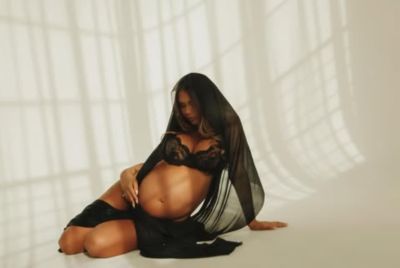
A mum has sparked a huge online conversation after giving birth to her second baby at home without a doctor or midwife. Abbey Khopesh, 30, delivered her baby on 16 August, with her husband beside her, and has since shared parts of her experience on social media. The couple's pregnancy and birth content has attracted millions of views, putting the controversial idea of 'free birth' firmly in the spotlight.
But while an empowering birth story can be fascinating to watch, it also raises an important question: How safe is it to give birth without medical assistance? Free birth is different from a planned home birth supported by a qualified midwife, and health organisations warn that the distinction matters when things suddenly go wrong.
@encompassfarming I believe in every Woman's right and power to do this. But please don't walk into the portal blindly 💛 it's no joke
♬ original sound - EncompassFarming
What Is 'Free Birth'?
Free birth — sometimes called unassisted birth — means deliberately giving birth without a doctor, midwife or other trained medical professional present.
For women who choose it, the appeal can be about having complete control over the experience and avoiding medical intervention. Khopesh has spoken about researching pregnancy and childbirth extensively and choosing to have both of her babies without conventional medical care.
However, Khopesh herself has stressed that free birth is 'not for the faint of heart' and said she would not recommend it to everyone. She also explained that becoming comfortable with the idea took years of mental, physical and spiritual preparation—not something she decided to do overnight.
'I am not trying to discourage women from doing this,' she said, while adding that she would not advocate that 'everybody can and should do it'. She described free birth as requiring a willingness to accept whatever outcome may occur.
Her story has resonated with people online, particularly among those interested in natural or low-intervention childbirth. However, a social media birth story cannot show every possible risk involved with an unassisted delivery.
That is where free birth differs from a planned home birth.
Free Birth vs Home Birth: What's the Difference?
A planned home birth generally involves a qualified midwife who monitors the mother and baby and can recognise when additional medical care is needed.
Tommy's, a UK charity specialising in pregnancy and baby health, says a planned home birth can be a safe option for women with straightforward pregnancies. For women having their second baby, it says a planned home birth is as safe as giving birth in hospital or a midwife-led unit, provided the pregnancy is low risk and appropriate care is available.
That does not mean giving birth alone carries the same level of safety.
During an assisted home birth, a midwife can monitor the labour and arrange a hospital transfer if complications develop. Without a trained professional present, there is no healthcare provider immediately available to spot warning signs or begin appropriate care.
Potential Risks of Giving Birth Alone
One of the biggest problems with childbirth is that complications can develop unexpectedly, even when a pregnancy has been healthy.
The American College of Obstetricians and Gynecologists (ACOG) says complications during labour can include problems delivering the placenta, which can lead to heavy bleeding or haemorrhage. It also warns that if an emergency occurs during a planned home birth, getting to hospital takes time and may delay critical medical care.
ACOG considers hospitals and accredited birth centres the safest settings for labour and delivery. It also says planned home births are linked to more than twice the risk of perinatal death compared with planned hospital births. It also says babies born at home face three times the risk of seizures or serious neurological problems.
That does not mean every home birth will result in complications. Instead, it highlights why having trained assistance and rapid access to emergency care can be so important.
So, Is Free Birth Actually Safe?
Free birth can come with serious risks. Without a registered healthcare professional present, there is no one available to monitor the mother or baby or respond immediately if a complication develops.
But that doesn't mean every free birth will end in an emergency. The risks can vary depending on the individual circumstances, including the mother's and baby's health and how labour progresses.
It is also important to remember that a planned home birth is not the same as free birth. A home birth can be a safe option for some low-risk women, particularly those who have given birth before, but this usually involves a qualified midwife who can monitor labour and arrange medical help if needed. That does not make unassisted birth equally safe.
Ultimately, a successful free birth does not prove that unassisted birth is always safe for everyone. The key difference is immediate access to trained care and emergency support—something that can become crucial if childbirth does not go according to plan.