A woman has sparked a heated online debate after claiming she felt she needed to bring her husband to a gynaecology appointment before her concerns about perimenopause were finally taken seriously.
In a TikTok video, the woman, who said she is approaching menopause, described going through four gynaecologists while seeking help for symptoms that were affecting her emotionally and her relationship. She said she had been offered options including diet and exercise, SSRIs and birth control, but claimed the approaches she had tried were not working for her.
After repeatedly feeling unheard, she decided to take her husband to her next appointment and ask him to explain how her symptoms were affecting their marriage. Her experience has since prompted a much bigger question among women online: why should a patient need to bring a man into the room to feel listened to?
'Maybe They'll Listen To My Husband'
The woman said she was already following advice around diet and exercise, but continued to struggle with symptoms and emotional changes she associated with perimenopause.
In the video, she questioned whether her weight could be influencing how doctors responded to her concerns, asking whether being a 'large lady' meant she would simply be told that her problems were because she was overweight.
Then came the line that became central to her story: 'Maybe they'll listen to my husband.'
Rather than presenting the claim as proof of discrimination, her comments reveal how frustrated she had become after feeling that her own account of what was happening to her was not enough.
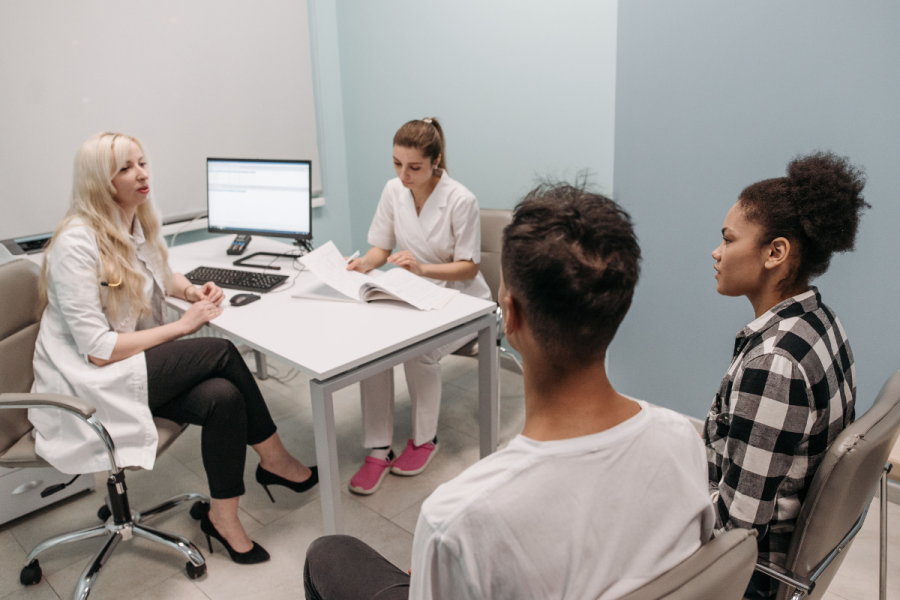
She later returned with an update, saying the appointment had gone differently. She said the doctor ordered laboratory tests and an ultrasound, leaving her feeling that she had finally been taken seriously.
But that outcome raised an uncomfortable question for her: why did she have to bring her husband at all?
Her Search For HRT
A major part of the woman's frustration was her attempt to discuss hormone replacement therapy, or HRT.
She said four previous gynaecologists had refused her HRT options, while suggesting alternatives such as lifestyle changes, SSRIs and birth control. She maintained that she had tried different approaches without getting the relief she was looking for.
That does not necessarily mean the doctors were wrong to recommend alternatives. HRT is not appropriate for every woman, and treatment decisions can depend on a patient's symptoms, medical history and individual risks.
However, the woman's complaint was less about being guaranteed a particular prescription and more about feeling that her experience was not being adequately heard. That distinction is important. A doctor can disagree with a patient's preferred treatment while still taking her symptoms seriously, explaining the reasoning and discussing other options.
Perimenopause Can Be Disruptive
Perimenopause can involve much more than changes to periods. Symptoms can include hot flushes, night sweats, sleep problems, mood changes, anxiety, difficulty concentrating and changes in sexual wellbeing.
For some women, those symptoms can affect relationships, work and everyday life, which helps explain why the woman in the TikTok was so concerned about the impact on her marriage.
Her experience also highlights how difficult it can be to navigate treatment when symptoms are complex and there is no single solution that works for everyone.
The fact that she was eventually offered blood tests and an ultrasound should not automatically be interpreted as evidence that her previous doctors had failed her. Those investigations may have been intended to explore other possible causes of her symptoms rather than diagnose perimenopause itself.
Women Share Their Own Healthcare Experiences
The discussion quickly spread beyond the original TikTok, with Reddit users sharing stories about bringing their husbands or partners to gynaecology appointments. One commenter said she brings her husband to every appointment because she believes she receives better care when he is present. She described him asking questions during procedures and challenging doctors over issues such as pain management.
Other commenters shared difficult experiences involving IUD insertion and removal, describing severe pain and feeling that their discomfort had been minimised.
Those accounts are personal experiences rather than evidence that doctors systematically treat women differently when their husbands are present. Still, they show why the TikTok struck a nerve.
The common thread was not necessarily that women wanted their partners to speak for them. Rather, some felt safer or more confident having another person there to witness what was happening and advocate for them.
'Why Did I Need To Bring My Husband?'
The woman's story does not establish that she was refused HRT because of her gender or weight, and it cannot prove that her husband's presence caused the doctor to order further tests. What it does expose is the frustration of a patient who felt she had repeatedly explained that something was wrong, only to leave without the solution she wanted.
Her husband may have helped her feel supported and may have given the doctor another perspective on how her symptoms were affecting their relationship. But that is very different from saying his presence should have been necessary.
And that is the question at the heart of the debate: if a woman can explain her own symptoms, why should she need to bring a man into the appointment before she feels she is being heard?