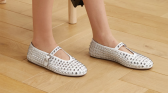

In the past few years, ballet flats have dominated the fashion conversation. They became the ultimate 'quiet luxury' shoe, from simple leather versions to ones with ribbons. They're polished, practical, and nostalgic. But as we move deeper into 2026, a softer sport-inflected alternative is steadily taking their place—the satin trainers.
They are delicate and feminine yet functional. And judging by their growing presence across British high streets and designer collections, satin trainers are not only a fleeting micro-trend. They signal something more nuanced about where fashion and daily life is heading.
From Balletcore to Sport-Luxe: What Changed?
Ballet flats enjoyed a powerful resurgence from 2023 to 2025, thanks in large part to the growing balletcore aesthetic. There was a big rise in demand for ballet flats, with brands like Miu Miu and The Row leading the way in bringing them back. Celebrity advertisements and social media styling drove up their return to mainstream fashion.
Ballet flats fit seamlessly into the era's minimalist mood with slim silhouettes, neutral palettes, and understated elegance. They seemed so easy to wear, working well with tailoring, denim, and slip dresses.
Yet dominance does not always last. While ballet flats are undeniably versatile, they are also fragile. Thin soles and delicate constructions do not always suit long commutes, unpredictable British weather or extended days on foot.
The cultural mood has also shifted. After the pandemic, fashion initially leaned into hyper-femininity and nostalgia. Now, practicality is slowly taking over.
Enter satin trainers.
Ballet flats emphasise restraint and elegance, while satin trainers combine softness and movement. They keep the romantic feel of balletcore but give it a shape that works for everyday life. Apparently, sport-luxe hybrids are increasingly replacing purely decorative styles.
They are more flexible than leather trainers and less fragile than flats. In a world where hybrid work, city commuting, and last-minute social arrangements are the norm, footwear must adapt accordingly.
The Power of Satin Texture
The texture is the crucial part of this footwear. Satin has long been associated with eveningwear, such as bias-cut dresses and opera gloves. Historically, it meant 'occasion'. Right now, it still gives off the same vibe, but it's more relaxed.
Satin doesn't reflect light sharply like patent leather or metallic finishes do. Instead, it spreads it out. The outcome is a soft sheen instead of a bright shine. This quality makes satin shoes look fancy without being too much of a statement piece that takes over an outfit.
There is also an appeal to touch. Today, consumers are becoming more aware of fabric and finish. Satin appears to be more thought out than ordinary material, even at lower prices.
Importantly, the material pairs well with contemporary wardrobes. Contrast is good for tailored wool trousers, slouchy denim, and flowy midi skirts. Satin is smooth, which makes it look good with heavier winter fabrics and lighter spring layers. It gives depth without needing extra decoration.
Many modern satin trainers are made with synthetic fibres to make them last longer, which makes them stronger than traditional evening satin. They are ideal for everyday city wear, though they aren't great for heavy rain.
Where to Buy Satin Trainers?
The British market has responded swiftly with this trend, with options spanning accessible to premium price points.
Affordable: Under £70
High-street stores are already selling satin-finish trainers at competitive prices. ASOS and Zara often have satin or satin-effect trainers in store that cost between £35 and £69. These types usually have rubber bottoms and gently padded inside. They look aesthetic while still being functional.
This bracket is great for trend-conscious customers who want to try out a look without making a big commitment.
Mid-Range: Over £70
Contemporary labels are increasingly embracing a polished sport-luxe aesthetic. Brands such as Charles & Keith and Vivaia have released satin or satin-finish sneaker styles typically priced between £70 and £180. These designs often combine soft textile uppers with practical features like cushioned insoles and flexible rubber soles.
This tier is all about durability, with superior materials, stronger construction, and colours that will never go out of style.
Luxury: £450+
At the designer level, satin trainers reimagine classic sporty silhouettes through a high-fashion lens. Miu Miu, Prada, and Dries Van Noten are some of the brands that have added satin finishes to some of their trainer designs, often pairing them with high-end details and high-quality craftsmanship. Prices usually start at around £450 and can go up to £900 or more, depending on the collection and materials used.
Luxury versions usually focus on craftsmanship, with tonal stitching, high-quality linings, and subtle branding details. For some customers, the appeal rests in the contrast between a traditionally luxurious fabric and a more casual style.
How to Style Them?
The key to styling satin trainers is contrast. Their softness works best when offset by structure or texture.
With Tailoring
Wear white satin trainers with wide-leg black trousers and a big blazer. The shine keeps the look polished without making it look too corporate. This outfit works well in offices where the dress code is not strict.
With Dresses
Grounded footwear are good with slip dresses and knitwear midis. Satin trainers keep things feminine without going too far into fancy territory. For transitional seasons, you can add a cropped cardigan or trench coat.
With Denim
A white shirt and straight-leg jeans continue to be a good combination. Black satin trainers add a touch of class without taking away from the simplicity. For evening, swap the shirt for a silk blouse to subtly elevate the outfit.
With Athleisure
Put on some satin shoes, tailored joggers, and a structured coat or jacket to really get into sport-luxe. The result will feel and look intentional rather than gym-bound.
Pro tip: Colour coordination matters. Neutral satin trainers are the most versatile. But tonal dressing, such as pairing blush trainers with similarly hued knitwear, makes everything look put together without too much work.
What This Shift Means?
The shift from ballet flats to satin trainers shows a bigger adjustment to fashion priorities.
First, formal and casual codes are still mixing together. The popularity of hybrid attire — like tailored clothes worn with trainers or knitwear designed for the evening — has changed what it means to be 'dressed up'. Satin trainers are an example of this dualism. They respect daily functionality while acknowledging aesthetic desire.
Second, customers are becoming more picky. The rising cost of living in the UK has made people think more carefully about how they spend their money. A versatile shoe that transitions from office to dinner holds more value than a purely decorative piece. You may be practical and still look stylish by choosing satin trainers over ballet flats.
Lastly, this change shows that people are tired of extremes. Instead of going back and forth between very feminine and very sporty looks, fashion is settling into softer ones. Comfort is no longer seen as casual, and elegance is no longer limited to discomfort.
Ballet flats will not go away. They are still an important part of many people's wardrobes. But satin shoes are more in line with how people live now—the same people who commute, socialise, work from home, and put comfort first.
The past few seasons were all about nostalgia and delicacy, while the upcoming chapter seems to be all on softness with substance. And in that context, satin trainers make perfect sense.