
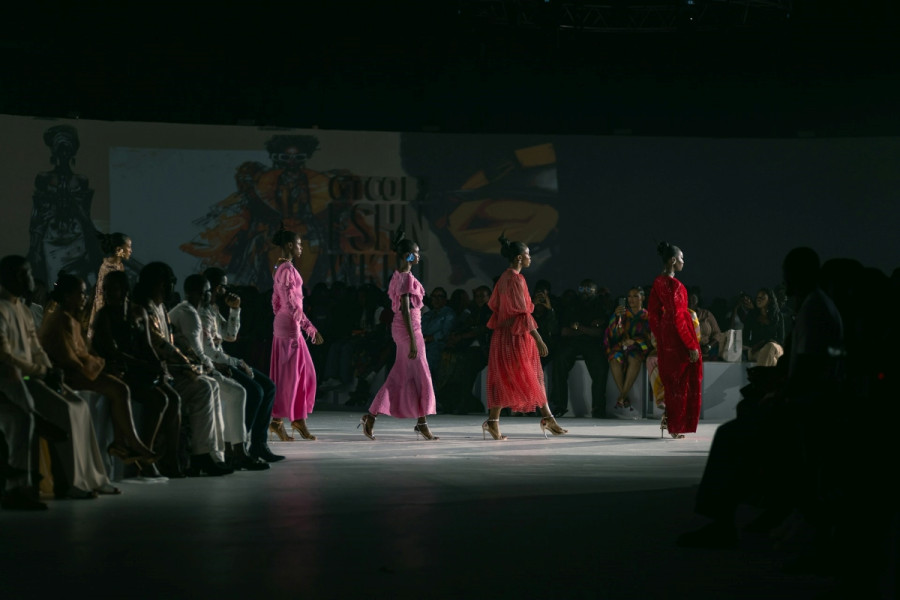
A powerful runway presentation at the Tasmanian Fashion Festival challenged victim-blaming attitudes towards sexual abuse. The show became a platform for addressing rape myths, domestic violence and the belief that women are responsible for preventing the abuse committed against them.
The 2026 Tasmanian Fashion Festival took place on 10 and 11 October at Princes Wharf No. 1 in Australia. Its closing-night programme featured the special runway, bringing an important social issue into an event celebrating fashion, creativity and the local industry.
Powerful Statement Through Runway
Presented by charity What Were You Wearing? Australia, the runway called out the harmful belief that a woman's clothing, behaviour or personal choices can make her responsible for sexual violence. The exhibition featured recreated outfits based on survivors' accounts, alongside clothing descriptions and placards that reject these misconceptions.
Some of the signs featured statements such as 'Don't teach women how to dress. Teach men not to rape', 'Protect women' and 'No means no'. Others read 'Safety is a right, not a privilege', 'Love should not hurt' and 'There is no excuse for domestic abuse'.
The presentation also highlighted the hurtful comments and controlling language women can encounter. Some outfits featured messages including 'Why didn't you leave?', 'How short was your dress?' and 'Did you enjoy it?'
By placing these words in a fashion presentation, the runway brought attention to how survivors can be questioned, judged or made to feel responsible for what happened to them. The show stressed that clothing never invites sexual violence and that responsibility lies solely with the person who commits the abuse.
The Reality Behind Victim-Blaming
The message behind the presentation reflects a wider problem, with research showing that victim-blaming beliefs continue to influence how people see sexual violence. A 2019 Scottish Social Attitudes Survey found that 29% of respondents believed a woman was at least partly to blame for being raped if she wore revealing clothing. Meanwhile, 30% held the same view if she was very drunk.
Although 69% of respondents said women were never to blame in either situation, others still believed a woman's appearance or behaviour could make her responsible for an assault.
Victim-blaming can also extend to how survivors respond after experiencing sexual violence. The survey found that while 76% of respondents disagreed that women who take time to report rape are probably lying, 7% agreed with the statement. These findings highlight how survivors can face unfair judgement both before and after reporting an assault
What Is the Charity's Mission?
What Were You Wearing? Australia is a volunteer and victim-survivor-led charity dedicated to ending sexual violence across the country. It works with survivors, communities and other groups to create safer environments, push back against harmful attitudes and advocate for meaningful systemic change.
Its involvement in the Tasmanian Fashion Festival gave the charity an opportunity to bring these conversations to a fashion audience. By bringing messages about consent, domestic violence and victim-blaming to the runway, What Were You Wearing? Australia challenged audiences to reconsider the language and attitudes directed at survivors.
Ultimately, women should not have to change their clothes, limit their choices or justify their behaviour to avoid being subjected to violence. The responsibility lies with those who commit abuse.