There's something slightly unexpected about seeing Victoria Beckham attached to a high-street label like Gap. For years, her fashion identity has been firmly rooted in a very specific world—sharp tailoring, muted palettes, and the kind of sleek occasionwear that rarely strays below the £1,000 mark. Think structured trousers, sculpted dresses, and an aesthetic that feels more gallery opening than school run.
So when news broke that she had designed a 38-piece collection for Gap, it immediately felt like a shift in rhythm rather than direction. Not a reinvention, but a recalibration. And perhaps more interestingly, a stripping back.
Instead of the slip dresses and figure-skimming silhouettes she's known for, Beckham has turned her attention to something far more grounded: everyday clothing. The kind you don't overthink in the morning, but still feel considered when you put it on.
A Collection That Speaks in Quieter Tones
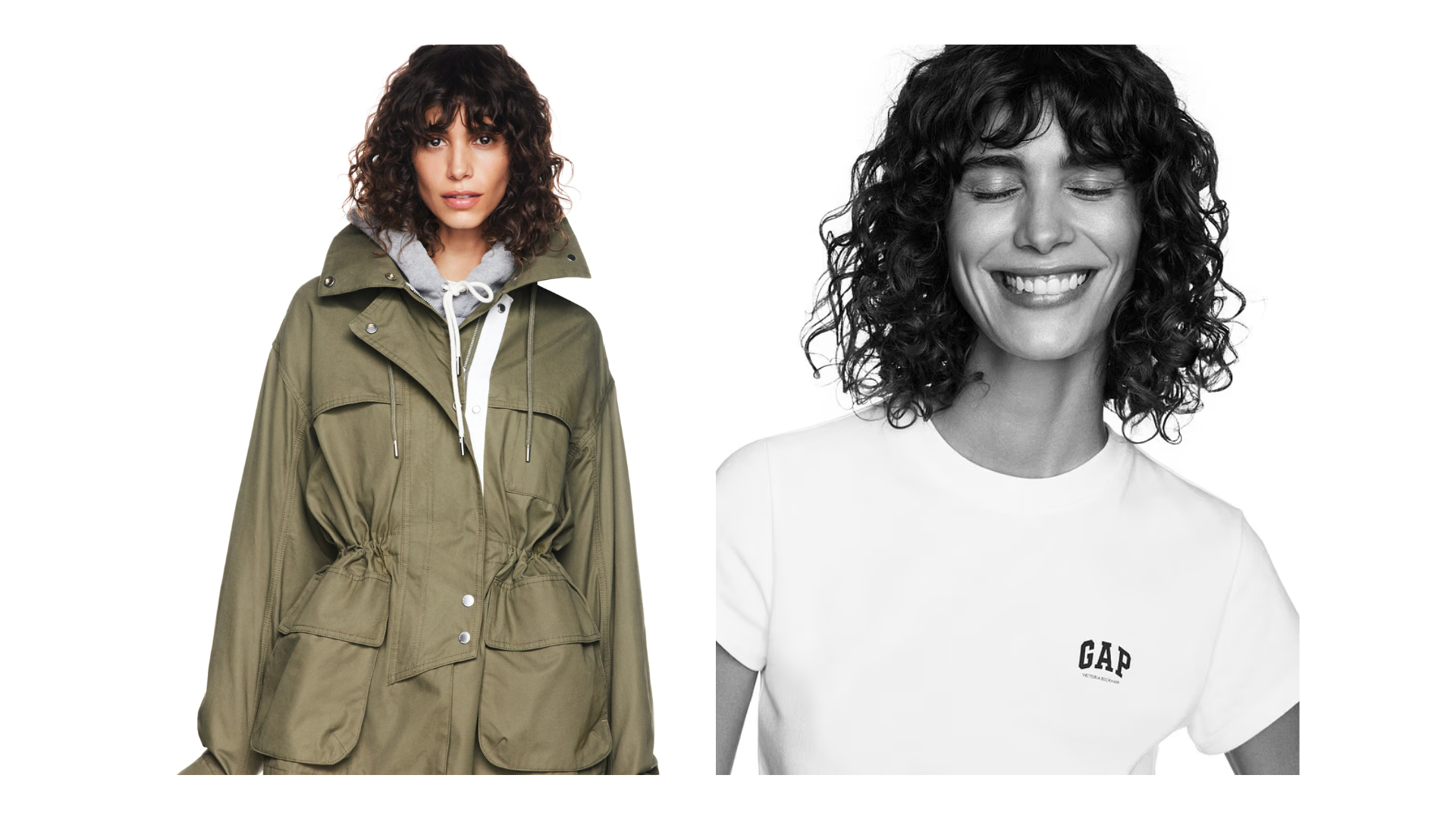
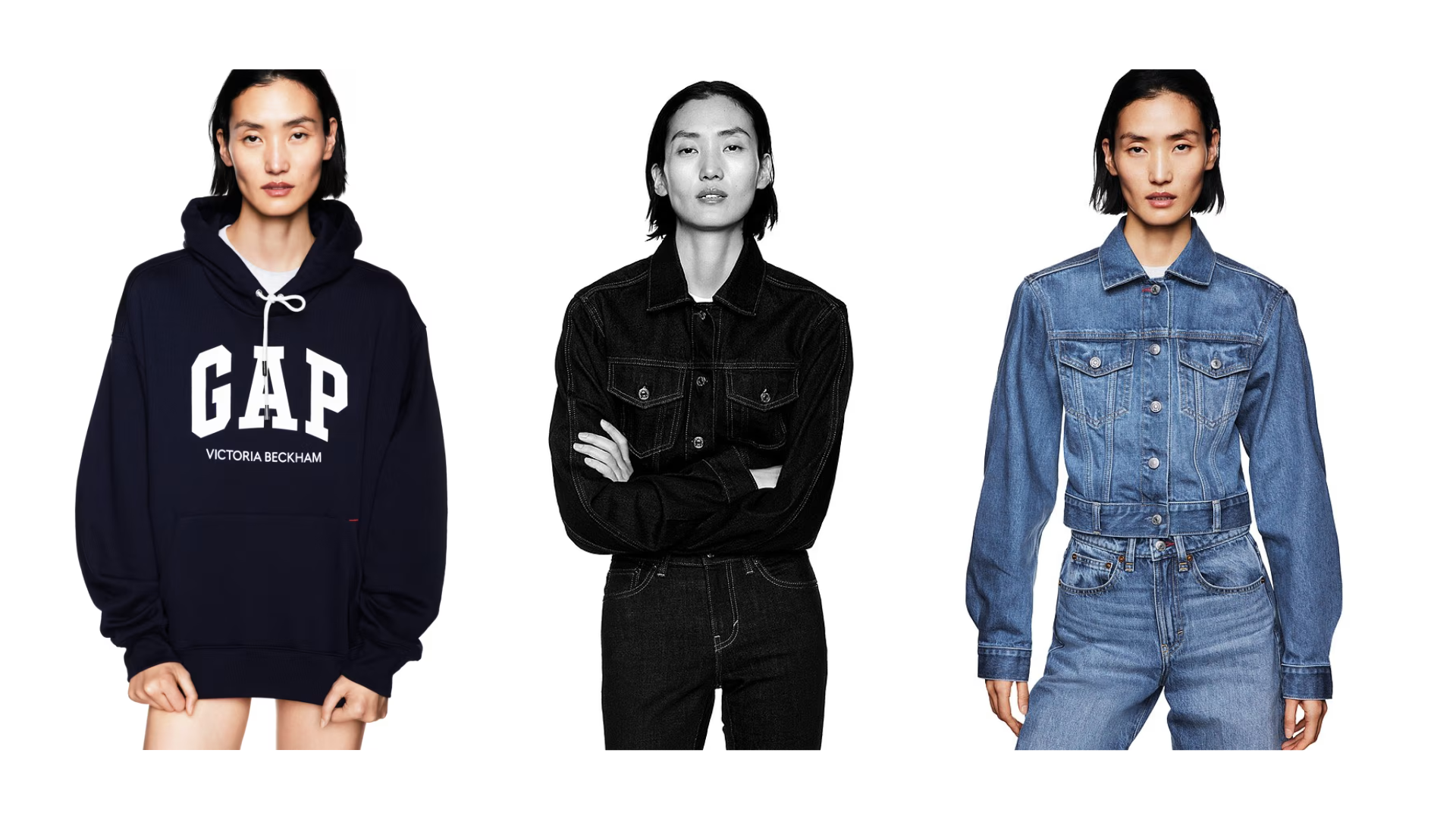
The collection — launching across selected UK stores on 24 April 2026 — leans heavily into familiarity. Trench coats, denim, cotton shirts, and relaxed tailoring form the backbone of the line, all rendered in a muted palette of black, white, khaki, and beige.
Prices sit somewhere between £25 and £250, which is a noticeable shift from Beckham's mainline pieces, where even a simple T-shirt can sit close to £100. But the point here doesn't feel like discounting luxury. It feels more like translation—taking a designer's visual language and making it readable on the high street.
What's interesting is how restrained it all feels. There's no obvious 'hero' piece screaming for attention. No dramatic eveningwear moment. Instead, the collection feels almost deliberately understated, as if it's trying not to compete with itself.
And in a way, that's what makes it feel very Beckham—just expressed differently.
Why Gap, and Why Now?
To understand the collaboration, it helps to look at where Gap currently sits in the cultural landscape. Once a defining force in casual American dressing, the brand has spent the last few years rebuilding its identity through nostalgia, celebrity partnerships, and a renewed focus on basics that feel both familiar and modern.
Under creative direction from Zac Posen, Gap has slowly repositioned itself as something more style-aware than strictly functional. Campaigns featuring figures such as Anne Hathaway and Gwyneth Paltrow have helped reframe the brand as part of the wider conversation around 'everyday luxury'—clothing that doesn't shout, but still feels intentional.
Beckham's involvement slots neatly into that narrative. It's not a collision of worlds so much as a meeting point between them.
From High Glamour to High Street Reality
There's also something quite telling about what's missing.
No slip dresses. No tightly edited evening silhouettes. No overtly directional pieces designed purely for impact. Instead, the focus is on repetition—clothes that can be worn again and again without losing their shape or relevance.
That absence feels almost as important as the collection itself. Because Beckham has built her brand on precision and control, often expressed through garments that feel slightly removed from everyday life. Here, she's leaning into the opposite idea: clothing that exists inside it.
It doesn't feel like she's abandoning glamour entirely. More like she's putting it aside for a moment and asking a different question—what happens when you design for real life first, and image second?
A Familiar Brand, Finding New Relevance
Gap's resurgence in recent years hasn't been loud, but it has been steady. What was once seen as a fading high-street giant has found new relevance through Gen Z nostalgia, TikTok styling trends, and a broader return to 1990s and early 2000s silhouettes.
There's been a noticeable appetite for simplicity again—hoodies, straight-leg denim, clean-cut basics. Pieces that don't require explanation. That shift has given Gap space to re-enter the conversation, not as a trend leader, but as a reference point.
In that context, Beckham's collaboration doesn't feel like a departure. It feels like timing.
A Quiet Shift in Designer Behaviour
What's happening here is also part of a wider change in how designers operate.
High-street collaborations are no longer seen as diluted versions of luxury fashion. Increasingly, they're treated as extensions of it—ways of reaching audiences who are more selective about what they spend, but still interested in design language and brand identity.
For designers, it's also a way of testing scale without losing authorship. For brands like Gap, it's a way of borrowing credibility while reintroducing themselves to a new generation of shoppers.
Beckham sits somewhere in the middle of that exchange. Her name brings recognition. Gap brings accessibility. The collection sits in the space between the two.
So Where Did the Slip Dress Go?
It's tempting to read the absence of Beckham's signature silhouettes as symbolic—as if she's stepping away from the aesthetic that defined her early career in fashion. But that might be overthinking it.
More likely, this is less about leaving something behind and more about adjusting the context it exists in. The slip dress still belongs in her world. It just doesn't belong in this one.
What replaces it is something quieter: trousers that don't need styling tricks, coats that don't rely on occasion, shirts that simply work. Clothes that don't ask to be interpreted, only worn. And maybe that's the real shift here—not in silhouette, but in attitude.
A New Kind of Beckham Uniform
As the collection arrives in stores, it won't necessarily change how Beckham is seen as a designer. But it does add another layer to her evolving language—one that feels less about distance and more about proximity.
It's still controlled. Still precise. Still unmistakably hers.
Just slightly more within reach.