
It's easy to miss COS if you're looking for the loudest voice in fashion. It doesn't rely on spectacle or viral moments, and it rarely feels like it's trying to dominate the conversation. And yet, over time, it's become one of those brands people keep coming back to—sometimes without even realising it.
That shift hasn't happened overnight. There's been no defining 'breakthrough' moment. Instead, COS has built its reputation steadily, almost quietly, until it started appearing in places you might not expect. According to the Lyst Index, it ranked among the world's top 10 most in-demand brands across every quarter last year, alongside Miu Miu, Loewe and The Row. For a label once seen as a polished high-street option, that's a notable change in perception.
A Different Kind of Success Story
Because COS sits under the H&M Group, it's often been grouped into the high-street category. But that label feels less accurate now. If anything, COS has quietly outgrown it, sitting somewhere between accessibility and luxury without fully committing to either.
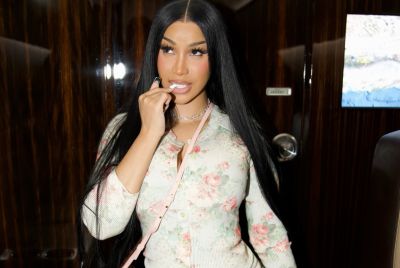
Its spring/summer 2026 show in Seoul made that shift feel more tangible. The setting had a sense of intention—modern, layered, constantly evolving. The guest list told its own story too, with Alexander Skarsgård, Emma Roberts and Park Gyuyoung among those attending. It felt less like a typical high-street presentation and more like a brand fully stepping into a global space.
Clothes That Don't Try Too Hard
After the show, design director Karin Gustafsson spoke about why Seoul made sense. 'It feels like it's from the past as well as having a feeling of the new at the same time', she said. It's a simple observation, but it lands—because it applies just as easily to the clothes.
COS has always drawn from different places — art, design, everyday life — but it doesn't push those references too hard. 'It's very important that you understand craft from the past', Gustafsson said, 'but also... take inspiration from what's going on around us.' That balance is what gives the brand its particular rhythm.
The result is clothing that feels easy to wear, without feeling forgettable.
Looking Closer, There's More Going On
At first glance, much of the collection reads as familiar: tailored pieces, crisp shirting, understated outerwear. The kind of wardrobe staples COS has built its name on.
But the longer you look, the more you notice the shifts. Tailoring is softer, less rigid through the shoulders. Fabrics move differently—lighter, more fluid. Even trench coats, usually quite structured, feel more relaxed when cut in linen-wool blends.
'We never set out to do anything other than create a timeless look', Gustafsson said. It's the sort of line that can sound overused, but here it feels grounded in the way the clothes are actually made.
There's also the question of price. COS still occupies that middle ground—some pieces reach around £299 (roughly $380), while others sit comfortably under £100 (about $125). That range plays a part in its appeal: it feels considered, but still within reach.
A Touch of Cinema, Without the Drama
This season's starting point was American Gigolo, particularly the tailoring worn by Richard Gere and Lauren Hutton. But rather than leaning heavily into nostalgia, COS has taken a more restrained approach.
You can see the influence in the shapes — slightly broader shoulders, a bit more volume — but it never feels like a throwback. It's more about capturing a mood than recreating a specific era.
'There's effortless elegance', Gustafsson noted. Even when the collection touches on power dressing, it does so lightly. 'There's a hint of it... but in a really effortless way.'
Why Do People Keep Coming Back
Part of COS's appeal is that it fits into real life. The clothes aren't designed to demand attention—they're designed to work, to last, to be worn in different ways over time.
There's also a growing shift in how people shop. Fewer impulse buys, more consideration. In that context, COS feels well aligned with what people are looking for now.
Fabric plays a role in that, too. Some pieces reveal themselves slowly—what looks like denim turns out to be silk, and textures feel different once worn. As Gustafsson put it, 'Sometimes the feel of a fabric is... even more important than the actual composition.' It's a small detail, but it says a lot about the brand's approach.
Still Evolving, Just Quietly
Even now, COS doesn't feel like a finished story. Gustafsson hinted at that, saying there are 'a lot of things we haven't done' and that she'd like to see the brand evolve into 'a new format'.
What that looks like isn't entirely clear—but then again, COS has never been about big reveals.
If anything, its strength lies in how it moves—slowly, deliberately, without overexplaining itself. And in a fashion landscape that often feels crowded with noise, that kind of restraint is starting to stand out.