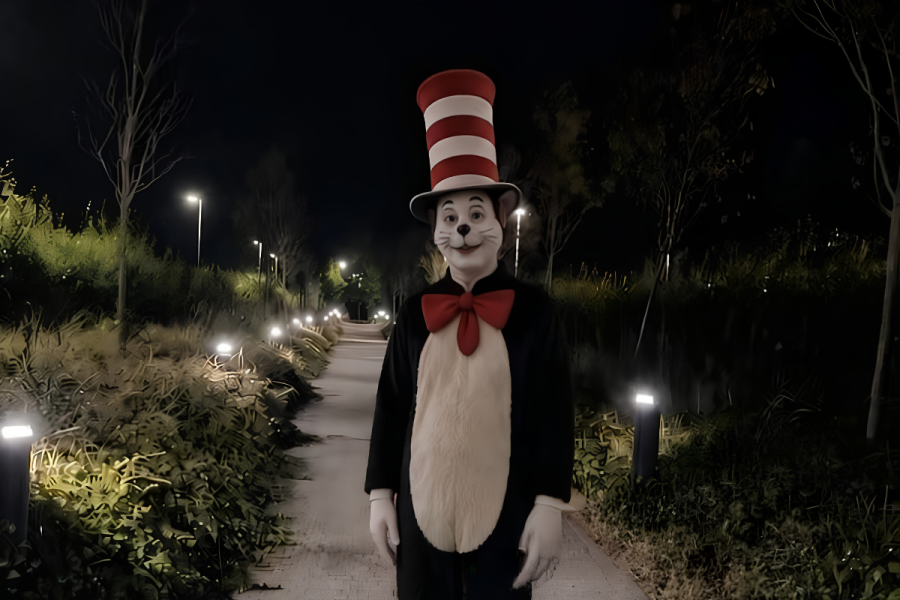
Police in Ireland have had to publicly confirm that Dr Seuss's Cat in the Hat is not stalking anyone's driveway. A wave of AI-generated Ring doorbell footage convinced TikTok users a life-sized version of the character was loose in UK and Irish streets.
The trend has genuine origins. Propstore auctioned the original Cat in the Hat suit from the 2003 film this year, with estimates between $12,000 and $24,000. Without an actor, the hollow-eyed, matted costume looks more like a horror prop than a family film item.
This unsettling image did more to fuel the trend than any single video, providing the internet with a tangible object to focus on and a real reason to feel uneasy.
How Ring Doorbell Footage and AI Are Fuelling the TikTok Hoax
Creators feed the Cat in the Hat's likeness into an AI video generator, then composite the result onto grainy, shaky Ring camera-style clips of real driveways, windows and front gardens.
The format borrows from Slender Man era creepypasta, where the terror comes from plausibility rather than gore. A blurry figure standing just outside a porch light does more damage to a viewer's nerves than any jump scare. The brain fills in the rest.
A spokesperson for Wexford Garda addressed the panic directly on Instagram, confirming reports of an elusive Dr Seuss character causing havoc in towns nationwide. They stated plainly that an AI prompt, not a costumed intruder, was behind the footage.
Why the 2003 Prosthetics Still Work as Horror
The 2003 film's creature design was already dividing audiences before AI got involved.
The prosthetic work fused human and feline features into something closer to body horror than children's entertainment, and critics flagged it as unsettling even on release.
Two decades later, that same design is precisely why the character fits seamlessly into modern digital horror.
The suit was never intended to appear cute up close. TikTok's trend of using AI generators has tapped into an audience that has long suspected it.
@jordankillan2 When all you have herd about is cat in the hat from your children. We decided as parents to take the opportunity to scare the 💩 out of them 🤣🤣🤣 #catinhat #scary #fyp #viral #vi
♬ original sound - SPAM LIKE = BLOCK
TikTok Urban Legend or Genuine AI Creepypasta
Reaction videos and comment sections show a trend that clearly rattled some viewers. One deleted clip, captioned as a joke about overdosing two weeks after prom, hit 4.4 million views before it disappeared, and spawned a wave of copycats. Commenters swapped their own Seuss references, with lines like 'Green eggs and SCRAM' repurposed as dark punchlines under the scarier uploads.
Physical costume hoaxes, such as the Killer Clown epidemic of 2016, required real people willing to buy a mask and stand in a park after dark. In contrast, this situation needed none of that. Just a generator, a photo taken in the driveway, and a few minutes were sufficient.
AI video tools are becoming increasingly user-friendly for casual creators. As a result, urban legends no longer require costumes, specific locations, or real people. They only need a compelling prompt and an audience willing to believe what is shown on their doorbell cameras.
🚨NEW: MULTIPLE reports coming out of Wexford, Ireland of a man dressed Dr. Seuss’ Cat In The Hat stalking people 🇮🇪
— BRITAIN IS BROKEN 🇬🇧 (@BROKENBRITAIN0) August 19, 2026
People are comparing it to the “killer clown” craze of 2016. pic.twitter.com/uFNUX9r31p
For now, nobody needs to check their driveway twice. But somewhere out there, that battered 2003 suit is about to have a new owner, and this trend has already proven exactly how far one convincing photo can travel.