Professional nature photographer Nate Luebbe has sparked a fresh debate over AI-powered smartphone cameras after sharing examples of photographs that appeared to contain details the camera had effectively invented. In a Threads post on 14 August 2026, Luebbe, a Sony Alpha Imaging Collective member known for landscape, wildlife and astrophotography, pointed to a Huawei image in which a distant plane appeared to emerge from processing with bird-like features.
The issue goes beyond filters or edits made after a photo lands in the camera roll. Some modern phones use machine learning during capture and processing to identify scenes, combine multiple frames, sharpen distant subjects and reconstruct details before the finished image is shown to the user. Luebbe called that shift 'truly dystopian and honestly a bit horrifying', arguing that the line between photographing a scene and generating parts of one is becoming harder to see.
When a Plane Becomes a Bird
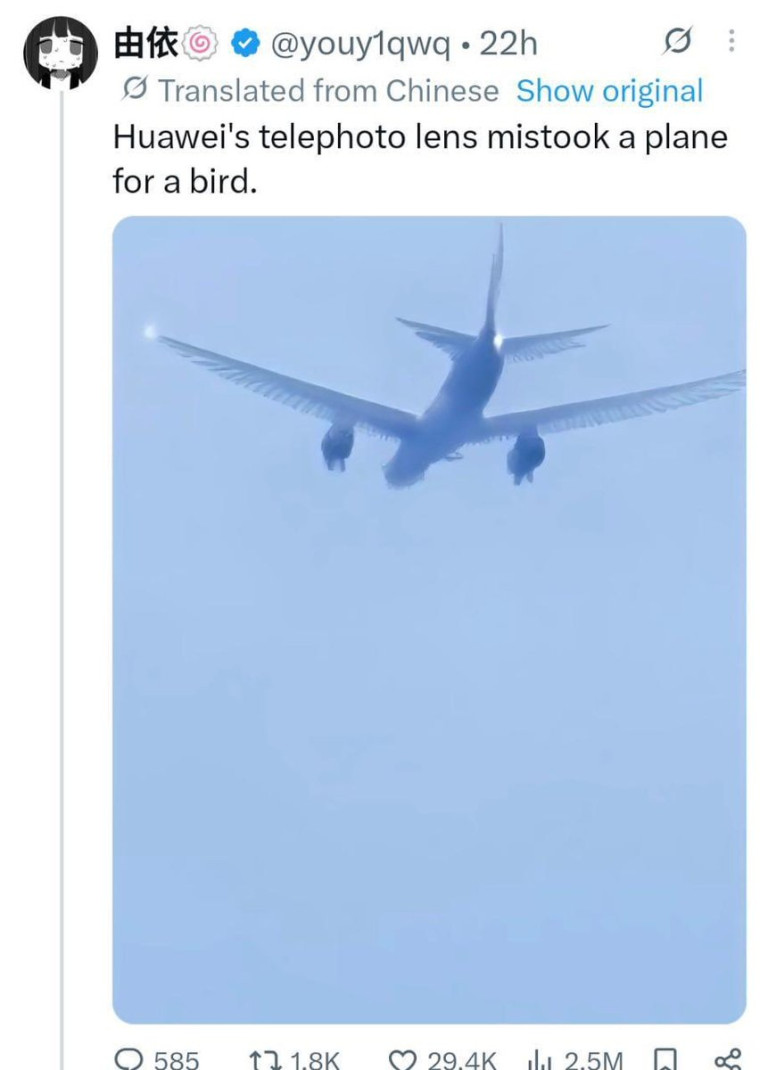
The viral example showed why the distinction matters. A faraway aircraft photographed with a Huawei telephoto camera appeared far less recognisable before processing than in the finished result, where the object took on feather-like shapes associated with a bird. The image has circulated widely online as an example of an AI system making a confident guess about a subject and then building detail around that guess.
Huawei openly uses AI throughout parts of its photography system. The company says its Master AI feature identifies objects and scenes before optimising settings such as colour and brightness, while its Moon mode automatically activates after recognising the moon at high zoom. On the Pura 70 series, Huawei has also described an XD Motion Engine that uses 'AI Motion Vector Computing' to match information from different exposures when restoring moving subjects.
That type of computational photography is not automatically generative, and modern smartphones have relied on software processing for years. The concern begins when software creates plausible detail rather than simply recovering information captured by the sensor, particularly when the final result still looks like a conventional photograph.
The Moon Problem Never Really Went Away
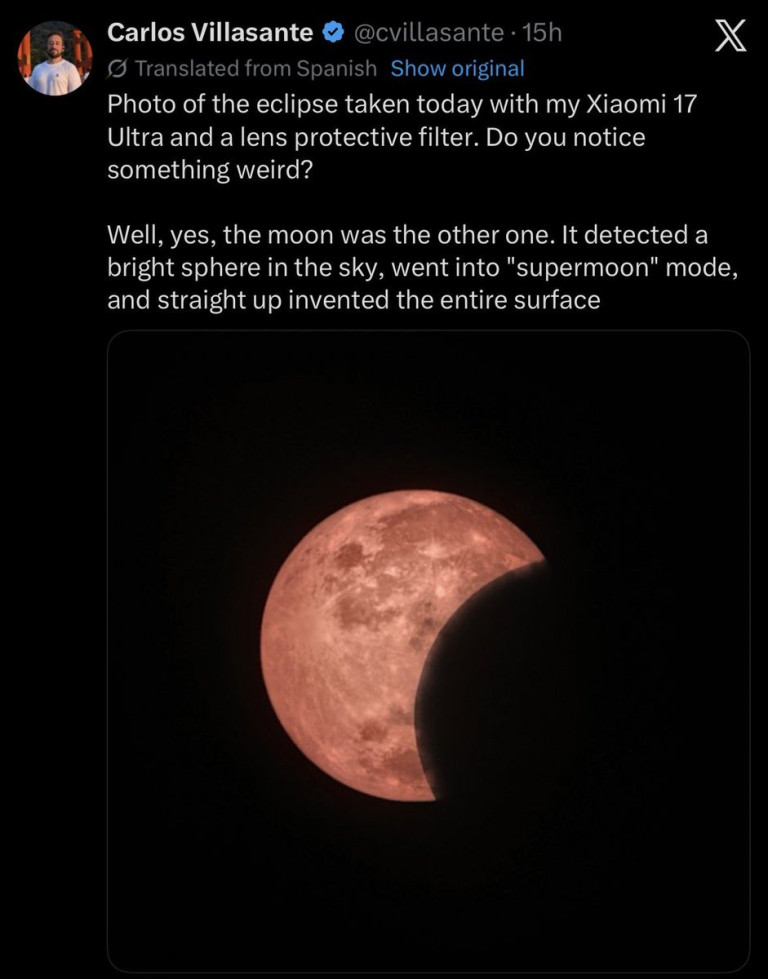
Samsung has faced a similar debate over its Galaxy moon photography. Its own support documentation says compatible Galaxy phones use deep learning-based AI, multi-frame processing and a detail enhancement engine when the camera recognises the moon. Samsung also gives users the option to switch Scene Optimiser off.
That matters because an AI system can know what a familiar object is supposed to look like. A 2026 research paper examining camera authenticity warned that AI-based zoom and low-light enhancement can introduce 'hallucinated content' into images produced directly by cameras, potentially changing how a scene is interpreted. The researchers said users may not realise that parts of a camera image are not authentic to the underlying capture.
The technology is also moving beyond specialist moon modes. Google Pixel phones offer tools including Best Take, which combines facial expressions from multiple photographs, and Add Me, which merges two captures so everyone can appear in one group shot. Magic Editor goes further after capture by generating new visual content inside an existing photograph.
Users Question What Counts as a Photo
The reaction to Luebbe's post centred less on whether smartphones should process images and more on whether users should know when that processing crosses into invention. One Threads user responded, 'I guess it would have been better just blurry and not that weird AI thing'. Another described the idea as 'deeply unsettling'.
For photographers, the debate arrives as phone makers increasingly sell AI as part of the camera experience rather than solely as a separate editing tool. Computational photography can rescue dark scenes, reduce noise and make tiny phone sensors more capable, but newer systems can also infer what they think belongs in a frame.
The result is a new question sitting behind an everyday action: when you press the shutter, are you saving what the camera saw, or what its software decided you probably meant to photograph?