Wedding guest dressing is taking a more glamorous turn for autumn 2026, and one of the season's most distinctive influences comes from an era known for its love of decoration, geometry and evening glamour.
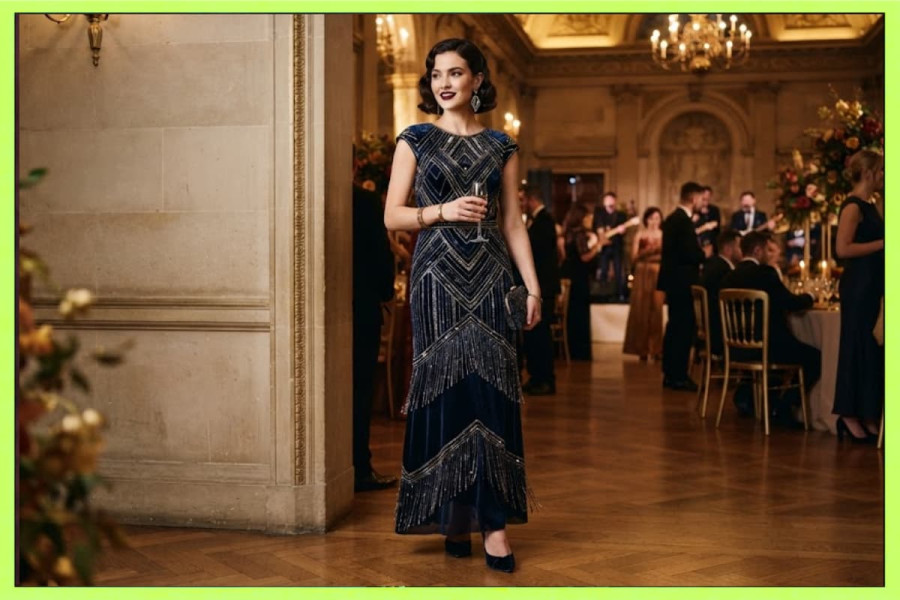
Art Deco-inspired dresses are appearing across the current fashion landscape, bringing details such as intricate beading, fringe, geometric patterns, velvet and dropped waists into modern occasionwear. Vogue has highlighted the aesthetic as a significant direction for wedding guest dressing this season, alongside other trends including rich colours, dramatic silhouettes and embellished designs.
The appeal is fairly straightforward. Unlike a minimalist slip dress, an Art Deco-inspired look can feel dressed up before accessories are even added. But the modern interpretation is less about recreating the 1920s and more about borrowing a few recognisable details and giving them a contemporary shape.
What Makes a Dress Feel Art Deco?
Art Deco emerged in the early 20th century and became associated with geometric forms, symmetry, ornamentation and luxurious decorative details. Those characteristics translate naturally into fashion, particularly eveningwear.
For wedding guests, the trend can be as obvious or subtle as desired. A dress might feature intricate crystal embellishment, a geometric print or a fringe detail, while a more understated interpretation could simply use a dropped waist or a rich velvet fabric.
Vogue's current selection includes dresses from designers and brands including Dôen, Bode, Taller Marmo, Staud, Kallmeyer, Tory Burch, McQueen and Ulla Johnson, illustrating just how differently the Art Deco influence can be interpreted.
That variety also makes the trend easier to adapt to different types of weddings.
Beading and Embellishment Bring the Glamour
If there is one detail particularly suited to the Art Deco aesthetic, it is embellishment. Crystals, beads and embroidery can create the intricate, decorative effect associated with the style without requiring an entire outfit to look vintage. Vogue points to hand-beaded designs from Dôen and Bode, alongside embellished options from Self-Portrait and Staud.
For a formal wedding, an embellished midi or maxi dress can provide enough visual interest on its own. Accessories can stay relatively simple rather than competing with the dress. This is particularly useful for guests who want a statement outfit but do not necessarily want to rely on a dramatic neckline or revealing silhouette.
Geometric Prints Offer a More Subtle Take
Not every Art Deco wedding guest dress needs to sparkle. Geometric prints provide a quieter way into the trend, particularly for anyone who prefers patterned dresses over heavy embellishment. Symmetry, angular motifs and graphic designs are all closely aligned with the visual language of Art Deco.
Vogue highlights examples from Kallmeyer, Tory Burch, La DoubleJ and Zimmermann, ranging from highly decorative beaded patterns to more contemporary graphic prints. The approach can also make the dress easier to wear beyond the wedding itself. A graphic midi, for example, can work for dinners, parties or other formal occasions depending on how it is styled.

Dropped Waists Are Back in the Conversation
The dropped-waist silhouette is another noticeable connection between contemporary fashion and the Art Deco era.
Rather than defining the waist at its natural position, the shape places the waistline lower on the body, creating a longer-looking torso and a looser line through the skirt. The silhouette is particularly associated with the flapper dresses of the 1920s, but current versions are being softened through draping and modern fabrics.
Vogue's selection includes versions from Cos, Zara, McQueen and Proenza Schouler, showing that the silhouette does not have to look like a literal vintage costume. For wedding guests, that makes the dropped waist an option for capturing the mood of Art Deco without leaning too heavily into historical styling.
Velvet and Fringe Make the Look More Dramatic
Two other details fit particularly well with the trend: velvet and fringe.
Velvet has long been associated with autumn and evening dressing, but its rich texture also complements the opulent side of Art Deco. Current examples include velvet dresses from Zadig & Voltaire, Loretta Caponi, Khaite and Self-Portrait.
Fringe, meanwhile, adds movement. It can appear across an entire dress or be used more sparingly along a hem or bodice. Taller Marmo, Sharon Wauchob, Simon Miller and Ulla Johnson are among the labels ideal for incorporating fringe into current occasionwear.
The Key Is Not To Overdo the Theme
There is one potential problem with an Art Deco-inspired wedding guest outfit: taking the theme too literally. A beaded dress, elaborate headpiece, statement jewellery and heavily styled accessories can quickly turn an outfit inspired by the 1920s into something closer to a costume. Vogue specifically recommends restraint, suggesting that guests allow one Deco-inspired element to lead while keeping the rest of the look clean.
That means pairing a heavily embellished dress with understated shoes and jewellery, or choosing a velvet gown and allowing its texture to provide the statement. The same principle works with fringe and geometric prints. One strong detail is often enough.
Art Deco Works Beyond the Wedding
One reason the trend feels particularly relevant for wedding guest dressing is its versatility. The same elements that make an outfit suitable for a ceremony can also work for other occasions. A beaded midi can move from a wedding reception to an evening party. A velvet dress can work for autumn dinners. A geometric printed dress can be styled more casually with different accessories.
That makes the Art Deco revival less about buying a novelty wedding outfit and more about choosing occasionwear with enough personality to be worn again. For anyone tired of predictable wedding guest dresses, the trend offers another direction: more texture, more decoration and a little more glamour, without requiring a literal return to 1920s dressing.