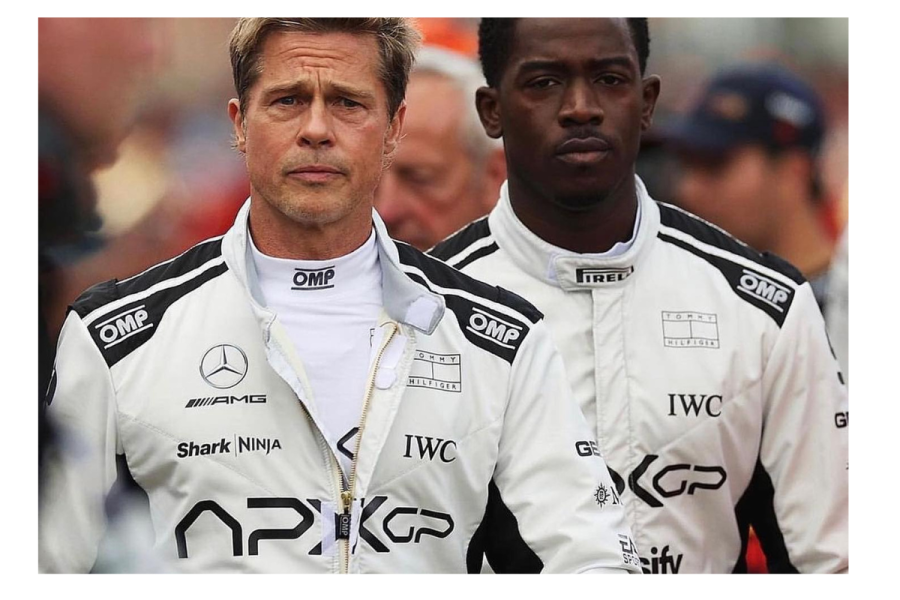
Oscar-winning actor and producer Brad Pitt has offered a pragmatic perspective on AI in cinema. The actor suggested that the emerging technology could serve as a vital lifeline for Hollywood's struggling mid-budget films by reducing post-production visual effects costs. He emphasised that this would not replace the creative human element at the heart of storytelling.
Speaking in a cover story interview with Esquire, Pitt acknowledged the intense industry anxiety surrounding generative technology. He argued that AI could protect original storytelling if deployed as an operational production tool.
A Very Interesting Experiment
The veteran filmmaker highlighted how digital efficiencies could lower financial barriers for projects budgeted between $40 million (£29.6 million) and $90 million (£66.7 million). This was a vital tier of filmmaking that has steadily vanished from studio release calendars in favour of $200 million (£148 million) superhero franchises and micro-budget indie features.
'There's a lot of pushback against AI, but AI is going to be the very thing that, if used as a tool, is going to help these mid-budget films, $40 to $90 million-budgeted films, get made,' Pitt stated, framing the transition as 'a very interesting experiment'.
Pitt's commentary carries much authority given his extensive track record as co-founder of Plan B Entertainment.
Over two decades, Plan B has championed ambitious dramas that risk-averse major studios frequently hesitate to back, producing critically acclaimed, Oscar-winning titles including 12 Years a Slave, Moonlight, The Big Short, and Minari.
AI Could Drive Down Costs
As ballooning visual effects bills and post-production labour expenses make original, mid-tier feature films increasingly difficult to finance and distribute, Pitt views backend AI integration as a sensible, cost-effective solution to ensure complex scripts continue to receive greenlights from cautious studio executives.
Pitt emphasised a clear boundary between utilising AI for technical post-production tasks, such as background rendering, rotoscoping, and digital environment construction.
When asked if AI software could eventually replicate his own screen acting performances, the actor expressed deep scepticism about synthetic character work. He noted that algorithms lack authentic human discovery.
'Well, it depends on who's creating it, you know? Who's behind it, who's telling the story,' Pitt explained, adding that while programmers and directors can try to steer digital emotion, 'the final product might not be my choices and what I found and discovered in the thing'.
Despite supporting backend technical innovation, Pitt remains protective of his personal likeness and performative rights. The actor revealed that although major studios have taken 3D body scans of him for stunt work and CGI de-ageing over the past two decades, he has enforced strict contractual clauses ordering their immediate destruction once filming wraps.
'I've always put in my contract: I own them and I destroy them,' Pitt revealed, attributing the long-standing legal precaution to being a 'paranoid Ozark boy'.
Pitt also recounted experimenting with AI-generated music. He acknowledged that while synthetic compositions sound remarkably polished on first listen, they display a repetitive limitation that cannot replicate the emotional nuance of a genuine human voice.
As Hollywood continues to navigate post-strike regulations, evolving copyright laws, and audience pushback against automated media, Pitt's balanced perspective offers a practical roadmap. By distinguishing visual effects efficiency tools from actor replacement, he argues that technology should ultimately serve human talent rather than supplant it.