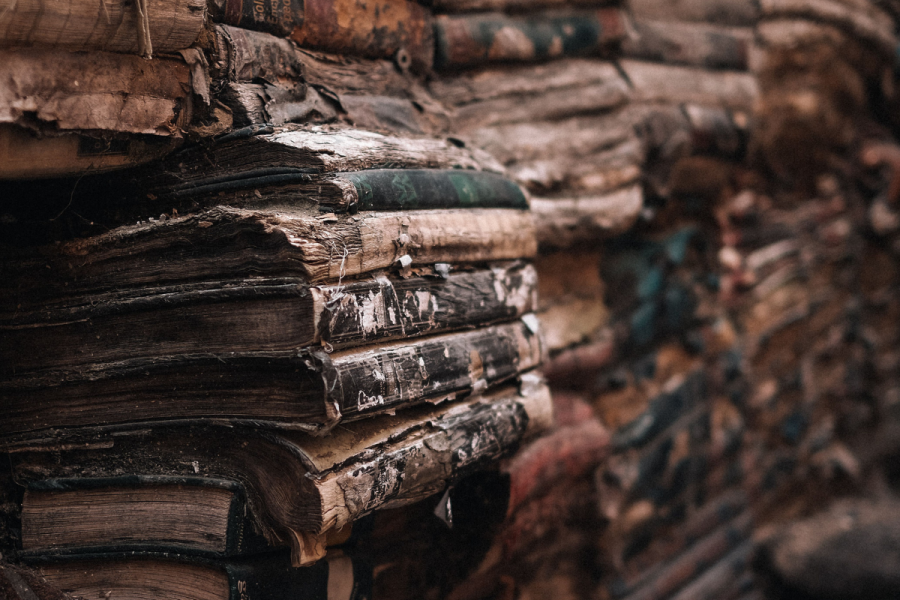
Artificial intelligence (AI) companies are allegedly buying rare and out-of-print books from used-book sellers in North America and Europe, cutting off their bindings, scanning every page and pulping or discarding the originals to build cleaner training datasets. Concerns intensified in July 2026 after suppliers advertised bulk orders for books published before the chatbot boom, while booksellers reported unusual purchases involving hundreds of obscure and specialist titles.
The strongest documented example involves Anthropic, the company behind the Claude chatbot. A United States District Court order dated 23 June 2025 states that Anthropic purchased millions of print copies, stripped their bindings, cut the pages to workable dimensions, scanned them and discarded each physical book. The company retained internal digital replacements in a research library that supported its development of large language models.
A Secretive Rush for Human Writing
ISBNdb, which describes itself as the world's largest book database, has promoted bulk acquisition services for AI clients, including orders reportedly ranging from 1,000 to one million titles. Its pitch highlighted older, rare and specialist volumes, declaring: 'The world's best AI training data is sitting on a shelf.' The company argued that books printed before widespread generative AI provide edited, human-authored material that is less likely to contain synthetic text.
The appeal comes as developers face growing concern about models learning from machine-generated material already flooding the internet. ISBNdb's promotional language also acknowledged confidentiality and the reputational risk surrounding book destruction, but the identities of companies behind many recent bulk purchases remain unclear. Reports of unusual orders therefore do not prove that every book is being shredded or that every buyer is connected to an AI laboratory.
Project Panama Put the Process on Record
Anthropic's own operation, known internally as Project Panama, showed how destructive scanning could work at an industrial scale. An internal planning document later unsealed in the company's copyright case called it 'our effort to destructively scan all the books in the world' and added: 'We don't want it to be known that we are working on this.'
The programme reportedly relied on used-book wholesalers, hydraulic cutters and high-speed scanners to turn physical collections into a searchable private library.
United States District Judge William Alsup ruled that converting lawfully purchased print books into internal digital copies qualified as fair use because one version replaced the other and the files were not shown to have been distributed outside Anthropic.
The ruling did not give AI companies a blanket exemption from copyright law.
It separately found that Anthropic's acquisition of more than seven million pirated digital books for a permanent library was not justified by the same fair-use argument.
Rare Editions Raise a Preservation Alarm
Booksellers have since reported sudden demand for foreign-language, technical and out-of-print works that might otherwise sell only occasionally. Dawn Albinger, president of the Australian and New Zealand Association of Antiquarian Booksellers, warned that marginal notes, inscriptions and physical evidence can carry historical value beyond the printed text.
'There are things that cannot be examined and properly understood unless the physical object is to hand,' she said.
No public evidence currently establishes how many rare books have been destroyed in the latest wave of buying or which AI companies commissioned every order. The verified Anthropic documents nevertheless show that millions of purchased books have already passed through a destructive scanning process, while current procurement pitches openly market old print as premium AI material.
As demand for uncontaminated human writing grows, the unanswered question is whether irreplaceable editions could disappear into private datasets before libraries, collectors or readers know what has been lost.