Christina Ricci has amplified criticism of US Immigration and Customs Enforcement family detention, sharing a post declaring that children are 'still being held in a concentration camp' at the Dilley Immigration Processing Center in Texas. The Yellowjackets and Wednesday star posted the message to her Instagram Stories on Monday, 21 September 2026, as the treatment and prolonged detention of migrant children remain under federal court scrutiny.
The post was one of several messages Ricci shared about children and families affected by US immigration enforcement. Another urged compassion for parents fleeing violence, poverty or persecution with their children and condemned the prospect of families being forcibly separated.
Ricci did not add a written statement of her own to either post. Instead, the Casper actor used her verified account to amplify advocacy messages centred on migrant children and their parents.
Ricci Shares 'Concentration Camp' Post About Dilley
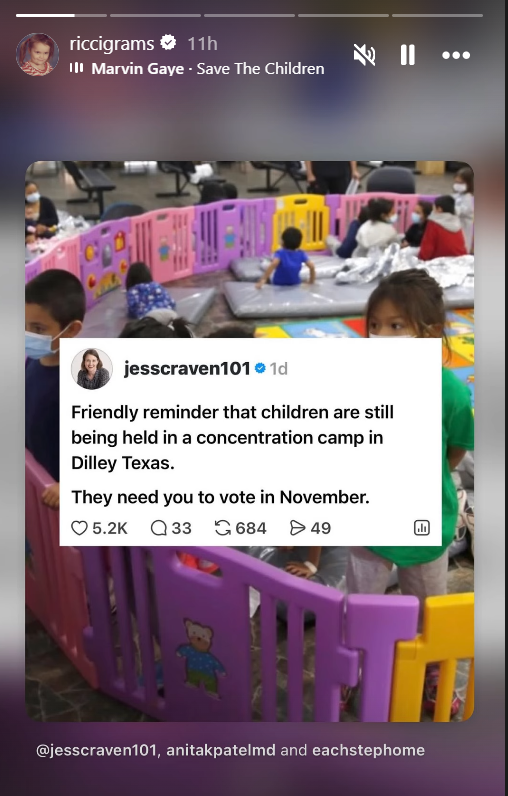
The first Story reshared a post from activist Jess Craven that read: 'Friendly reminder that children are still being held in a concentration camp in Dilley Texas. They need you to vote in November.' Ricci paired the repost with Marvin Gaye's Save the Children, further directing attention towards the children held at the Texas facility.
The description of Dilley as a 'concentration camp' came from Craven's original post rather than language written by Ricci herself. By sharing it with her followers, however, Ricci amplified the criticism alongside a post explicitly drawing attention to the children detained there. Dilley is an ICE family detention facility operated by CoreCivic used to detain immigrant families, and conditions and lengths of detention there have been the subject of continuing litigation over protections for minors.
Federal court proceedings have continued to scrutinise ICE compliance with the Flores Settlement Agreement, which sets protections for children in immigration custody. On 17 August 2026, the court appointed a special master and independent monitor to oversee compliance with the Flores Settlement Agreement at Dilley and other immigration facilities.


Ricci Amplifies Plea for Migrant Families
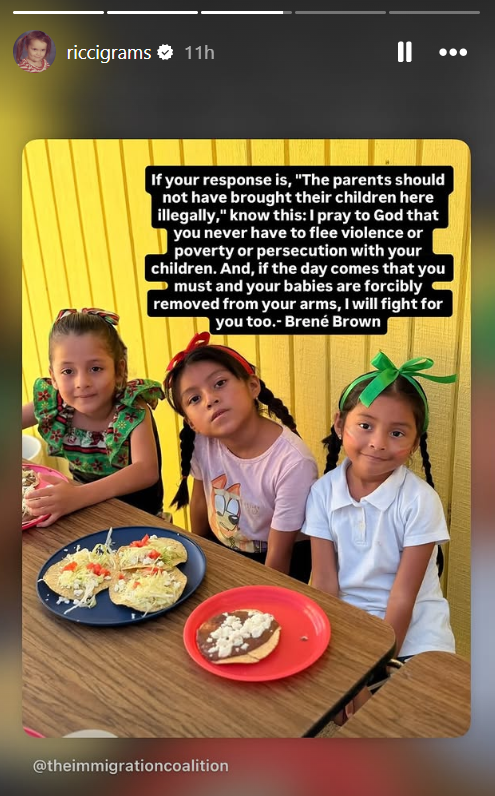
Ricci followed the Dilley post with another Story from The Immigration Coalition featuring three young girls and a message attributed in the graphic to author Brené Brown. 'I pray to God that you never have to flee violence or poverty or persecution with your children,' the message read, before saying that if a parent and their children were forcibly separated, 'I will fight for you too'.
The second Story shifted attention from detention conditions to families affected by immigration enforcement. Rather than debating how parents entered the United States, the post centred on what families may have fled and what happens when parents and children face detention or separation after arriving.
Together, the two Stories present a clearer picture of the issue Ricci chose to amplify: the impact of immigration enforcement on children and families. They also fit alongside other recent posts on her account drawing attention to children affected by violence, displacement and humanitarian crises.
Dilley Remains Under Federal Scrutiny
Family detention returned to Dilley in 2025 after the facility had previously stopped holding families. A January 2026 declaration filed with the court described Dilley as the largest family residential centre in the United States and the primary facility used to detain immigrant family units.
The legal scrutiny centres partly on the Flores Settlement Agreement, which requires protections for minors held in federal immigration custody, including placement in the least restrictive appropriate setting. In August, the federal court overseeing the agreement appointed independent officials to monitor compliance after months of disputes over conditions at ICE and Customs and Border Protection facilities.
Ricci has not released a detailed immigration policy statement alongside the Stories, and the posts do not establish her position on every aspect of US immigration enforcement. What they do show is the actor using her platform to amplify criticism of family detention and messages urging greater protection for migrant children and their parents.