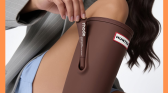
Hailey Bieber has said she is not interested in overconsumption, but her comments about Rhode have sparked criticism from fashion watchdog Diet Prada. The Instagram account has called out the skincare brand's promotional packaging, plastic accessories and viral product launches, asking whether its practices match its message.
The debate comes as beauty brands compete for attention with collectible accessories, limited-edition drops and social media-friendly products. While Rhode has built its reputation around everyday skincare essentials, critics argue that some of its extras encourage the very consumption its founder says she wants to avoid.
Hailey Bieber Rejects Overconsumption
Bieber discussed her approach to beauty at Fortune's Most Powerful Women Summit in Santa Barbara, California, on 14 October. The annual event brings together influential women in business, technology, media and other industries to discuss leadership, entrepreneurship and issues affecting women in the workplace.
During the conversation, the model and entrepreneur explained that Rhode was created to offer useful beauty essentials rather than constantly add more products to an already crowded market.
'I'm not interested in overconsumption,' Bieber said, describing the beauty industry as 'very, very filled'. She explained that Rhode's original ethos was 'one of each thing done really well, one of everything good', with products designed to become reliable staples, and not unnecessary additions.
Bieber added that this philosophy still guides the brand today, saying she does not want to release products simply for the sake of having something new to sell. 'I actually want to make things that I need and I love,' she said.


Diet Prada Takes Aim at Rhode
Diet Prada, an Instagram account known for scrutinising fashion and beauty brands and calling attention to industry controversies, was quick to challenge Bieber's comments.
'Talk is cheaper than its $16 [£12] pimple patch case (patches sold separately),' Diet Prada wrote, taking aim at the compact case designed to hold Rhode's blemish patches. It also challenged the idea that a celebrity skincare brand could genuinely avoid overconsumption, asking: 'Can the millionth celebrity skincare brand really avoid overconsumption or is the venn diagram a circle?'
The account highlighted Rhode's $8 (£6) Flutter Charm, an accessory that reportedly attracted resale listings of up to $300 (£225). The product reflects how beauty brands can turn everyday items into fashionable collectibles.
Rhode's viral lip tint phone case also came under scrutiny, with critics pointing to the extra plastic involved in an accessory made to carry a beauty product. Diet Prada further highlighted oversized PR boxes used to promote individual cosmetics, arguing that such packaging appeared excessive for the items inside.
The post also drew attention to Rhode's compact blush products and separate charm accessories, alongside social media criticism of the brand's product releases. These examples fuelled debate over whether viral beauty merchandise encourages consumers to buy more than they need.
Does Rhode Practise What It Preaches?
Bieber's comments have put the spotlight on a challenge facing the beauty industry. How can brands encourage consumers to buy less while continuing to launch products that generate excitement and sales? For Rhode, the debate is about more than skincare formulas, extending to the accessories, packaging and marketing that surround them.
Diet Prada's criticism does not erase the sustainability measures Rhode has introduced, but it raises questions about how consistently the brand applies its stated values across its business. Ultimately, consumers may look beyond minimalist branding and carefully chosen words to consider if the products they buy are genuinely necessary.