The conversation surrounding actress and writer Jenny Mollen has continued to intensify this week, following her detailed response to widespread criticism over intimate photographs shared with her 12-year-old son, Sid. What began as a seemingly casual social media post has since developed into a wider cultural debate about motherhood, boundaries, and the increasingly blurred lines between private family life and public storytelling online.
The controversy first erupted when Mollen posted images of herself lying in bed with her son alongside a caption that read, 'Your eldest son will be the most toxic boyfriend you ever have'. The reaction was immediate and polarised, with some social media users describing the post as affectionate and humorous, while others labelled it 'inappropriate' and 'uncomfortable'. The initial coverage of the incident framed it within broader discussions about online parenting culture and so-called 'boy mum' identity, before Mollen addressed the backlash directly in a reflective Substack essay titled The Love That Breaks Us.
In her latest response, Mollen has doubled down on her interpretation of the moment, reframing what critics saw as controversy into what she describes as emotional honesty rooted in grief and attachment.
Backlash Over the Viral Bed Photos
Writing on Substack, Mollen said, 'Last week, the internet called me a child molester for posting a photo of myself holding my son'. She explained that the image was taken after her son returned home from a weekend away, and insisted that what critics viewed as a scandal she experienced as emotional vulnerability. For her, the photograph was not intended as provocation, but as a reflection of a shifting parent-child relationship.
The actress, known for her candid writing style and previous roles in projects such as Girls, also revisited the caption that triggered the strongest backlash. 'The joke that offended people was: 'Your eldest son will be the most toxic boyfriend you ever have', she wrote, adding, 'And he is'. While acknowledging the divisive nature of her humour, she maintained that the sentiment was grounded in the emotional intensity of parenting rather than literal meaning.

A Childhood That Shapes Her Perspective
In her essay, Mollen linked her reaction to her own childhood, revealing that her mother told her at age 12 that she 'didn't know how to be a mum anymore' before leaving her life entirely. She suggested that this experience continues to influence her approach to motherhood, particularly as her own children become more independent.
Her reflections also highlighted the emotional contradiction many parents experience: the desire for closeness alongside the inevitability of separation. 'When I look at that picture, I see a 12-year-old boy who still wants his mother, and a woman trying to hold on to closeness and connection at a time in her life when everything else is changing', she wrote.
The 'Boy Mum' Debate Resurfaces
These comments have reignited discussion around an earlier analysis of Mollen's online presence, which questioned whether her posts reflect emotionally expressive parenting or cross into uncomfortable territory when framed through romantic or relationship-style language.
That earlier reporting placed her social media activity within a wider conversation about 'boy mum' culture, a term used to describe mothers who express particularly intense emotional bonds with their sons in public-facing spaces.
Public reaction remains sharply divided. Critics argue that using romantic or dating-style metaphors in relation to a child risks blurring emotional boundaries, particularly when shared with a wide audience. Supporters, however, suggest the backlash reflects a growing tendency to misinterpret humour and emotional expression in digital spaces where tone is easily lost.
Jason Biggs and Life in the Public Eye
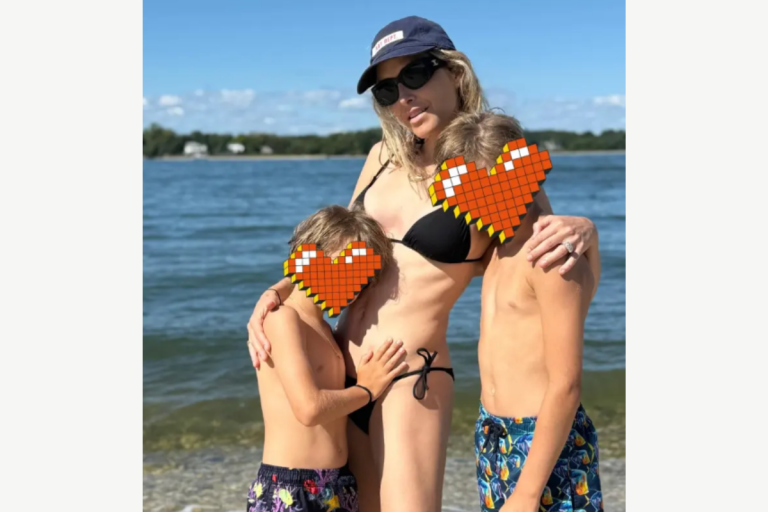
The debate has also drawn attention to how celebrity parents, including Mollen's estranged husband Jason Biggs, navigate co-parenting under public scrutiny. The former couple, who confirmed their separation after 18 years of marriage, continue to share parenting responsibilities for their two sons, Sid and Lazlo, and have recently been seen maintaining a united front despite their split.
Media outlet Page Six has reported that the pair remain amicable following their separation, though the renewed attention on Mollen's writing has inevitably placed their family life back into the spotlight.
Where Private Life Meets Public Performance
What makes this moment particularly notable is how personal expression, parenting, and public identity now intersect more visibly than ever. Mollen's Substack essays, social media posts, and public appearances collectively shape a narrative that blends candid reflection with provocative humour.
In today's online environment, even intimate family moments can be reframed as cultural commentary or performance depending on audience interpretation. As a result, Mollen's work now sits in a space where sincerity and scrutiny constantly overlap.
A Debate That Shows No Sign of Settling
As the discussion continues, the central question remains unresolved: was this a mother expressing grief over her child's growing independence, or a misjudged attempt at humour and reflection that did not translate well online?
Mollen appears to favour the former interpretation, insisting the reaction misunderstands emotional intent rather than questioning it. In a final reflection, she wrote, 'Don't let anyone shame you for holding on while you still can'.
Whether interpreted as raw honesty or misplaced framing, the story now forms part of a wider cultural conversation about parenting, privacy, and the realities of sharing family life in the public eye.