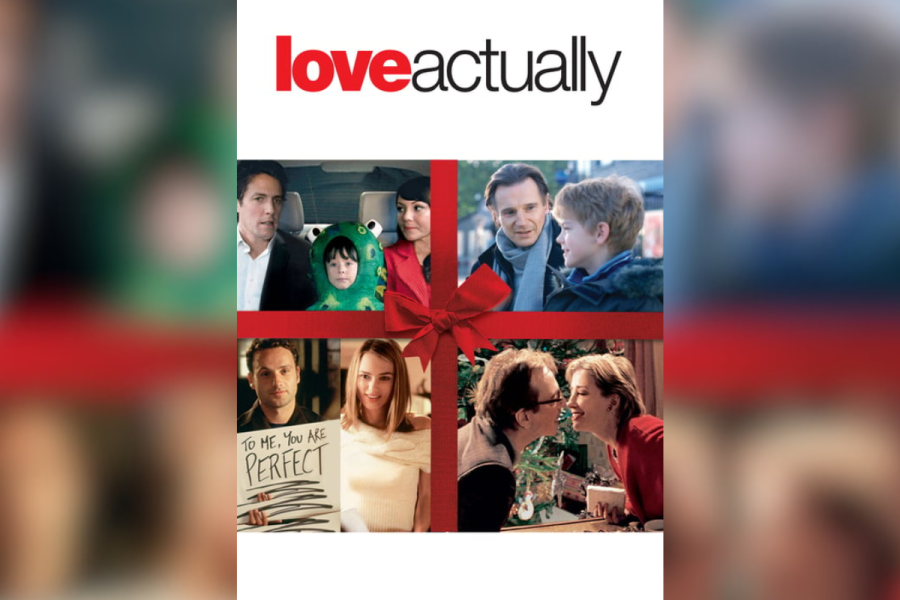
Keira Knightley has revealed that she found Love Actually's famous cue card scene 'creepy' even while filming it, but director Richard Curtis wanted her to change her expression. The British actress looked back on the scene more than two decades after Love Actually first hit cinemas in 2003 and became a Christmas favourite.
Despite the attention the film has gotten from audiences over the years, she recalled how Curtis told her she was looking at Andrew Lincoln's character as though he were unsettling, prompting her to respond in a dramatic whisper: 'But it is quite creepy.'
Keira Knightley says it means "nothing" to her when fans quote "Love Actually":
— Variety (@Variety) November 10, 2026
“I have not watched ‘Love Actually’ since the premiere, which was when I was 18, so, I think I’m the person that knows it the least of anybody. I know that people have a particular look on their… pic.twitter.com/uqW7MRQtJL
A Disagreement With the Director
Speaking to a publication in 2024, Knightley recalled the 'slightly stalkerish aspect' of the scene and an exchange with Curtis during filming. The director, whom she described as a 'very dear friend', apparently noticed that her expression made Mark appear creepy.
'My memory is of Richard, who is now a very dear friend, of me doing the scene, and him going, "No, you're looking at [Lincoln] like he's creepy," and I'm like [in a dramatic whisper], "But it is quite creepy,"' she said. Knightley explained that she subsequently had to redo the scene and adjust her expression to make Mark seem less creepy. Her recollection suggests that she was already aware of the uncomfortable undertones of the storyline while working on the film.
In Love Actually, Lincoln plays Mark, who is secretly in love with Juliet, Knightley's character, despite her marriage to his best friend, Peter (Chiwetel Ejiofor). On Christmas Eve, Mark visits the couple's home and uses handwritten cue cards to reveal his feelings, including the now-famous message, 'To me, you are perfect.'
Although presented as a romantic declaration, Mark's gesture has become one of the film's most debated moments. His decision to confess his feelings to his best friend's wife has prompted audiences to question whether the scene is romantic or inappropriate.


She Was 17 During Production
Knightley also reflected on her age when discussing the scene's uncomfortable elements. She was 17 while filming Love Actually and turned 18 by the time the film premiered in November 2003.
'I mean, there was a creep factor at the time, right? Also, I knew I was 17. It only seems like a few years ago that everybody else realised I was 17,' she revealed.
During a later interview while promoting the second season of her Netflix series Black Doves, Knightley revealed that she had spent only a week working on Love Actually. She also admitted that she had not watched the film since its premiere and had surprisingly little memory of making it. She even joked that she was probably the person who knew the film least well, despite how frequently fans approached her with quotes from it. Her limited recollection contrasts with the Christmas comedy's enduring popularity and its place in festive viewing traditions.
Love, actually, is all around (especially today). Check out this interview with the cast of "Love Actually" from 2003. pic.twitter.com/E1XI7He8qi
— E! News (@enews) December 25, 2021
Love Actually's Lasting Popularity
Released in 2003, Love Actually follows several interconnected relationships in London in the weeks leading up to Christmas. Its ensemble cast also includes Hugh Grant, Emma Thompson, Colin Firth, Liam Neeson and Bill Nighy.
Knightley previously reflected on the film's gradual rise in popularity, admitting in the interview that it had not performed as well as expected upon release. She said it developed a life of its own three or four years later, describing its lasting popularity as lovely to see.
Although Knightley has not revisited the film since its premiere, she remains pleased that it has continued to find an audience. Her recollection of the cue-card scene offers a different perspective on one of its most recognisable moments, revealing that its supposedly romantic gesture did not seem entirely innocent to her even at the time.