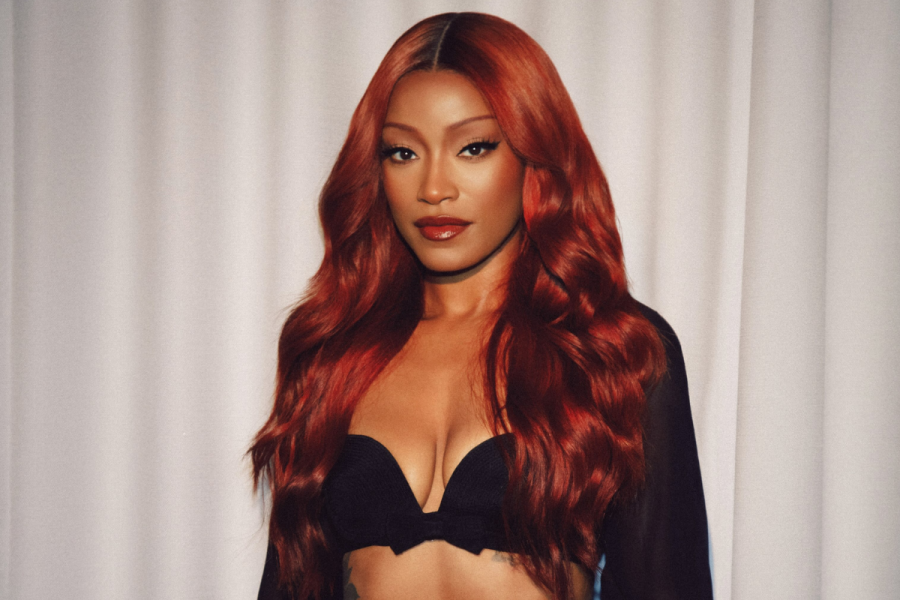
Emmy-winning actor Keke Palmer has revealed that shaving her legs is barely part of her beauty routine, turning a casual confession about body hair into a wider conversation about the grooming standards women are still expected to follow.
The Nope and One of Them Days star made the admission during an appearance on the social media show Are You Okay?, in a clip released on 31 July 2026. Asked to name something she was not ashamed to admit, Palmer replied: 'I don't really shave my legs. I'm not doing it.'
Keke Palmer Says Leg Hair Is Not a Dealbreaker
Palmer, 32, was equally direct about how she views anyone bothered by the decision. 'If you don't like me because of the hair on my legs, then we're not meant to be,' she said, before revealing that she might use depilatory cream roughly once every six months rather than regularly reaching for a razor.
It was not Palmer's first recent admission that shaving ranks low on her list of priorities. In another wellness interview, while discussing everything from Pilates to skincare and sleep, the The Burbs actor was asked how often she shaves her legs. 'It's giving the 1970s around here,' Palmer joked, adding that she does it less often than she would ideally like.
The comments are striking partly because something as ordinary as natural body hair can still generate discussion when it appears on women. For men, visible leg or underarm hair is rarely treated as a departure from conventional grooming. For women, more than a century of beauty messaging has helped make hair removal feel closer to an expectation than an optional beauty treatment.
How Hairlessness Became a Beauty Standard
The modern expectation that women should have smooth legs and underarms did not emerge in a vacuum. The Smithsonian Institution's National Museum of American History notes that, beginning in the early 20th century, safety razor manufacturers expanded their marketing to women by presenting female body hair as masculine, indelicate and even unhygienic. Gillette introduced its first razor specifically marketed to women, the Milady Décolletée, in 1915.
As sleeveless clothing and shorter hemlines exposed more skin during the 1920s, advertisers increasingly encouraged women to remove visible hair. Marketing even tended to avoid the traditionally masculine word 'shaving', instead promising women 'smooth' skin. The result was a beauty practice that became deeply associated with conventional ideas of femininity.
Fast forward to today, and that same visual language hasn't really disappeared—it's just been remixed through pop culture. From red carpet close-ups to Instagram 'clean girl' aesthetics, women in media are still overwhelmingly presented as hairless by default. On screen, even characters meant to feel 'relatable' or 'messy' are rarely shown with visible body hair, reinforcing the idea that smooth skin is simply part of being camera-ready. When body hair does appear, it's often framed as a statement moment rather than something ordinary.
You can see the contrast clearly in how female celebrities are styled versus their male counterparts. While male actors like Pedro Pascal or Timothée Chalamet are frequently photographed with visible chest or leg hair in editorial shoots, women in similar spaces are almost always presented with completely smooth skin—whether it's Zendaya on a premiere carpet or Margot Robbie in a fashion campaign. Even in more 'natural' beauty eras, like the rise of the Y2K revival or the current soft-glam trend, hairlessness remains the unspoken baseline.
That expectation is so embedded in visual culture that it often only becomes noticeable when someone breaks it. When celebrities like Julia Fox or Amandla Stenberg have appeared in shoots or red carpet moments that subtly challenge grooming norms, the reaction online tends to be immediate—proof of how rarely audiences are asked to see women's bodies outside of that polished standard.
In other words, the standard isn't just maintained by advertising anymore, but by repetition across film, television, social media, and celebrity styling. It's a visual shorthand that has been normalised for over a century, and pop culture continues to quietly reinforce it every time a woman appears on screen without a single visible hair in sight.
Body Hair Is Still a Social Choice
More recent research suggests that the tension has not entirely disappeared. A small 2024 qualitative study published through Stanford University interviewed 10 college-aged women who acknowledged the financial, physical and social burdens of hair removal but nevertheless described feeling pressure to continue doing it to meet beauty expectations. Researchers also found that hairlessness was associated by participants with confidence and desirability, though the sample was too small to represent women broadly.
Palmer is far from the only celebrity to challenge those expectations. Stars including Miley Cyrus, Adela, and Julia Roberts have all, at various points, appeared publicly with visible body hair or spoken about rejecting routine shaving, framing it as a personal choice rather than a statement. Their openness has helped normalise the idea that grooming is not a requirement of femininity, even as it continues to attract public commentary.
That distinction may be why these confessions and appearances resonate beyond celebrity beauty chatter. More than 100 years after razors were first aggressively marketed to women, simply choosing not to use one can still become a conversation about what femininity is supposed to look like.