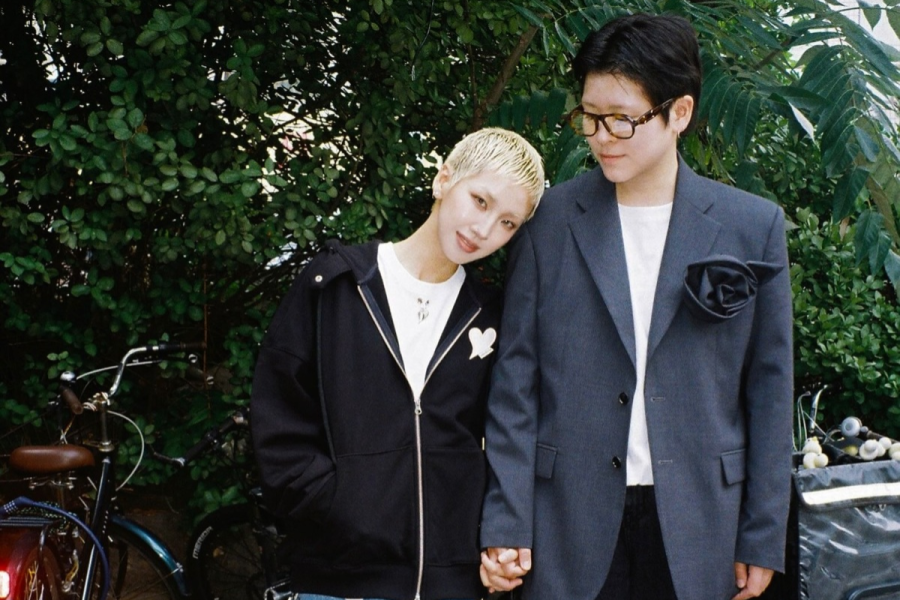
Kim Nara's wedding took place on 1 November in a golden rice paddy, and her marriage to her partner of eight years has no legal standing in South Korea. Photos from the day, including the bride holding a bundle of rice stalks in place of a bouquet, have since circulated widely online.
The couple waited a long time for this day. Kim said the couple postponed the wedding for financial reasons, and she described her partner as 'always my coolest partner and manager.' Kim, who won tvN's fashion competition Kill It in July, still chose to hold the ceremony in public view.
Inside Kim Nara's Rustic Rice Field Wedding
Reports place the ceremony among the paddies in Gangwon Province, with a meal served between the rows and family and friends in attendance. There was no formal venue. The rice-stalk bouquets and the open field gave the day a rustic, countryside feel.
About ten days before the ceremony, Kim shared pre-wedding photos and wrote that the couple had ten days left until the wedding they'd planned after eight years of dating. One image showed the two sharing a single veil. The day before the ceremony, she posted, 'No roadmap, just us.' She also said the couple wanted to build a life together in their own way, without worrying about what others think.


South Korea's Same-Sex Marriage Ban and Legal Reality
South Korea does not recognise same-sex marriage. Kim explained that the couple could register, but they would only receive 'a piece of paper telling us NO.' In her announcement, she added, 'We don't need permission to celebrate our love.'
Online, the photos sparked a broader debate over how LGBTQ+ South Koreans should navigate state erasure. While most initial reactions focused on celebrating the couple and praising the bride's dress, discussion quickly turned to strategy. Some observers questioned whether a domestic, non-legal ceremony was merely symbolic, asking why the couple did not marry abroad and attempt to force recognition at home.
Comment
by u/No-Hall-3485 from discussion
in Fauxmoi
Others pointed out that current law has no legal loopholes, making official registration a dead end regardless of where a ceremony takes place. From that perspective, hosting a public wedding in the rural countryside, a region traditionally viewed as far more conservative than Seoul, was a deliberate statement in itself.
Comment
by u/No-Hall-3485 from discussion
in Fauxmoi
This tension highlights two distinct paths forward. While legal campaigners push through institutional channels, such as the 11 couples who announced in 2024 that they would sue over rejected registrations, a public ceremony like Kim's operates entirely outside state permission. South Korean law remains unchanged, but each path challenges the status quo in a different way.
The Power of Visibility Over Legal Paperwork
Kim has noted that her hope for the wedding was simple: to give at least one other queer couple the courage to imagine their own future. In a country that offers no legal standing to same-sex unions, choosing to celebrate an eight-year relationship in full public view transforms a private milestone into a quiet act of cultural defiance. Surrounded by loved ones, the couple chose visibility over waiting for official approval.
South Korea's legal framework remains rigid, but the reach of their ceremony has outpaced national borders. As images of the day continue to circulate across global platforms, the wedding underscores a growing gap between institutional law and public acceptance.