
British digital creator Leila Layzell is facing criticism over a fake husband prank after sharing footage of a man who appeared far from amused when she introduced him as her spouse during a shopping trip. The clip has prompted viewers to question whether the joke crossed a line, particularly because the man's reaction suggested he was not keen to play along.
Known for approaching strangers with unexpected marriage proposals, Layzell usually turns awkward public encounters into comedy content. However, this particular interaction has attracted criticism from commenters who believe that filming an unwilling participant is one thing, but publishing the footage for an online audience is another.
The Watch Shop Encounter
In the TikTok video, Layzell approaches a man who is looking at watches and pretends to introduce him to her mother during a video call. 'Hi, Mom. This is my husband. We're just looking at watches together, aren't we?' she says, presenting the stranger as her partner.
@leila_layzell turns out men in gilets are VERY serious about not being husbands😤
♬ original sound - ✨Leila Layzell✨
The man does not appear to embrace the joke, and the exchange becomes awkward rather than playful. Layzell acknowledges his reaction afterwards, saying, 'He was not happy. He was not happy to be a husband.' The moment became the focus of criticism because the video was subsequently shared online.
Her Signature Marriage Prank
Layzell has built a following through comedy videos in which she approaches unsuspecting men in public and pretends they are getting married. Her scenarios range from introducing strangers to her fictional family to joking about extravagant purchases, luxury cars and spontaneous honeymoons.
The format depends on how each person responds to an unexpected proposal. Some strangers play along, turning the encounter into an amusing exchange, while others appear confused or uncomfortable. The difference matters because a prank that works with a willing participant can feel very different when the person being filmed does not seem to share the joke.
Her Caption Adds Fuel
Rather than presenting the encounter as a straightforward rejection, Layzell's caption leaned into the humour of the moment. She joked that 'men in gilets are VERY serious about not being husbands', turning the stranger's apparent reluctance into another punchline in her ongoing series.
That comedic framing did not convince every viewer. For critics, the issue was not simply that the man refused to pretend to be her husband, but that his uncomfortable reaction became part of a video shared with the public. The clip therefore raised questions about whether a joke remains harmless when one person is clearly not enjoying the interaction.


Viewers Question The Upload
Some commenters challenged Layzell's decision to post the footage, with one writing, 'And... you still posted it'. Another remarked, 'He's not happy at all', while a separate commenter argued that the man had reason to be upset by what had been said.
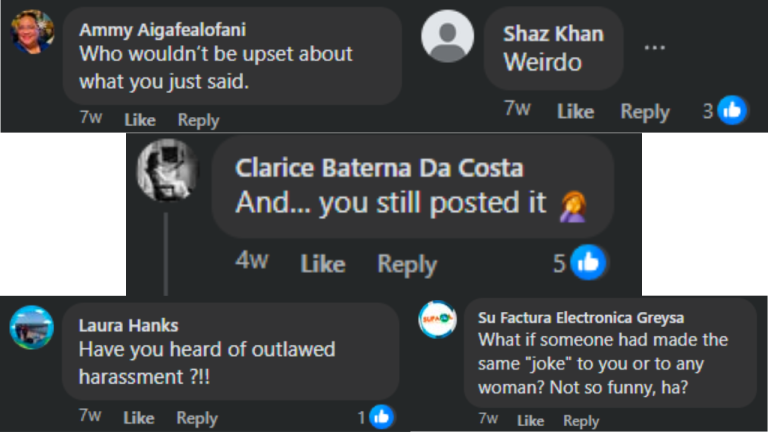
Other reactions were more pointed, with users describing the joke as 'a very bad joke' and questioning whether it amounted to harassment. These are individual opinions expressed in the comments, rather than a legal determination about the incident.
Critics Raise Consent Concerns
The backlash centres on a simple question: should a stranger's uncomfortable reaction become entertainment for an online audience? Critics argue that public prank creators should consider whether the people they approach are comfortable being filmed and whether sharing identifiable footage could cause embarrassment.
The video alone does not establish whether the man explicitly asked Layzell to stop filming or requested that the footage be removed. Nor does the criticism prove that a criminal offence occurred. Nevertheless, the reaction illustrates why consent and consideration matter when creators turn spontaneous encounters into content.
A Joke That Divided Viewers
Layzell's marriage pranks rely on surprise, awkwardness and the unpredictable reactions of strangers. While some viewers may enjoy the absurdity of pretending a random encounter has turned into a marriage, others see a difference between a willing participant and someone who appears unhappy to be involved.
In this instance, the man's reaction became the very thing that attracted attention to the clip. The criticism is less about whether the fake marriage was believable and more about whether the joke should have been shared at his expense. For some viewers, the uncomfortable moment was not the punchline they wanted to see.