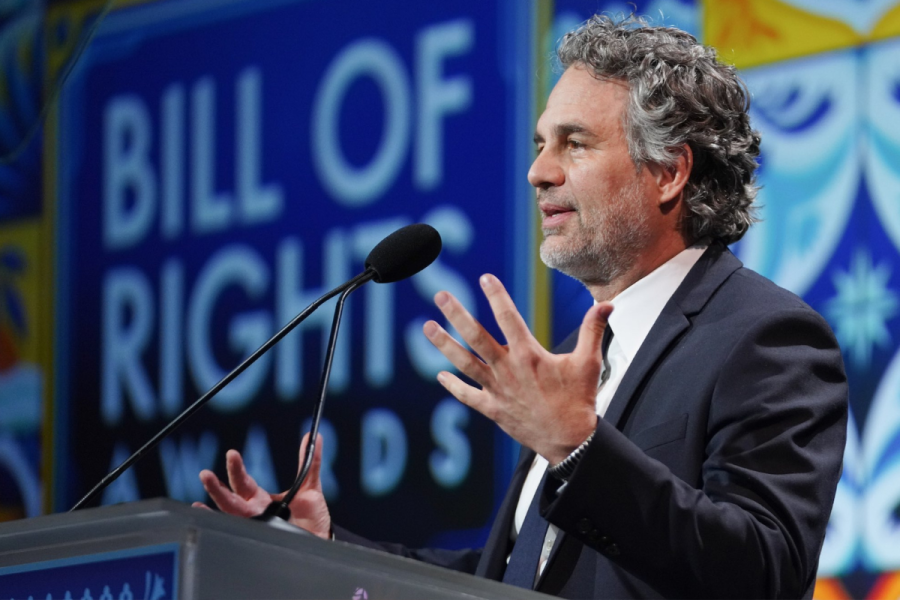
Mark Ruffalo has hit back after Paramount Skydance condemned his criticism of its proposed Warner Bros. Discovery takeover, and the actor has rejected accusations that his comments invoked antisemitic tropes.
The controversy intensified after Variety described Ruffalo's latest Instagram Story as a 'screed' and reported criticism from Jewish advocacy organisations. Ruffalo has insisted that his remarks were directed at political and corporate actions, rather than Jewish people, calling the accusation of antisemitism 'appalling and fundamentally dishonest'.
At the heart of the dispute is Ruffalo's opposition to the proposed $111 billion (£83.8 billion) Paramount Skydance-Warner Bros. Discovery merger, alongside his criticism of Oracle and its co-founder Larry Ellison, whose son David Ellison runs Paramount Skydance. The actor has argued that the deal could concentrate too much media power in one family's hands.
Why Variety Called It A 'Screed'
The word 'screed' is particularly significant because Variety used it to describe Ruffalo's latest social media post, rather than quoting the actor directly.
In its report, the publication called the statement a 'social media screed' while outlining Ruffalo's accusations against Larry and David Ellison and his opposition to the Warner Bros. Discovery deal. In this context, the term suggests a strongly worded, forceful or angry piece of writing.
Ruffalo's post centred on a video featuring Safra Catz, a Jewish Paramount Skydance board member and former Oracle executive, discussing technology supplied by Oracle to Israel after the 7 October 2023 Hamas attack.
Ruffalo criticised Oracle's role and linked it to the proposed merger, arguing that the company's technology could ultimately become part of a huge entertainment conglomerate.
What Ruffalo Actually Said
Ruffalo described Larry Ellison as a 'classic oligarch' and accused him of concentrating wealth and power. He also questioned what the proposed merger could mean for workers, media ownership and editorial independence.
His comments prompted Paramount to issue a rare public response, saying it was 'troubled when antisemitic tropes are invoked in purported service of a business dispute'. The company also objected to Ruffalo's use of terms including 'genocide' and 'apartheid' in relation to the corporate transaction.
Importantly, these are allegations and characterisations made by Paramount and advocacy organisations, rather than an established finding that Ruffalo intended to express hatred towards Jewish people.
Ruffalo has strongly disputed that interpretation.
Ruffalo Rejects Antisemitism Accusation
Responding to Paramount, Ruffalo said criticism of Israeli political leaders, military technology contracts or executives connected to those businesses should not be equated with criticism of Jewish people.
He also said his views should not be interpreted as hostility towards Jewish people and reiterated his concerns about the merger's potential impact on media concentration and workers.
The distinction is now central to the dispute. Paramount and several Jewish advocacy groups argue that elements of Ruffalo's rhetoric invoke antisemitic tropes, while Ruffalo maintains that he is criticising Israeli policy, corporate activity and the proposed merger.
The accusation that I am antisemitic is appalling and fundamentally dishonest. Criticizing the actions of the Israeli prime minister, a military technology contract, or the executives who supply it is not the same as criticizing Jewish people. This critical and necessary dialogue…
— Mark Ruffalo (@MarkRuffalo) August 22, 2026
Jewish Groups Back Paramount
The Simon Wiesenthal Centre and Creative Community for Peace have publicly supported Paramount's position.
Jim Berk, chief executive of the Simon Wiesenthal Centre, said legitimate political debate should not cross into what he described as antisemitic tropes. Ari Ingel of Creative Community for Peace said Ruffalo's rhetoric had moved beyond criticism of Israel into what the organisation called 'extremist and antisemitic messaging'.
The Anti-Defamation League has also criticised Ruffalo's remarks, according to TheWrap, adding another prominent voice to the controversy.
The Bigger Merger Battle
The row comes as Paramount Skydance's proposed acquisition of Warner Bros. Discovery faces regulatory scrutiny in the US.
Ruffalo has been an outspoken critic of the deal, warning about the consequences of bringing major entertainment and news properties under greater corporate control. The proposed transaction would combine major brands and assets, including Warner Bros., HBO, and CNN, with Paramount's entertainment portfolio.
The merger remains subject to legal and regulatory proceedings, including an antitrust challenge involving 12 US states. For Ruffalo, the controversy is about far more than a single Instagram Story. For Paramount and the organisations criticising him, however, his language has become a separate and serious issue.
As the dispute continues, Variety's description of Ruffalo's post as a 'screed' has become part of the story itself—highlighting how sharply the actor's campaign against the proposed merger has escalated.