
A Threads user recently posted a screenshot that set off a wave of debate online. It showed an Instagram ad for Meta AI glasses appearing in a message-style interface — but what caught attention wasn't the product. It was the fact that the ad seemed to use her actual profile picture inside the simulated call screen.
Appeared on her boyfriend's app, the ad promoted hands-free calling with the text that says: 'Make calls without reaching for the phone.'
Meta AI Glasses Ad Sparks User Outrage
In the viral screenshot, originally posted by user @lissil_, the Instagram ad for Meta AI glasses showed a fake incoming call interface. On the right side of the screen was her contact profile photo — the kind you'd normally see when someone calls or messages you.
The issue? The image wasn't a generic avatar. The user claimed it was her real actual photo, shown in a context she didn't expect or approve.
Her caption questioned why Instagram was using her profile picture to target an ad at her boyfriend, adding: 'I'm uncomfortable.' The screenshot was enough to spark a much bigger conversation about privacy, targeting, and whether personalised ads are going too far.
Social Media Split Over Privacy Concerns
The internet did what it always does, and people were deeply divided.
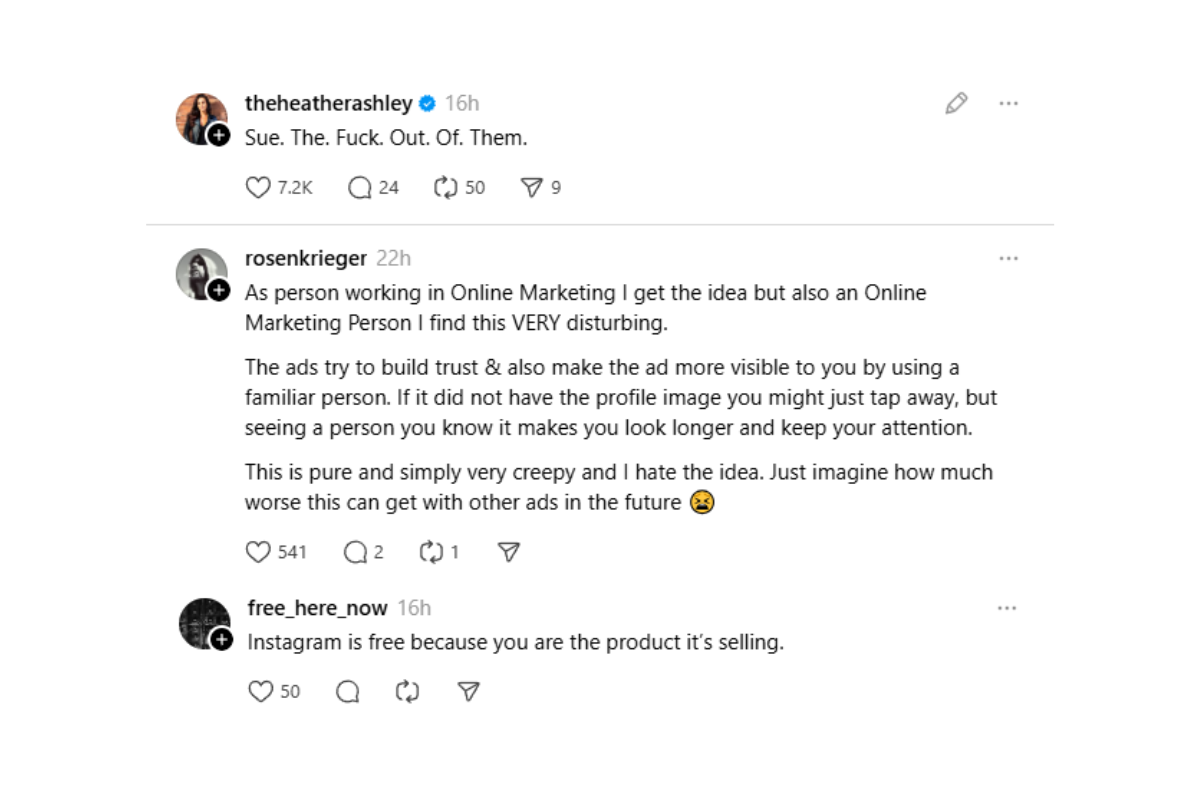
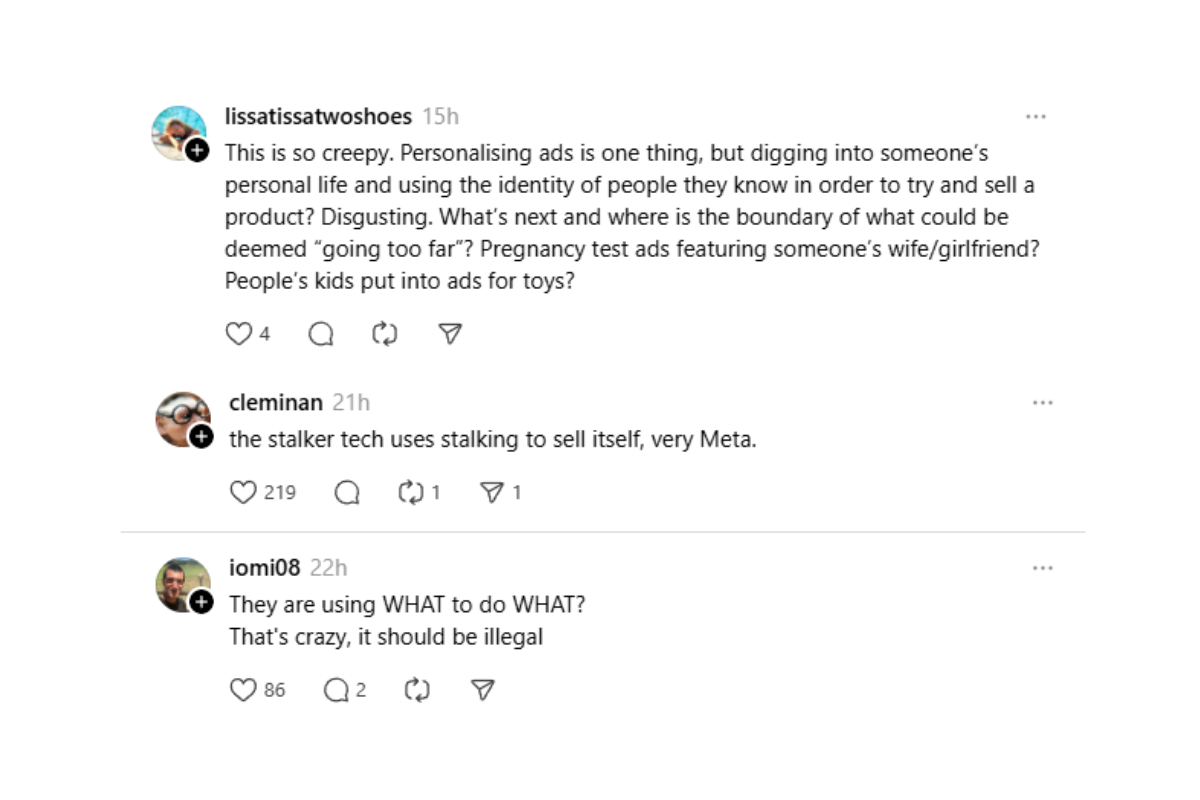
On one side, people were alarmed. Some called the ad 'creepy' and said it felt like a line had been crossed between personalised marketing and something closer to stalking.
One user bluntly wrote: 'I hate the idea. Just imagine how much worse this can get with other ads in the future.' They argued that using familiar faces makes ads harder to ignore because they tap into real emotional recognition.
But not everyone was shocked. Some users argued this is exactly how modern advertising works. Personalisation has been standard for years, and Meta's systems already rely heavily on user data to tailor content.
One commenter even said that people agreed to this when they accepted the terms: 'Instagram is free because you are the product.'
Others suggested the ad wasn't manually designed at all, but automatically generated using data signals. Similar to how emails insert your name into templates, the system may simply be pulling profile images tied to connections.
Still, even those defending the tech admitted it feels weird when you see it in action.
An online user commented: 'Personalising ads is one thing, but digging into someone's personal life and using the identity of people they know in order to try and sell a product? Disgusting.'
What Are Meta AI Glasses?
Meta AI glasses are wearable smart glasses designed to blend artificial intelligence with everyday use. Instead of pulling out your phone, the idea is that you can just speak, and the glasses respond.
They're designed to support features such as hands-free calling, photo and video capture, voice-activated AI assistance, and, in some models, real-time translation. Meta's wider goal is to move toward a world where devices feel less like screens and more like natural extensions of everyday behaviour.
Our new Meta Glasses are launching with 26 styles across a range of colors, lenses, and frames, so there’s a pair of Meta Glasses for just about any look.https://t.co/rhqz5aiTf4 pic.twitter.com/5WKemyr4mx
— Meta Newsroom (@MetaNewsroom) June 23, 2026
Does User Consent Make It Legal?
It's not as simple as saying Meta can freely use someone's photo in any way it wants.
What's more likely happening here is automated advertising inside the platform. Meta's systems can personalise ads using data that already exists on Instagram, such as profile information and connections. In some cases, this may include showing a user's profile image within an ad experience if it's linked to a contact or interaction.
Legally, this is generally allowed under consent-based rules, since users agree to data use when creating an account and through platform settings. Privacy laws like GDPR also allow personalised advertising as long as companies are transparent and have a lawful basis for processing data.
However, this doesn't mean unrestricted use of someone's image. It's limited by platform policies, legal safeguards, and user controls — even if many people don't fully realise the extent of what they've agreed to.