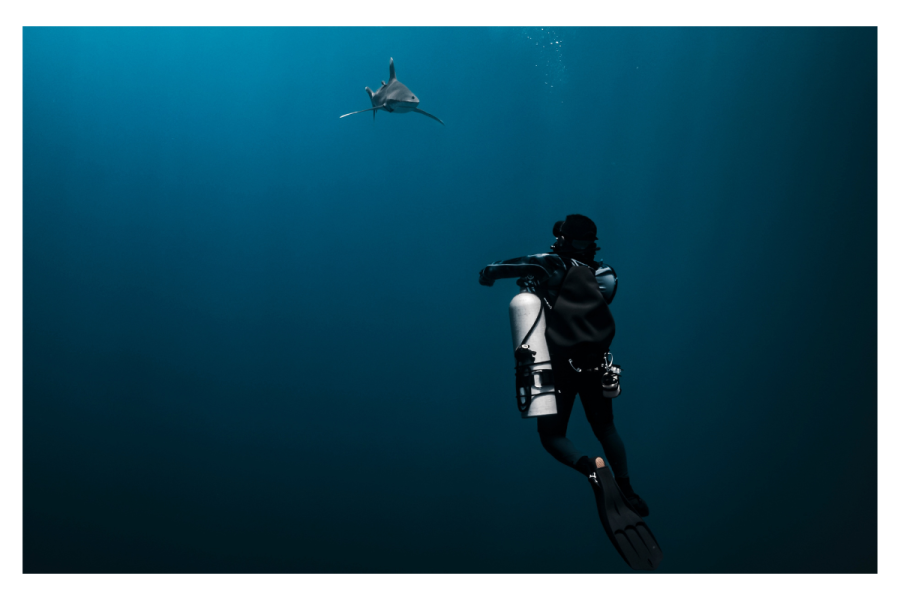
A social media influencer was recently attacked and bitten by a shark while attempting a selfie with it to capture content for her followers. The incident has sparked fresh warnings from marine safety experts. This happened during a guided 'swim with wildlife' excursion.
The incident showed an alarming global trend of dangerous animal interactions driven by the pursuit of viral photo opportunities.
The victim is Tayane Dalazen, a 37-year-old Brazilian lawyer and a content creator. She was posing alongside marine predators in shallow waters when a nurse shark clamped down on her thigh and dragged her briefly under the surface.
The Perfect Selfie, but at What Cost?
Emergency services confirmed her injuries were not life-threatening. However, the harrowing footage was swiftly uploaded to her social channels. It drew widespread public scrutiny. Marine authorities note a surge in similar confrontations as tourists venture deeper into natural habitats, flouting basic safety guidance to secure the perfect photograph.
Popular destinations across the Caribbean, the Pacific islands, and off the Australian coast have seen a dramatic rise in wildlife-centred tourism over recent years.
Driven by social media algorithms that heavily reward daring visual content, visitors increasingly seek out up-close interactions with species such as nurse sharks, reef sharks, and stingrays. Experts warn that the persistent search for the perfect selfie is allowing more people to enter into dangerous waters with wild apex predators.
The Dangers of Humans Interacting With Sharks
Dr Emily Thorne, a marine biologist specialising in predator behaviour, highlighted the hidden dangers of human habituation.
'When wild animals learn to associate humans with food or constant close proximity, their natural caution diminishes rapidly,' Dr Thorne explained.
'What many influencers portray as serene, harmless photo opportunities are actually high-risk scenarios. Sharks do not possess hands to explore their surroundings; they test objects using their teeth. When individuals wave selfie sticks, flash reflective jewellery, or splash around to provoke a reaction, an inquisitive or defensive bite becomes far more likely.'
Unregulated Feeding Tours Should Be Stopped
The rapid proliferation of tour operators offering unregulated wildlife feeding tours has significantly exacerbated the issue. In many tropical hotspots, tour guides routinely throw chum into shallow waters to attract dense groups of marine life.
This creates a chaotic feeding environment where animals lose their natural fear of humans and can easily mistake a swimmer's hand or leg for bait.
Environmentalists and local authorities are facing growing pressure to enforce stricter regulations on marine tourism activities.
Proposed measures include enforcing mandatory minimum distance requirements. They have also proposed banning wildlife feeding during private boat charters and issuing heavy fines for individuals who deliberately disturb marine ecosystems.
The Warning Signs
Several popular coastal resorts have already posted explicit warning signs reminding visitors that wild animals are living creatures, not props for online entertainment.
Beyond human safety, conservationists emphasise that the concern extends directly to animal welfare. Incidents resulting in bites often provoke misplaced panic or calls for retaliatory culls, severely undermining vital protection programmes for shark species already facing severe threats from climate change and global overfishing.
Furthermore, social media companies face criticism for failing to moderate reckless wildlife content. Videos showcasing creators handling wild animals often remain online, gathering millions of views and inspiring inexperienced travellers to replicate these dangerous stunts.
As digital platforms continue to amplify extreme wildlife encounters, marine biologists urge travellers to prioritise safety and environmental ethics over views, warning that until human behaviour shifts from exploitation to stewardship, preventable injuries will keep rising.