Prada has transformed its historic Milan flagship into an eight-level luxury destination designed to win over the world's wealthiest shoppers, while still drawing in aspirational customers who may be making their first purchase from the Italian fashion house.
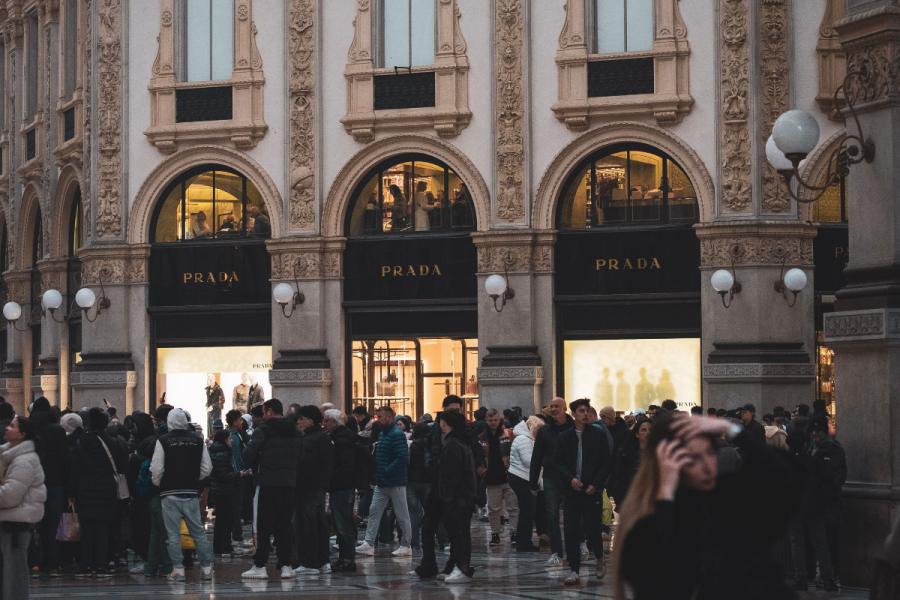
A multi-floor immersion into the vast world of Prada is set to open to the public on 23 September, taking over Milan's legendary 19th-century shopping arcade, the Galleria Vittorio Emanuele II, and the historic home of Fratelli Prada. The newly expanded complex brings together Prada's menswear and womenswear spaces through an underground passage, while adding private shopping areas, art, food and hospitality.
The ambitious complex is expected to generate €100 million, or roughly £86.6 million, in annual revenue, although Prada has not disclosed how much it spent on the renovation.
Inside Prada's Eight-Level Luxury Playground
The newly revamped site occupies one of the most prestigious shopping locations in Milan and has particular significance for Prada. The womenswear boutique sits on the site of the original Fratelli Prada store, opened by brothers Mario and Martino Prada in 1913.
Prada has now expanded that historic footprint into an eight-level complex incorporating fashion, art, food and private hospitality. The existing menswear and womenswear stores have been connected by an underground tunnel, creating a more seamless experience for clients moving between the two sides of the business.
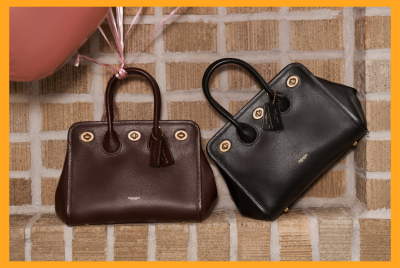
The passage was used to display silver-plated Prada handbags reworked by British artist Damien Hirst, alongside the 'Chandelier' party dress worn by Carey Mulligan in Baz Luhrmann's film adaptation of The Great Gatsby.
The complex also connects to Marchesi, the historic Milanese patisserie owned by Prada, adding another element to the experience.


Private Shopping for the Ultra-Rich
At the heart of the redesign is a clear focus on Prada's wealthiest clients. The complex includes a permanent exhibition room, spaces for highly personalised shopping by appointment and an apartment designed for private dinners and special events.
The idea is to move luxury retail beyond the traditional shop floor and create an environment where clients can spend time with the brand in a more private and curated setting.
Prada chief executive Andrea Guerra said the project was designed to communicate the company's heritage and creative identity.
'It is a way to show our DNA, our roots, our way of thinking and point of view,' Guerra told a news media outlet.
The strategy reflects a wider shift in luxury, with major fashion groups increasingly placing greater emphasis on experiences, private client services and hospitality as they compete for high-spending customers.
The £85 Million Revenue Ambition
The headline-grabbing financial figure attached to Prada's new Milan complex is its projected earning power.
Prada expects the eight-level destination to generate €100 million in annual revenue. Using Reuters' exchange rate, that is approximately £86.6 million a year. The company reported total sales of €5.7 billion last year.
Crucially, the £85 million-plus figure is not the amount Prada has spent on the makeover.
The fashion group has not disclosed the size of its investment in the Milan renovation, meaning the cost of creating the sprawling new destination remains unknown. Instead, the figure represents the revenue Prada hopes the complex will generate each year, making it a major commercial target for the newly expanded flagship.
From Shopping to 'Experiential' Luxury
Guerra said the experience surrounding a purchase has become increasingly important as luxury shoppers seek more than simply walking into a boutique and buying a product.
'The experiential part of the store, the part where we host our clients, has become more important,' he said, pointing to private spaces as well as venues such as Prada Caffè.
The Milan flagship functions as a showcase for Prada's wider vision of luxury retail, combining fashion with art, dining, culture and personal service. The approach also ties into Prada's plans to expand its private 'apartment' concept internationally.
Guerra said the company had already opened apartments in cities around the world and intended to establish them in the world's top 25 capitals.
Keeping the Door Open to New Shoppers
Despite the focus on high-net-worth clients, Prada is not abandoning shoppers with smaller budgets. Guerra said the company would continue to target aspirational customers through entry-level products, with prices for those items intended to remain relatively stable.
That gives the new Milan complex a dual purpose: providing increasingly exclusive experiences for Prada's most valuable clients while maintaining a route into the brand for newer shoppers. It also underlines the balancing act facing luxury houses during a broader sector slowdown, as brands attempt to protect exclusivity while continuing to attract the next generation of customers.
For Prada, the revamped Galleria flagship brings that strategy together under one roof.
From Damien Hirst's reworked handbags and a famous Hollywood costume to private dinners, personalised shopping and a permanent exhibition dedicated to the house, the Milan complex is being positioned as far more than a boutique.
And with an annual revenue target of roughly £86.6 million, Prada is betting that turning its historic flagship into an immersive luxury destination can make its most prestigious address an increasingly valuable part of the business.