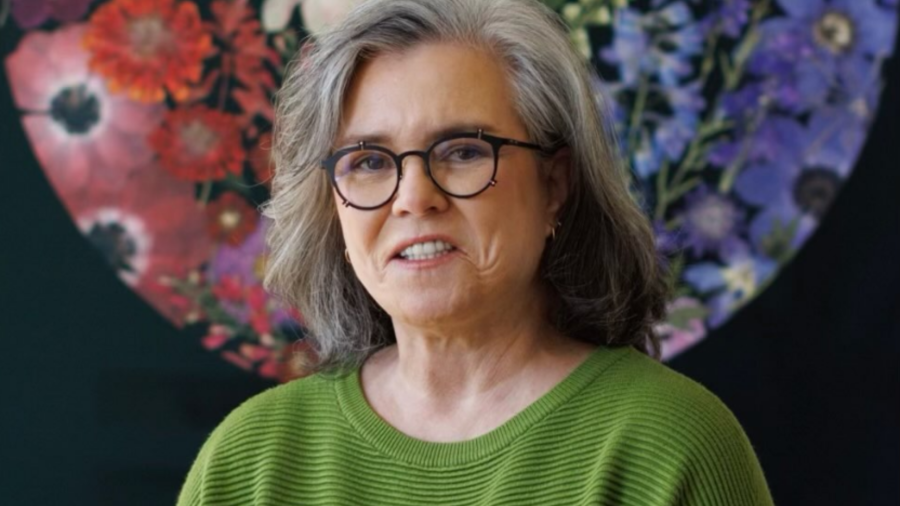
Rosie O'Donnell has never been shy about speaking her mind, but her latest revelation has struck a more vulnerable note than usual. The 64-year-old comedian and actress has shared that she recently underwent a facelift, opening up about the emotional and physical changes that led her to decide after years of firmly opposing cosmetic surgery.
The disclosure comes via a candid essay published on Substack, where O'Donnell reflected on how significant weight loss altered her appearance and, in turn, her relationship with the mirror. What began as a personal health journey eventually became, in her words, a moment of reckoning with identity, ageing and self-acceptance.
From Weight Loss to a Shift in How She Saw Herself
O'Donnell explained that she lost around 50 pounds while taking Mounjaro, a prescription medication used to manage type 2 diabetes. While she has previously spoken positively about feeling healthier and more energetic, she revealed that the weight loss also had an unexpected effect on her facial features.
She described looking in the mirror and feeling as though her face appeared more aged and hollowed, at one point calling it a 'haunted' look. Initially, she tried to accept the changes as a natural part of ageing, telling herself, 'This is natural. This is earned'.
But the emotional adjustment proved more complicated than expected.
'Umm, how earned does it have to look?' she wrote in her essay, capturing the moment she began seriously reconsidering whether she could live with the changes she was seeing.
The internal conflict, she admitted, was not just about appearance but about her long-held beliefs. O'Donnell said she had previously viewed facelifts as a moral line she would never cross, describing herself as once being 'head of all women who would never — ever' undergo cosmetic surgery.
A Personal Turning Point Influenced by Family
O'Donnell also revealed that her decision was shaped in part by a conversation with her 13-year-old child, Clay, who urged her to reconsider surgery.
Clay reportedly told her, 'Young women look up to you', and added, 'I wouldn't be able to respect you if you did it.'
The comment, she explained, forced her to revisit her earlier stance on cosmetic procedures and what message she wanted to pass on. For a time, she abandoned the idea entirely, questioning whether surgery would contradict the values she had previously spoken about in public.
However, she later came to a different conclusion, reflecting that her body and face should not be controlled by any ideology, even one she had once believed in strongly.
'If I'm teaching Clay anything, it can't be that my body belongs to an idea either. Even a good idea. Even feminism', she wrote.
That realisation ultimately reframed the decision for her as one about autonomy rather than contradiction.
The Procedure and Recovery
O'Donnell confirmed she underwent a lower deep plane facelift in January. She said she chose a surgeon she trusted, noting that he had previously worked with people she knew who still looked like themselves after surgery.
She added that the result left her looking like 'a slightly more well-rested, emotionally stable version' of herself, and joked that very few people in her life even noticed she had the procedure.
'I went through a full existential feminist crisis, had my face and neck surgically altered, and the result is... zippo', she wrote.
She added that, in a way, the lack of reaction felt like the best possible outcome, as it meant she had not drastically altered her identity in the eyes of others.
'I didn't disappear, I didn't become someone else—I just stopped arguing with the mirror. And maybe that's enough', she reflected.
How Much Did the Facelift Cost?
O'Donnell has not publicly confirmed the exact price of her procedure, though she previously suggested it cost more than she would ever spend on a car, hinting at a substantial investment in specialist cosmetic surgery.
In the absence of a verified figure, industry experts estimate that a lower deep plane facelift of this kind typically falls in the range of £20,000 to £60,000 ($25,000 to $75,000) in the US, depending on the surgeon's reputation, clinic location and the complexity of the work involved.
The deep plane technique is considered one of the most advanced facelift methods available. It works beneath deeper layers of facial tissue rather than simply tightening skin, which can create more natural and longer-lasting results, but also significantly increases cost.
In high-end practices across cities like New York and Los Angeles, the total price can rise further once anaesthesia, hospital facilities and aftercare are included. Some specialists note that the final bill may climb well above standard ranges in celebrity-focused clinics where bespoke treatment and extended recovery care are part of the package.
In the UK, comparable procedures are generally more affordable, often ranging between £10,000 and £20,000+, though pricing still varies widely depending on expertise and clinic standards.
Ultimately, without confirmation from O'Donnell or her representatives, her exact spending remains undisclosed—but her own remarks place the surgery firmly within the premium tier of cosmetic procedures.
Life Changes Beyond Surgery
O'Donnell's facelift comes after a broader period of personal transformation. She has previously spoken about being prescribed Mounjaro in 2025 to help manage diabetes, which contributed to her weight loss.
In earlier social media posts, she described the experience as both surprising and emotional, admitting she had to adjust to wearing smaller clothing sizes and seeing a new version of herself in the mirror.
She has since shared images of herself shopping for clothes in Dublin and preparing for long-haul travel, marking what appears to be a continued shift in her lifestyle and self-image.
A Reflection on Ageing, Identity and Control
O'Donnell's openness about her facelift adds to a growing public conversation around ageing and cosmetic procedures, particularly among women in the public eye. Her essay does not present the surgery as a simple transformation, but rather as a complicated emotional process shaped by health, motherhood and long-standing personal beliefs.
Rather than framing the decision as purely aesthetic, she positioned it as an attempt to reconcile how she feels internally with how she appears externally.
For O'Donnell, the outcome appears less about looking different and more about reaching a place of acceptance.
And while she once saw cosmetic surgery as a rejection of ageing, her latest reflection suggests a softer perspective—one that prioritises personal choice over rigid ideology, and comfort over perfection.