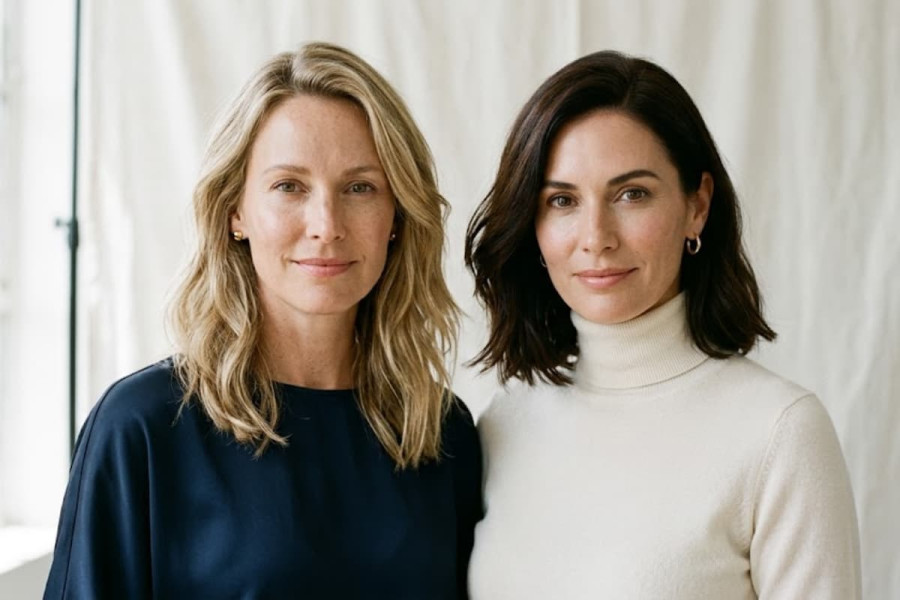
A study on how hair colour influences perceptions of women's appearance found that darker shades receive more favourable ratings for attractiveness and perceived health than blonde hair.
The findings add to research on how visible features, including hair colour, skin tone, hair length and style, can influence the way people assess physical appearance. While blonde hair has often been associated with conventional beauty ideals, researchers found that perceptions can vary depending on hair colour and other characteristics.
Study Examined Hair Colour and Attractiveness
The research, published in the Scandinavian Journal of Psychology, investigated how skin tone, hair colour and hair length influence perceptions of women's physical attractiveness, health and fertility.
Researchers Viren Swami, Adrian Furnham and Kiran Joshi asked 242 participants, including 130 men and 112 women, to rate a series of 12 line drawings. The images varied in skin tone, hair colour and hair length.
The study found significant effects associated with all three factors. Hair colour generally accounted for the greatest variation in participants' ratings.
Among the hair-colour comparisons, brunette figures were rated more positively than blonde figures. The researchers also found that lighter-toned figures generally received more favourable ratings overall.
The findings therefore suggest that perceptions of attractiveness are not determined by hair colour alone. Skin tone and hair length also played a role in how the figures were assessed.
Brunette Hair Received More Positive Ratings
One of the study's notable findings was the difference between brunette and blonde hair. Participants generally gave more positive ratings to the brunette figures than the blonde figures. The research also reported that hair colour had a stronger influence on the ratings than hair length, with the latter having only a relatively weak effect on attractiveness.
The researchers did not conclude that brunette hair is inherently more attractive. Instead, their findings showed that hair colour can affect how a person's appearance is perceived within a controlled research setting.
This distinction is important because attractiveness is influenced by several visual characteristics. The study examined simplified line drawings rather than photographs of real people, which means its findings cannot automatically be applied to every individual or population.
Hair Colour Can Affect Perceptions of Health
The relationship between hair colour and perceived health has also been examined in other research.
A later study published in the International Journal of Cosmetic Science found that darker shades, including medium copper and brown hair, were perceived as healthier than blonde shades in a study involving rendered images of hair. Brown and copper shades also received higher attractiveness ratings than blonde shades in that research.
However, the research also showed that other characteristics of hair could have a substantial influence on how it was viewed. Hair type, including whether it appeared straight or wavy, affected assessments of age, health and attractiveness.
These findings indicate that hair colour is only one part of the visual information people use when forming impressions of appearance.


Newer Research Highlights Hair Quality
More recent research has continued to examine how hair characteristics influence perceptions of women's appearance.
A 2026 study published in the International Journal of Cosmetic Science investigated hair shine, alignment and volume, using blonde and dark brown hair in controlled images. The researchers found that high-shine hair was generally rated as more youthful, healthy and attractive than low-shine hair.
Straight-aligned hair also received particularly favourable ratings for youthfulness, health and attractiveness. Importantly, these effects were observed across both blonde and dark brown hair, suggesting that characteristics such as shine and alignment may influence perceptions more than hair colour in some circumstances.
The newer study involved women from Germany, Spain and the United States in its first experiment, while a second experiment involved 2,000 US women assessing controlled images featuring different hair characteristics.
What the Research Actually Shows
The research does not establish a universal answer to whether blondes or brunettes are more attractive. Instead, the studies show that hair colour can influence perceptions of attractiveness and health, with some controlled experiments finding more favourable ratings for brown or darker shades than blonde hair. Other research has produced different results depending on the specific hair colour, skin tone, hairstyle and characteristics being assessed.
A 2018 study, for example, found that the relationship between hair colour and skin colour affected perceptions of age, health and attractiveness. Participants with lighter hair were judged younger in between-person comparisons, particularly among women with lighter skin, while smaller perceived differences between hair and skin colour were associated with more positive responses.
Taken together, the findings suggest that perceptions of women's appearance involve several interacting features rather than a single factor. The question of which hair colour is more attractive therefore remains dependent on the characteristics being assessed and the context in which they are viewed.