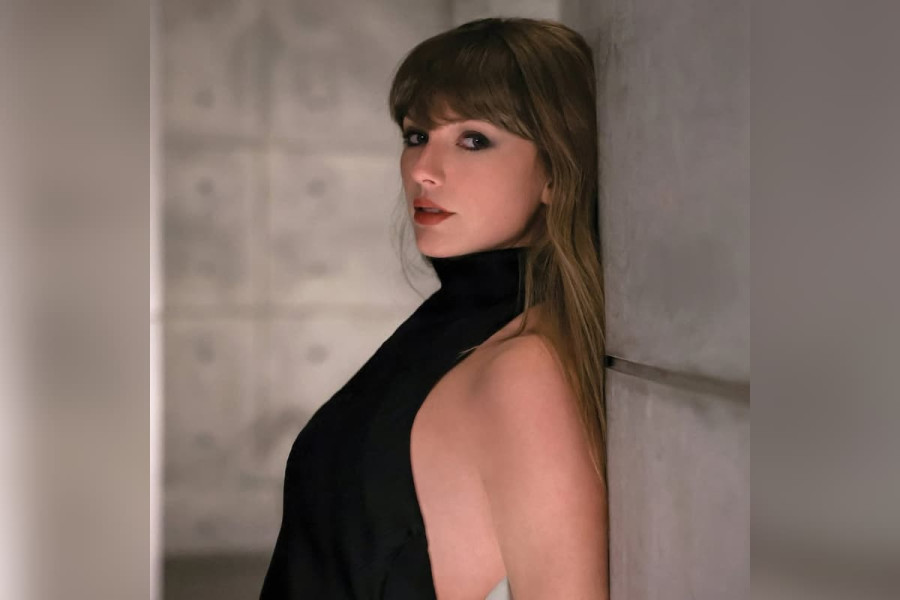
No pop release is complete without a little online detective work — and Taylor Swift's piano is now the centre of it all. Swift's latest 'Patient Zero' acoustic and piano variants landed shortly after Olivia Rodrigo teamed up with Chappell Roan, sending fans straight into another round of chart conspiracies and suspicious-timing discourse.
Now, the internet is asking whether this is simply standard music-industry business or another episode of the never-ending saga of Taylor Swift and the pop girls trying to have their moment. And naturally, fans are bringing receipts — including a songwriting-credit controversy that has kept speculation about Swift and Rodrigo alive since 2021.
Olivia Rodrigo and Chappell Roan Released 'expectations'
Rodrigo's collaboration with Roan has brought two of contemporary pop's most talked-about voices together on 'expectations', a track on Rodrigo's 2026 album you seem pretty sad for a girl so in love. Already being celebrated by some fans as the 'newest bisexual anthem' in town, the collaboration should have been a moment for both fanbases to lose their minds over the music.
Instead, the conversation has taken a familiar detour into chart-watch territory. Swift's acoustic and piano versions of 'Patient Zero' became available on streaming platforms on 16 October, shortly after Rodrigo and Roan's collaboration drew attention.
We feel like staying in and listening to the “Patient Zero” acoustic and piano versions this evening… good thing they’re out now on all streaming platforms! 🙆♀️ https://t.co/7h7WNhvnUq https://t.co/Si3rhEinDh
— Taylor Nation (@taylornation13) October 16, 2026
Cue the online investigations, with fans questioning whether the timing was coincidental or another case of a major pop release sharing the spotlight with Swift. For critics, the overlap feels familiar enough to revive accusations that Swift uses alternate versions to maintain chart momentum when other artists have new music out.
However, a suspicious-looking release calendar is not proof of a deliberate strategy against Rodrigo. Sometimes, two major pop moments collide; the internet, meanwhile, is rarely satisfied with leaving it at that.
Taylor Swift's 'Patient Zero' Variants Face Scrutiny
In today's pop landscape, one version of a song is apparently never enough. Acoustic recordings, piano arrangements, remixes and limited-edition releases have become familiar tools for keeping a track in circulation and encouraging fans to return for another listen — or purchase. In this case, Swift's official store confirms the release of both versions, while Apple Music lists the piano version dated 9 October, ahead of its reported streaming release on 16 October.
Supporters see alternate versions as a perfectly ordinary promotional move, giving listeners fresh takes on a song they already love. Critics, however, question whether the endless stream of variants turns chart competition into a game of who can keep releasing new editions rather than who can deliver the next big hit.
Great, we’re about to get four new versions of Patient Zero
— cameron 🔥 (@camruined) October 13, 2026
On Reddit's r/Fauxmoi, one post captured the frustration with a pointed declaration: 'Only three things in life are certain: death, taxes, and Taylor Swift dropping another variant of the same song to block other pop girlies from having their moment on the charts'.
The sentiment struck a nerve with users who believe Swift's release tactics deserve closer scrutiny. Others see the accusations as an overinterpretation of standard industry practices.
Comment
by u/No-Hall-3485 from discussion
in Fauxmoi
Apparently Taylor Swift is required to call her label and cancel all promotional plans she had scheduled at the drop of a hat because an artist like Olivia Rodrigo decides to surprise drop any music. Taylor must stop her career for Olivia.Do you all genuinely hear yourselves?! https://t.co/yrPzUwYean
— bea 🦋 (@ShouldveSaidNo3) October 16, 2026
Either way, the distinction is important: fans can question the timing all they like, but that does not establish that Swift deliberately released the variants to sabotage Rodrigo's chart performance. The internet may have its theories, but a theory is not a smoking gun — even when it comes with a piano soundtrack.


From Songwriting Credits to Chart-Timing Allegations: Why Fans Keep Connecting Swift and Rodrigo
For some fans, this is not a one-off case of questionable timing but another episode in a pop-culture storyline that refuses to leave the group chat. On X, users have pointed to previous controversies involving Swift and Rodrigo, arguing that the latest overlap feels like déjà vu with a streaming link.
To understand why the allegations keep resurfacing, it is worth revisiting 2021, when Rodrigo's debut album Sour became the starting point for a songwriting-credit controversy that followed both artists around the internet. Swift and her frequent collaborator Jack Antonoff received writing credits on '1 Step Forward, 3 Steps Back', which interpolates Swift's 2017 song 'New Year's Day'. The credit reflected the use of elements from the earlier composition.
The conversation grew louder when Swift, Antonoff and St Vincent were added as co-writers of Rodrigo's 'Deja Vu' in July 2021. Rodrigo had previously discussed drawing inspiration from Swift's 'Cruel Summer', particularly when creating the bridge of her own song. The subsequent credit change sparked questions about creative influence, songwriting ownership and royalties.
Taylor Swift, Jack Antonoff & St. Vincent are now credited as co-writers on Olivia Rodrigo’s “deja vu”.Olivia had previously revealed to Rolling Stone that the song was influenced by Swift’s “Cruel Summer”. https://t.co/zMRhBOh3i6
— Pop Base (@PopBase) July 9, 2021
Since then, fans have pointed out that Rodrigo, a huge swiftie since childhood, doesn't talk about Swift anymore nor interact like they used to before. For fans already invested in a potential rivalry, this storyline became prime material for speculation.
Fast-forward to the present, and the latest 'Patient Zero' variants have given the internet another reason to revisit that history. Pop fandoms have long memories. Once a rivalry narrative takes hold, every new development can become another episode, complete with fan theories, screenshots and a fresh batch of quote posts. Whether the evidence supports the bigger storyline is another question entirely.
Is Taylor Swift's Release Strategy Really About Olivia Rodrigo?
The latest controversy shows just how quickly a release calendar can become the main character. Rodrigo and Roan have a collaboration for fans to celebrate, while Swift's alternate recordings give listeners more ways to engage with 'Patient Zero'. Both moves fit within an industry where release schedules, streaming figures and chart positions are carefully watched.
The sticking point is the alleged motive behind the timing. Some fans see the overlap as another example of Swift competing for attention when Rodrigo has a major moment; others argue that alternate versions are simply part of modern music promotion.
For now, Swift's piano has done what pianos rarely get accused of doing: become the centre of a pop-culture discourse. The variants are out, the timelines are being investigated, and the 2021 songwriting-credit controversy has returned for another cameo.
Whether this is calculated chart competition or a coincidence the internet has turned into a full-blown cinematic universe remains unproven. But one thing is certain: in pop music, the songs are only half the story. The release dates, the receipts and the fandoms are ready to provide the sequel.