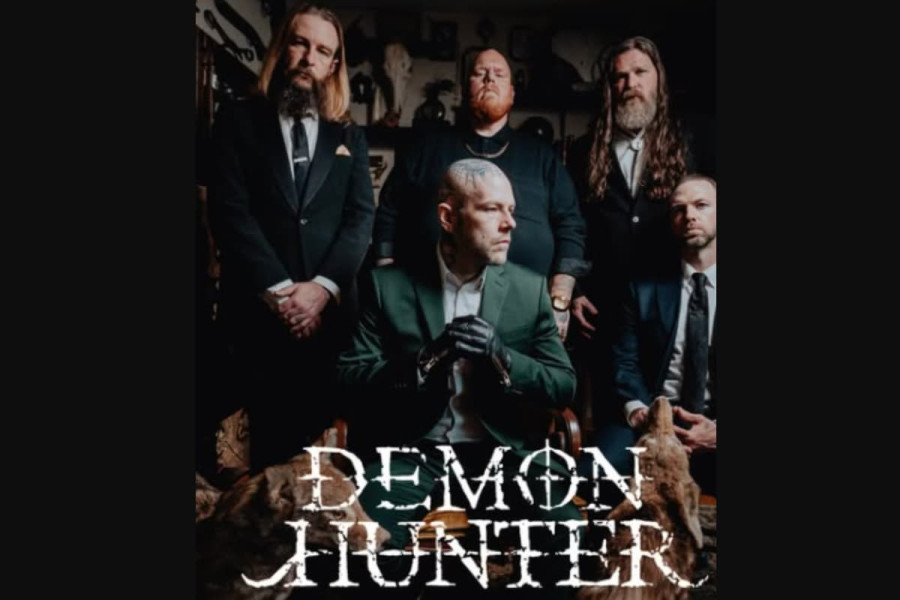
A trademark dispute is brewing between Christian metal band Demon Hunter and Netflix over the name of the streaming giant's hit animated film KPop Demon Hunters.
Demon Hunter has reportedly taken legal action against Netflix, arguing that the use of the 'Demon Hunter' name in connection with the hugely popular franchise could create confusion for fans and consumers. The dispute comes as KPop Demon Hunters continues to expand beyond the original film and into live entertainment and merchandise.
Demon Hunter Takes Issue With Netflix Branding
Demon Hunter is an American Christian metal band that has used its name for years, building a following within the heavy music scene. The group's legal challenge centres on the similarity between its established name and Netflix's KPop Demon Hunters branding.
The lawsuit reportedly raises concerns about potential confusion between the band and Netflix's entertainment properties. According to the filing discussed online, the band has included an example involving a customer who mistakenly purchased expensive tickets to a Demon Hunter concert, believing they were for a KPop Demon Hunters event.
The reported example involved someone who spent around $500 (£370) on top-tier tickets to a Demon Hunter concert in Albany, New York, reportedly believing the tickets were for a KPop Demon Hunters show for their young daughters.
While the circumstances may sound unusual, the example matters to the band's argument because trademark disputes can involve whether consumers are likely to be confused about the source or affiliation of entertainment services.
The Rise of KPop Demon Hunters
Netflix's KPop Demon Hunters has become one of the biggest entertainment success stories of the past year.
Released on Netflix in June 2025, the animated musical follows the fictional K-pop girl group HUNTR/X, whose members Rumi, Mira and Zoey secretly battle demons while maintaining their careers as pop stars.
The film quickly developed a major global fanbase, with its music becoming a significant part of its success. Songs connected to the fictional group moved beyond the film itself and became popular with audiences around the world.
The success has also created demand for additional KPop Demon Hunters content, merchandise and live experiences. Netflix has continued releasing material connected to the franchise, including bonus content that became available on the platform in March 2026.
That growing commercial footprint is significant in the context of Demon Hunter's complaint, as the band is concerned about how the franchise's branding could affect its own identity in the music industry.
Why the Trademark Issue Matters
Trademark law is designed, among other things, to protect brands from confusion over who provides or endorses particular goods or services. However, having similar words in two names does not automatically mean that one party has infringed another's trademark.
The circumstances surrounding the businesses, industries, branding, services and the likelihood of consumer confusion can all be relevant.
That distinction has already become a talking point among people discussing the lawsuit online. Some commenters have noted that 'Demon Hunter' is a relatively broad phrase, while others have argued that the band's long history of using the name strengthens its position.
The case therefore raises an interesting question about how established entertainment brands can protect their identities when another major franchise uses similar terminology.
Fans React to the Unusual Dispute
The legal action has attracted plenty of attention online, with reactions ranging from support for the band to scepticism about the strength of its claim.
Some fans have shared their own experiences of people referring to KPop Demon Hunters simply as 'Demon Hunters', suggesting that confusion between the two names is at least possible in everyday conversation.
Others have questioned whether consumers should reasonably be expected to confuse a Christian metal band with a Netflix animated film centred on fictional K-pop demon hunters.
The reported ticket-buying incident, however, gives Demon Hunter a concrete example to point to as it makes its case.
Netflix and Demon Hunter Dispute Could Draw Further Attention
For Netflix, KPop Demon Hunters has developed into much more than a single animated film. Its characters, songs and fictional performers have become recognisable parts of popular culture, while the franchise continues to generate interest.
For Demon Hunter, meanwhile, its name represents an established identity built over a much longer period within the metal music world.
The legal dispute will ultimately turn on the specific trademark claims and the evidence presented by both sides. At this stage, it would be premature to predict how the case will be resolved.
What is clear is that the dispute highlights an increasingly common challenge in the entertainment industry: as successful intellectual properties expand into music, live events, merchandise and other areas, questions over branding and consumer confusion can become increasingly complicated.
For fans familiar with both worlds, the case has created an unusual collision between Christian metal and K-pop-inspired fantasy. Whether the two 'Demon Hunters' can coexist without further legal conflict remains to be seen.