
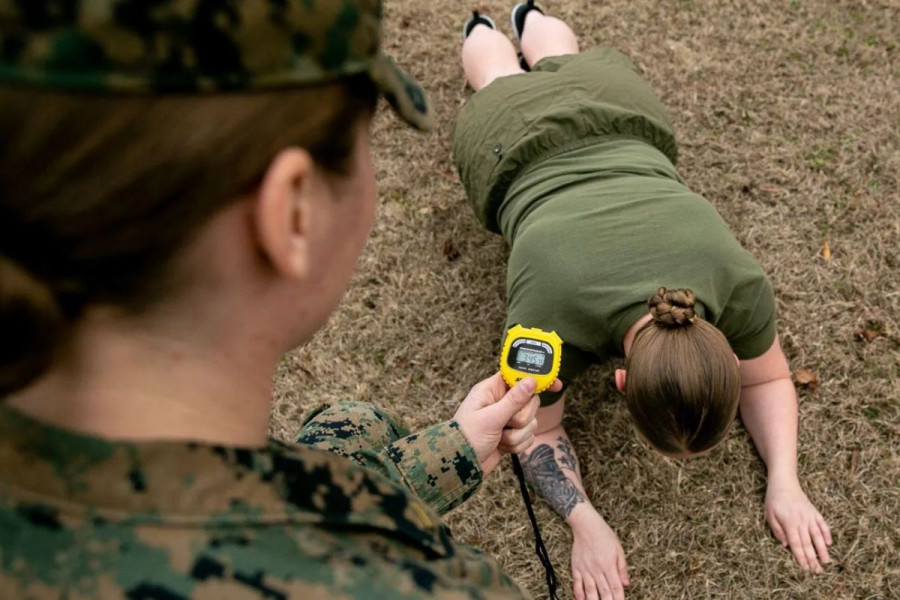
More than 90% of female Marines in combat roles have passed the new sex-neutral fitness test introduced under Defence Secretary Pete Hegseth, according to Marine Corps data obtained by The War Horse. The figures reflect a specific group of female service members and do not represent results across the broader U.S. military.
The Marine Corps began using sex-neutral scoring for its annual Physical Fitness Test (PFT) for Marines in combat arms Primary Military Occupational Specialities on 1 January 2026.
Combat arms Marines must score at least 210 points out of 300 using the male, age-normed standard. Marines outside combat arms may continue to use sex- and age-normed scoring.
The PFT includes a three-mile run, a choice between push-ups and pull-ups, and an abdominal plank. Hegseth said the standards must be 'uniform, gender-neutral, and high'. He also said the policy was not intended to prevent women from serving, while acknowledging that it could result in fewer women qualifying for some combat jobs.
More Than Nine In 10 Women Marines Pass
According to Marine Corps data reported by The War Horse, 91.38% of women and 96.53% of men in combat arms who have taken the test since January met or exceeded the 210-point threshold.
The figures represent 400 women out of 422 women Marines currently serving in combat specialities who had taken the test under the new scoring system. The data covers women who took the test, rather than every female Marine serving in combat specialities.
Kris Fuhr, co-founder of the Women in the Service Coalition, said the results showed that women Marines had prepared for the higher benchmark. The figures provide a view of performance under the new system, but do not establish how women across other military branches would perform.


Experts Caution Against Broader Conclusions
Kyleanne Hunter, a Marine veteran who leads Iraq and Afghanistan Veterans of America, cautioned against drawing broad conclusions from the Marine Corps figures.
Women make up a small proportion of the Marine Corps, and their share of combat arms personnel is smaller still. The War Horse had requested similar data from the Army but had not received it at publication.
Moreover, the new scoring system changes performance scores. The War Horse reported that a woman Marine who previously could have earned a perfect 300 might receive roughly 240 points for the same performance under the male scale. That score would still exceed the 210-point minimum, but the change could affect performance evaluations and promotion considerations.
The Marine Corps states that Marines who do not meet the 210-point requirement by the end of the reporting period will be assigned to remedial physical training. They may also face Primary Military Occupational Speciality reclassification and/or promotion restriction.
Raw Story has characterised Hegseth's policy as potentially reducing the number of women in military roles. However, Hegseth said reducing women's participation was not the policy's intent, although he acknowledged it could be a result.
For now, data show that most women Marines in combat specialities who have taken the PFT have met or exceeded the sex-neutral threshold. The longer-term effects on recruitment, retention and representation in combat roles remain unclear for the wider U.S. military.