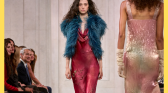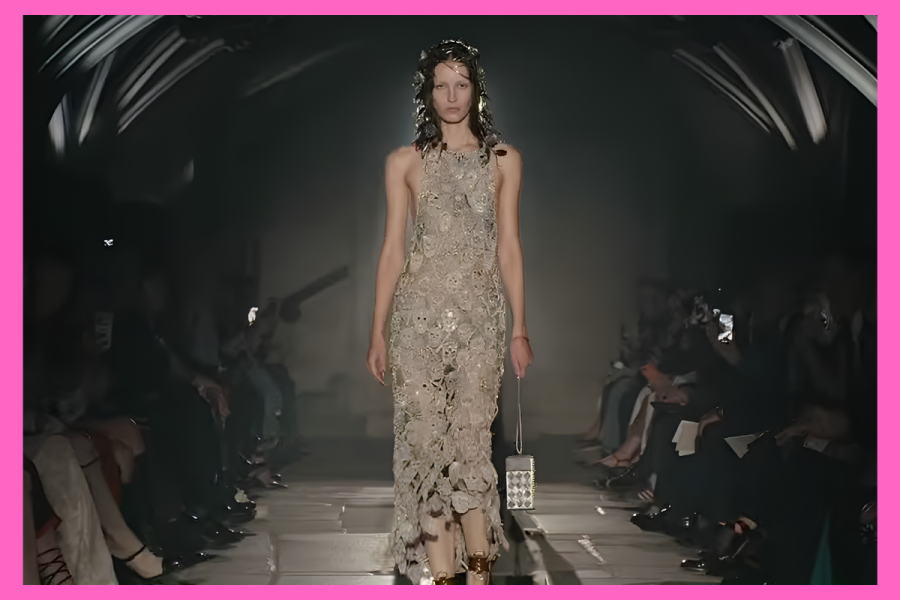
Alexander McQueen returned to the official London Fashion Week schedule on Sunday, 20 September, by sending models through the Undercroft of Lincoln's Inn Chapel, a centuries-old burial ground where historic gravestones remain set into the stone floor. Creative director Seán McGirr's Spring/Summer 2027 collection made that setting even more striking with a dress constructed from interlinked, hand-embroidered metal skulls.
The location was not simply dressed to look gothic. The Undercroft was consecrated as a burial ground in 1623, with burials continuing there until 1852, meaning the runway unfolded above a centuries-old burial ground. The show also marked McQueen's first official appearance on the London Fashion Week calendar since 2001.
A Runway Above a Burial Ground
Lincoln's Inn Chapel was consecrated in 1623, and the space beneath it was formally designated for burials that same year. Benchers and other figures connected with the historic legal institution were buried there across the following centuries, with surviving gravestones still visible beneath the vaulted ceiling. Among them is the grave of 17th-century lawyer and political writer William Prynne, who died in 1669 and was buried beneath the chapel.
That history sat underneath a guest list that included Florence Welch, Emma Corrin, Lola Tung and Alexa Chung. The setting aligned with McGirr's wider inspiration for the collection, which collided the formal traditions of London with the city's more rebellious nightlife. 'London always stimulates me,' McGirr said after the show, describing an attitude and playfulness that come from mixing things in a deliberately 'wrong' way.
Watch below: Alexander McQueen's Spring/Summer 2027 London show.


Metal Skulls Meet Savile Row
The metal skull dress turned one of McQueen's most recognisable motifs into the structure of the garment itself. Skulls have appeared across the house's scarves, dresses, jewellery and accessories for decades, but this version was formed from individual metal skulls linked across the body. Elsewhere, McGirr mixed sculpted evening gowns, sheer fabrics, metallic leaves and perforated leather with pieces influenced by rave culture.
Several suits were developed with Huntsman, the Savile Row tailor with historic ties to the McQueen house and its late founder, Lee Alexander McQueen. Suit shoulders stretched into wing-like forms, while corsetry, harnesses and glossy evening fabrics pushed other looks towards a darker silhouette. Models also wore hair sculpted into sharp horn-like peaks, reinforcing the collection's recurring collision between angelic and demonic imagery.
I'm in love.🪡
— La Mode Unknown (@LaModeUnknown) September 21, 2026
PS: these absolutely ETHEREAL looks from ✨️McQueen✨️ by Seán McGirr Spring/Summer 2027 pic.twitter.com/HPSsGPDGnV
McGirr also drew from Piero della Francesca's The Baptism of Christ, which he encountered after moving to London, while placing the painting's serenity against the energy of the capital's rave scene. Camden club culture appeared in footwear references, while traditional tailoring was repeatedly disrupted by unexpected shapes and materials. 'You can talk about the dark stuff,' McGirr said of his approach, while arguing that darkness does not have to take over life itself.
McQueen Comes Back to London
The choice of venue carried additional significance for a fashion house founded in London by Lee Alexander McQueen in 1992. Although McQueen staged later London presentations outside the official schedule, Sunday's show represented its first official London Fashion Week appearance in 25 years. McGirr, who joined the house as creative director in December 2023, had already described London as being 'at the heart of McQueen' before the homecoming.
The show ultimately placed McQueen's long relationship with mortality against the literal history beneath the runway. Centuries-old graves, visible memorial stones and a dress made of metal skulls gave the collection an unusually direct connection to death, while Savile Row tailoring and rave references pulled it firmly back towards contemporary London. For a house whose skull became one of fashion's most recognisable motifs, the return home placed that symbol directly above a centuries-old burial ground.