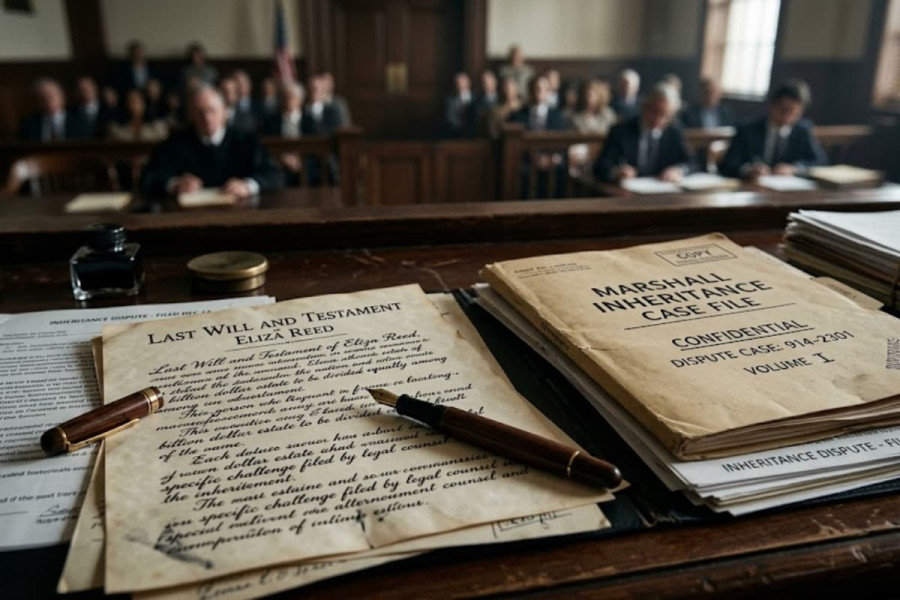
Anna Nicole Smith's marriage to oil tycoon J. Howard Marshall II became the centre of a lengthy legal battle over his estimated $1.6 billion (£1.2 billion) fortune after he died in 1995, just 14 months after their wedding. Smith, who was 26 when she married the 89-year-old businessman, was not named as a beneficiary in his will, which designated his son, E. Pierce Marshall, as the primary heir to his estate.
The former model and Playboy Playmate spent years challenging the estate arrangements, arguing that her late husband had intended to provide for her financially. The dispute moved through state and federal courts in the United States and reached the Supreme Court twice. However, Smith died in February 2007, aged 39, before the legal proceedings were concluded, and the final Supreme Court ruling in 2011 went against her estate.
Anna Nicole Smith Married J. Howard Marshall in 1994
Smith, whose birth name was Vickie Lynn Hogan, became widely known as a model and television personality before her marriage to Marshall. She was named Playboy's Playmate of the Year in 1993 and also worked as a model for Guess.
She met Marshall, a wealthy businessman with interests in the oil industry, while working at a Houston strip club. Their relationship attracted public attention because of their significant age difference and Marshall's considerable wealth.
The couple married on 27 June 1994, when Smith was 26 and Marshall was 89. Their marriage lasted approximately 14 months, ending with Marshall's death on 4 August 1995 at the age of 90.
Although Marshall had given Smith gifts and other financial support during their relationship, he did not formally include her in his will or the trust arrangements governing his estate. His son, E. Pierce Marshall, was the principal beneficiary.
Why Smith Fought for His Fortune
Following Marshall's death, Smith claimed that her husband had intended to leave her a substantial portion of his wealth. She alleged that he had promised to provide for her and argued that his son had interfered with those intentions.
The dispute involved competing accounts of Marshall's wishes and the legal documents governing his assets. Smith sought a share of the estate, while Pierce maintained his position as the designated beneficiary under his father's estate plan.
The case became complicated because proceedings took place in both Texas probate court and a federal bankruptcy court in California. The courts reached different conclusions at various stages, resulting in years of appeals and further litigation.
In 2000, a California court awarded Smith approximately $449 million (approximately £338 million) in damages in a ruling connected to her claims against Pierce. The amount was subsequently adjusted, and later proceedings continued to challenge whether the award could stand.
However, the Texas probate proceedings did not establish Smith's entitlement to her late husband's fortune. The conflicting decisions meant that the dispute remained unresolved even after several significant court rulings.


The US Supreme Court Considered the Case Twice
The inheritance dispute reached the United States Supreme Court in 2006. In Marshall v. Marshall, the justices ruled in Smith's favour on a legal question concerning the authority of federal courts to hear her claims.
The decision did not award her any money or establish that she was entitled to Marshall's estate. Instead, it allowed her legal challenge to proceed in federal court, keeping alive her efforts to obtain compensation.
The case returned to the Supreme Court in 2011 under the name Stern v. Marshall, after Smith and Pierce had both died. This time, the court ruled against Smith's estate, concluding that the bankruptcy court had lacked the authority to issue the relevant final judgment in her favour.
The ruling overturned the basis of the earlier award and dealt a decisive blow to the attempt to recover money from Pierce's estate. The Supreme Court's decisions concerned jurisdiction and how the dispute was handled, rather than simply whether Smith had been promised an inheritance. The litigation became one of the most closely watched inheritance disputes involving a celebrity, highlighting the importance of formal estate documents and the limits of claims based on alleged promises.
Smith Died Before the Inheritance Dispute Ended
The legal battle was still ongoing when Smith died on 8 February 2007, aged 39. She was found dead in a hotel in Hollywood, Florida, and her death was ruled an accidental drug overdose. Her death followed another devastating loss. On 10 September 2006, her 20-year-old son, Daniel Wayne Smith, died while visiting her in a hospital in the Bahamas, just three days after she had given birth to her daughter, Dannielynn.
The events unfolded during a period when Smith was also involved in legal proceedings concerning her late husband's fortune. However, the inheritance case and the circumstances surrounding her death were separate matters.
After Smith's death, her estate continued the legal fight. The 2011 Supreme Court decision ultimately went against her estate, leaving it without the substantial recovery previously awarded by the California bankruptcy court.
What Happened to Her Inheritance Claim?
Smith's case did not end with her death. Her estate continued to pursue the claim against the estate of Pierce Marshall, who died in 2006, before the final Supreme Court decision.
The dispute centred on whether Smith could recover money based on her allegations about her husband's intentions and whether the courts handling the case had the legal authority to grant the award. The final ruling in 2011 rejected the legal basis for the substantial damages award.
Although Smith received gifts and financial support during her marriage, she was not named in Marshall's will. Her efforts to secure a share of his estimated $1.6 billion estate therefore did not result in the inheritance she had sought.
The case remains notable for the length of the litigation, the involvement of two generations of the Marshall family and the Supreme Court's examination of the boundaries between federal bankruptcy proceedings and state probate matters.