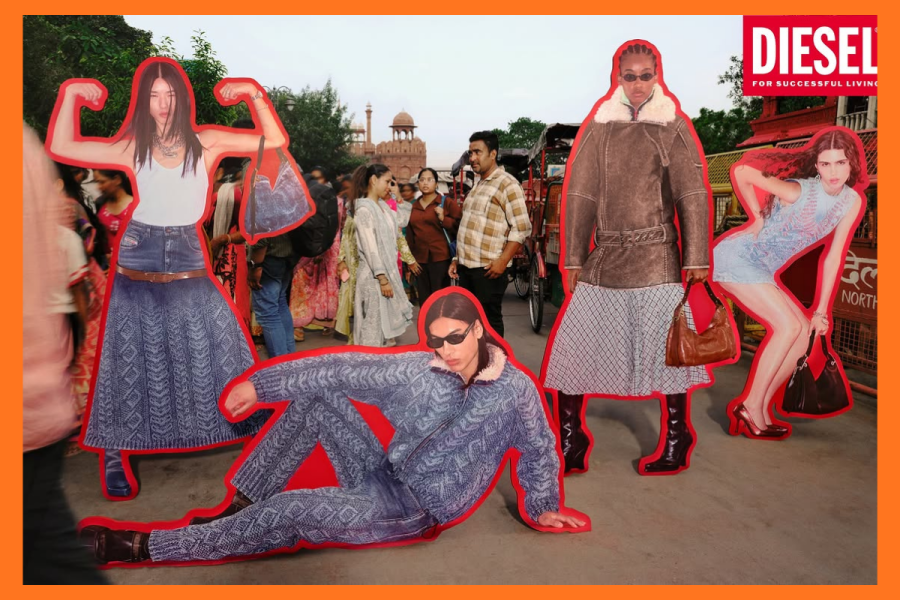
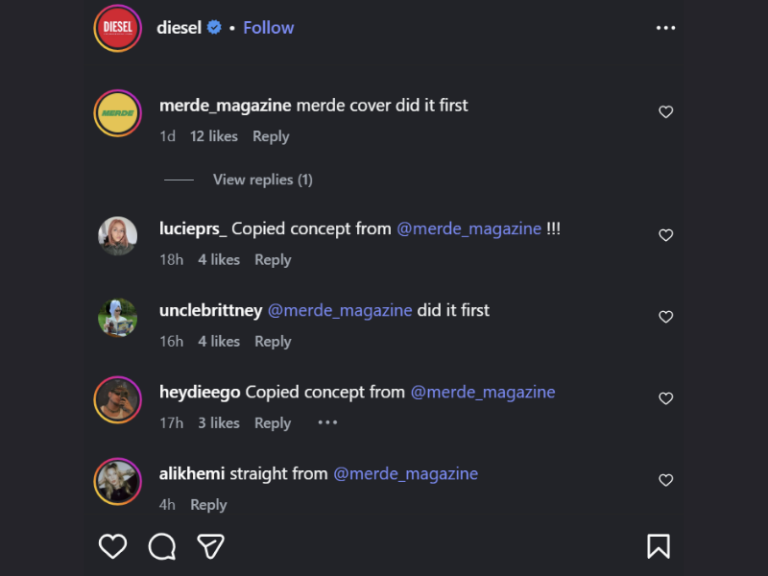
'Merde cover did it first.' That is the exact comment Merde Magazine's own account left beneath one of Diesel's FW26 cardboard cutout images, posted directly on Diesel's official page for anyone following the campaign to see.
The magazine was not the only one saying it. Across separate posts under the same Diesel account, several unconnected commenters made the same accusation, with some pointing out that Merde had done the concept first and others accusing Diesel of copying it outright.
The comments appeared on different threads within hours of each other, all sitting in public view on Diesel's own page rather than on a rival publication's account.
Diesel FW26 'Multiplicities' Campaign vs. Merde Magazine's DIY Aesthetic
Merde's main complaint focuses on its print covers, which feature life-sized figures presented flat, cut out, and placed into real-world settings with a rough, handmade aesthetic.
Diesel has now adopted this exact visual style globally, sending its own cardboard cutouts into busy streets and having local photographers capture them candidly, as if they were caught in passing rather than staged.
People with no apparent connection to the magazine independently noticed the similarity. This suggests it is not just one publication expressing a concern, but a trend recognised by multiple people while casually scrolling past.
Unpacking the Visual Similarities Between Diesel and Merde
Cardboard cutouts are considered public property. They have appeared in shop windows, pop art, and guerrilla marketing for decades, and no single magazine can claim ownership over flat packaging as a concept. Therefore, Diesel does not owe anyone credit for utilizing a format that has existed long before any contemporary indie publication.
Merde's argument was not simply about cardboard as a concept. Instead, it focused on the deliberate choice to use a satirical, DIY print cover format that is life-sized and intentionally unpolished. This format appears in candid public scenes and is funded with resources an independent magazine could never afford.
Indie-Washing in Luxury Fashion
The indie magazine produces prints in small batches on a limited budget. Diesel showcased five cities with a full creative team led by Glenn Martens. When a large brand with substantial resources mimics the aesthetic of a magazine operating on a much tighter budget, the focus shifts from who owns the design to who should get credit for the original idea.
This fits a wider pattern in luxury fashion. Houses regularly tap into underground zines and grassroots creators to gain street credibility. However, they often do this without formal recognition, partnerships, or compensation. Once the borrowed appeal has fulfilled its purpose, they move on to the next campaign.
Who Wins the Engagement Game?
Merde's comment had a significant impact, regardless of its intention. One line in another person's comment section raised the magazine's visibility more effectively than most independent titles can with a full marketing budget, attracting curious readers to its account within hours.
The real question is whether such call-outs genuinely hold luxury brands accountable or merely create a larger campaign, driving more engagement for a smaller magazine than either would have received on its own.