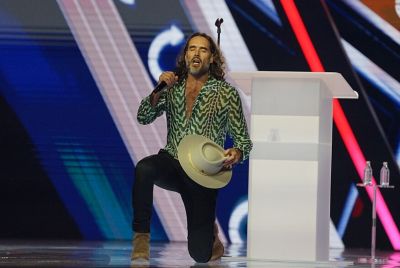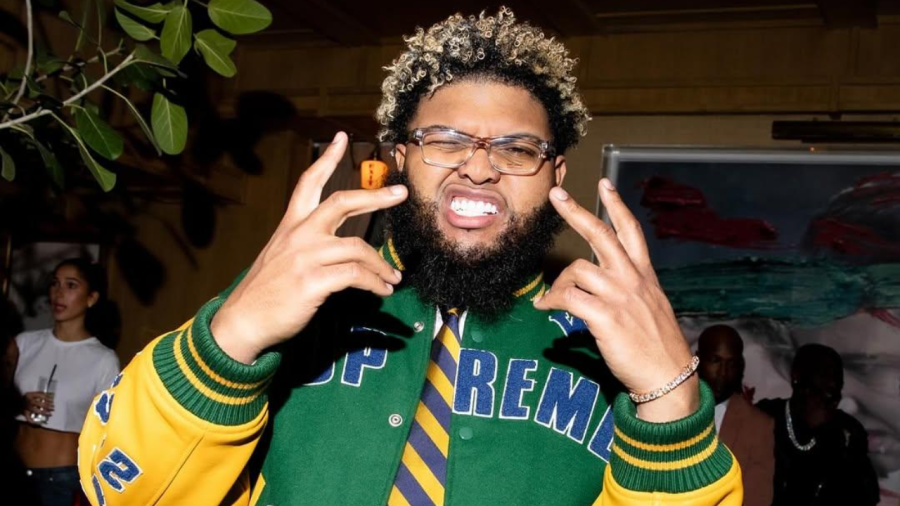
Druski has sparked an online discussion about race after appearing in full whiteface as Elizabeth Holmes during his Saturday Night Live hosting debut. The documentary parody prompted some viewers to question why blackface and whiteface are judged differently.
While some social media users questioned the apparent double standard, others defended the comedian's performance and said they found the sketch amusing. Their differing reactions have brought renewed attention to racial impersonation and the boundaries of comedy.
The SNL Transformation
Titled 'Dru Can See Everything', the sketch aired on Saturday, 7 November, and spoofed Nathan Fielder and Lance Oppenheim's documentary You Can See Everything about disgraced Theranos founder Elizabeth Holmes. It imagined Holmes, played by Jane Wickline, and her partner Billy Evans, played by Ben Marshall, approaching Druski before turning to Fielder.
Druski was immediately suspicious, telling the couple they had some of the strangest vibes he had ever encountered. When Holmes presented a product, he dismissed it as the 'most Temu-ass piece of s***' he had ever seen, before the sketch took a stranger turn.
The Disguise Was Coming
Druski borrowed Fielder's documentary-style reenactment technique, deciding he needed someone to embody Holmes before revealing it was him. He appeared in pale make-up, blue contact lenses, a blonde wig and a beige outfit to create an exaggerated version of the former technology executive.
The transformation had been teased during his opening monologue, when Druski joked that SNL had given him rules he might not follow, including a warning against whiteface. He then faced Wickline's Holmes in an awkward staring contest, with the pair repeatedly insisting, 'I'm always being real'.


The Double Standard Question
Some social media users questioned whether the reaction would have been different if a white performer had darkened their skin to portray a Black person. One X user asked, 'So this isn't racism? But when a white person cosplays as black it's racist?', while another argued, 'Racism is allowed for every race but the white race.'
So this isn’t racism? But when a white person cosplays as black it’s racist? https://t.co/5zr8ix8QNS
— voló . ݁🌺 (@lowcortisol) November 8, 2026
These were individual opinions, not proof of a widespread backlash or a consensus among viewers. Other commenters agreed that double standards existed, while some said the performance did not offend them.
— DEMIAN 🗣️ (@EDemian90773) November 9, 2026
Blackface Has a History
The comparison is complicated by the history of blackface in American entertainment, which is not simply a matter of one group copying another's appearance. The Smithsonian's National Museum of African American History and Culture traces it to 19th-century minstrel shows, where white performers darkened their faces and mocked Black people through degrading stereotypes.
Those performances helped spread racist portrayals of African Americans and reinforced a culture that denied them equal treatment. Whiteface impersonations do not carry the same historical legacy in the United States, so the two practices are not automatically equivalent, although individual performances can still be criticised.
Yes, because BLACK FACE is fucking racist due to history context.
— INDE NAVARRETTE AND HXH (@FANDEHUNTEfhvd) November 8, 2026
Viewers Were Not United
Not everyone found Druski's sketch offensive. One commenter said it did not bother them and praised the make-up team for getting the look right. Another said they had more important things to worry about than being offended on somebody else's behalf.
Other users connected the sketch to Dave Chappelle's past comedy about the roles Black men are expected to play in entertainment. Their comments brought older conversations about race and performance into the discussion, although they cannot represent the views of all Black or white viewers.
Since Dave Chappelle is ironically in the news today as well. It immediately made me think of his bit about how black men have to wear the dress in the industry. Druski is just another Schwartze goy doing the rite of passage.
— jtrade🦃 (@Jtrade0001) November 8, 2026
More Than a Costume
The sketch also played with Holmes' recognisable intense stare and repeated insistence that she was being genuine. Druski and Wickline faced each other in a prolonged 'Holmes-off', echoing the documentary's awkward interview style before Druski's character declared he could keep going all day.
Druski's appearance was a milestone, making him the first digital content creator to host the long-running programme in its 52-season history. The whiteface sketch became one of the night's talking points, while the reaction raised wider questions about racial impersonation, satire and whether comedy is judged by the same rules in every situation.