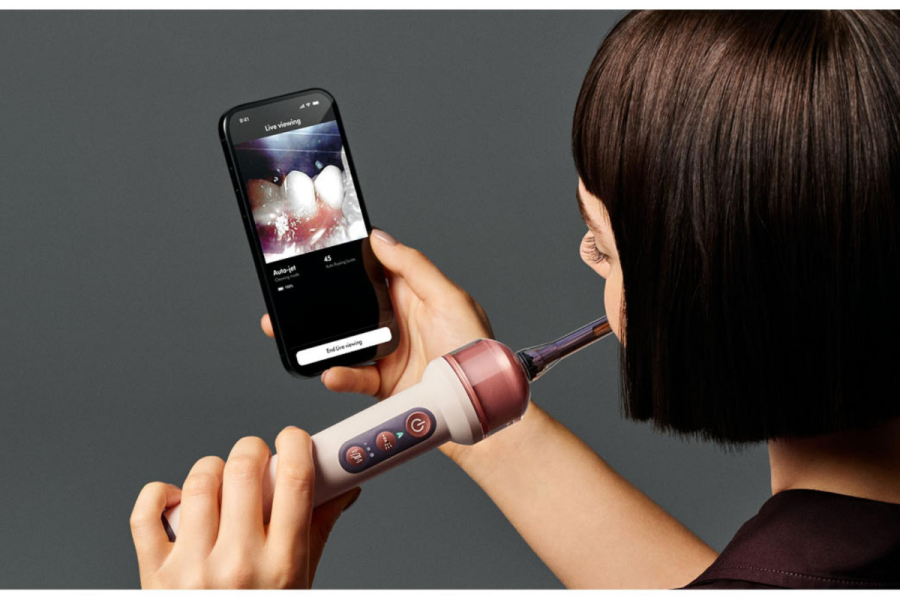
A $499 toothbrush is now streaming live video of your teeth to your phone, and the internet has questions about where that footage could end up. Dyson unveiled the CameraJet this week, a device packing a 100,000-pixel camera, machine learning software and a jet of mouth rinse into a handle you hold twice a day.
The camera feeds a live view of the inside of your mouth straight into the MyDyson app, hunting for gaps between your teeth so you never have to floss again. Plenty of people online care less about the flossing bit and more about the Wi-Fi-connected camera sitting between your cheeks.
How Does the Dyson CameraJet AI Toothbrush Work?
More than six in ten adults skip flossing regularly, a habit gap tied directly to gum disease and broader inflammation. Dyson is pitching the CameraJet as a fix, not a novelty.
Replacing manual flossing means putting a 100,000-pixel camera, a Wi-Fi transmitter and 16 million lines of code inside your mouth twice a day. A macro lens captures 28 images a second, feeds them through an algorithm trained on around 470,000 dental images to spot a gap, and fires a burst of rinse within a tenth of a second. Dyson calls it Gap Optical Targeting.
One dentist online rejected the whole premise, arguing a soft brush, fluoride toothpaste, daily floss and two check-ups a year do the same job for the price of a $2 roll of floss, not a $499 handle. For someone with limited dexterity or chronic gum disease, that automated precision could still be a genuine breakthrough.
Could Your Dental Data Be Shared with Insurers?
Dyson insists there are no privacy issues. Footage is only ever viewed live, never stored on the device, the phone or the cloud, and never accessible to Dyson or any outside party, at least under the company's current policy.
A light on the handle shows when the camera is on, and it only activates with a deliberate button press.
Those promises live inside a Terms of Service agreement that can change through a policy update, a new partnership or a corporate acquisition—whatever is guaranteed at launch.
Health insurers already offer premium discounts to customers who share activity data from devices like Fitbit and Apple Watch, and sceptics argue a camera capturing the state of someone's teeth and gums is a far more intimate data point than a step count, making it a plausible next frontier rather than a confirmed plan.
One commenter pictured a claim being denied because an AI toothbrush flagged something to an insurer as a pre-existing condition. Another put it more simply: not everything in life needs a camera attached.
Dyson CameraJet vs Oral-B iO10 and Philips Sonicare
The CameraJet sits well above the Philips Sonicare Prestige 9900 and the Oral-B iO Series 10, and that $100 to $200 gap buys almost nothing beyond the camera and its AI engine.
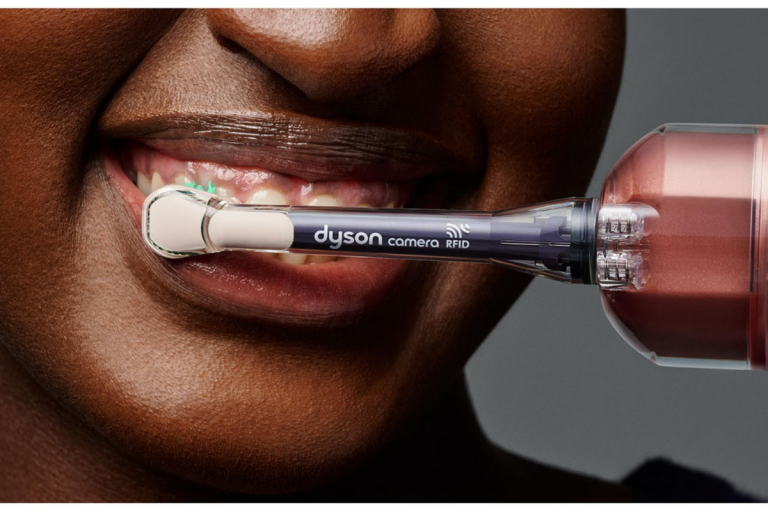
The $499 handle is also only the entry price. The brush works exclusively with Dyson's proprietary RFID-tagged heads and its own non-foaming rinse formula, locking buyers into ongoing costs well past the first purchase.
Would you trade live biometric streaming for automated oral health or has smart-home surveillance finally crossed the line into your bathroom?