Fendi turned its Spring/Summer 2027 runway into a hall of mirrors at Milan Fashion Week, but the unusual set left some viewers asking a simple question: could guests actually see the clothes?
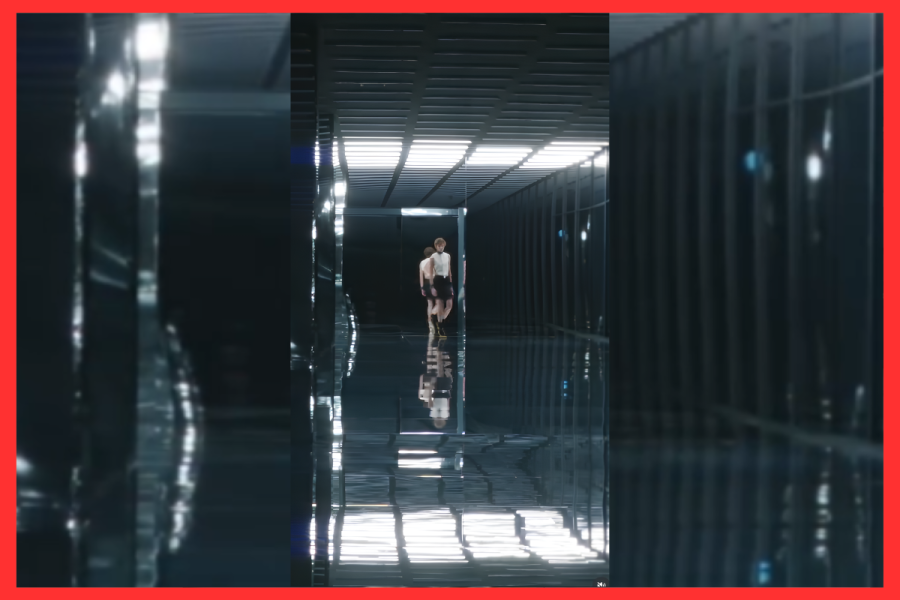
Maria Grazia Chiuri presented her latest Fendi collection on Wednesday, 23 September, with models walking inside a large semi-transparent mirrored box. Instead of giving guests a clear view of each look, the reflective surfaces created layers of images that mixed the models with the people watching them.
The unusual presentation also drew criticism online, with some viewers questioning whether guests could properly see the collection through the reflective installation. Fashion critics raised similar concerns, making the visibility of the clothes part of the conversation around the show.
Why Was Runway so Hard To See?
The mirrored runway was not a mistake. Vogue reported that the box was inspired by Italian artist Luciano Fabro's Cubo di specchi, or Mirror Cube, and was designed to make the audience part of what they were seeing.
what is the point of a show when the guests cannot even see the looks properly? if the priority was to remove the visual clutter caused by an audience and make the digitals more favourable for viewing, why invite anyone at all? https://t.co/SKmgvFYQPe pic.twitter.com/efRQv1Fbrn
— izzah (@izzah_vl) September 23, 2026
Models appeared through repeated and blurred reflections as they walked inside the structure. W Magazine noted that the models could only be glimpsed through the reflective screens, with their images mixing with reflections of the audience.
That made the show very different from a normal runway, where guests usually have a clear view of the clothes as models pass them. Fashion review site The Impression called the set 'unusually divisive' and noted that it obscured the clothes, showing that the visibility problem was not limited to social media complaints.
The Mirrors Had Deeper Meaning
Chiuri's idea went beyond creating a dramatic background. The set also drew from an Italian television performance featuring Raffaella Carrà and Adriano Celentano performing 'Prisencolinensinainciusol' among mirrors.
Carrà was one of the main inspirations behind the collection. Chiuri praised the late Italian star's strong awareness of her body and sense of fashion, while the clothes included sheer dresses, visible bras, lace, plunging necklines and other 1970s-inspired details.
The mirrors also changed the role of the people watching. Instead of looking only at the models, guests repeatedly saw themselves and other audience members reflected back at them, turning the runway into an experiment about how people see fashion and one another.


Critics Say Mirrors Hid Fashion
The idea may have been deliberate, but it created an obvious problem. If a runway show is meant to introduce a new collection, making the clothes difficult to see can undermine that purpose.
Fashion critics also noticed the tension. W Magazine opened its review by joking about what viewers 'could see' of the collection, while The Impression said the mirrors made it harder to view the details of the clothes.
Some online viewers went further, questioning the purpose of a presentation that made the collection difficult for guests to see clearly. That criticism reflects viewers' interpretations rather than Fendi's stated intention, however, and the documented artistic references suggest the mirrors were primarily part of Chiuri's wider ideas about bodies, relationships and spectatorship.
What Was Fendi Actually Showing?
Behind the optical tricks was a collection heavily focused on the body. Chiuri used lingerie as clothing, with bras, slips and boxer-style pieces appearing alongside sheer dresses, tailoring, coats and more covered looks.
The collection also carried the influence of Carrà, who became famous for her bold clothes and performances in 1970s Italy. The designs included sheer and airy dresses, deep necklines, backless shapes, fringe and feathered details.
Fendi wanted its audience to look through the mirrors — at the models, the other guests and even at themselves. Yet the unconventional presentation risked overshadowing the collection itself. For some viewers, that made the show more meaningful. For others, it simply made the fashion harder to see.