A $198 Free People top has sparked a cultural appropriation debate on social media, with users accusing the American fashion retailer of repackaging traditional Indian clothing as Western vintage fashion. One critic took aim at white people, writing, 'they have nothing original of their own', as backlash over the design spread online.
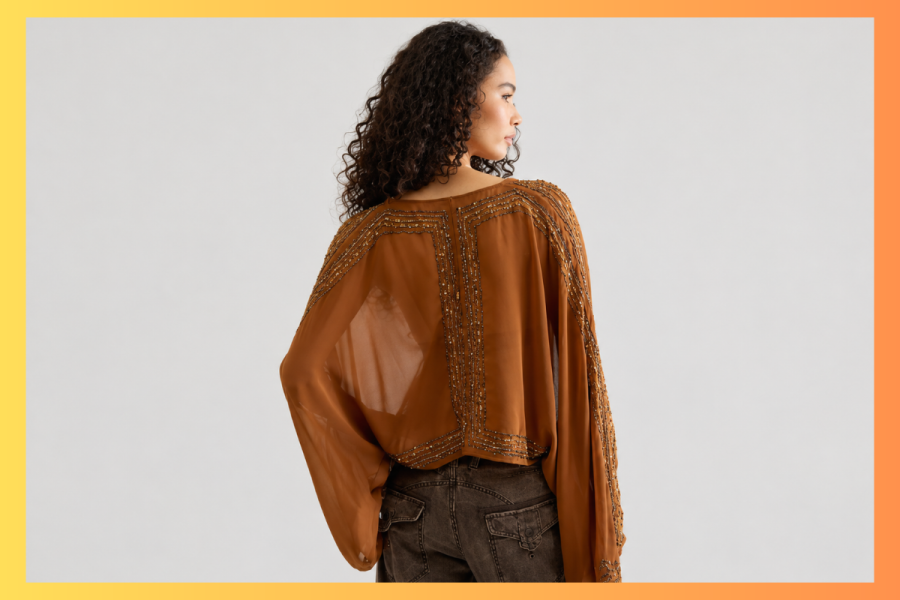
The American fashion retailer's Calla Embellished Cape Top, priced at $198 (£188 on its UK website), is marketed as having a '70s-inspired silhouette'. However, Indian shoppers recognised similarities to clothing already familiar in South Asian fashion. The controversy also comes during Diwali celebrations, with the festival's main day falling on Sunday, 8 November, when many families traditionally wear new or festive clothing.
The backlash began after pictures of the garment circulated on X earlier in the week. What started as a fashion discovery quickly became a discussion about cultural appropriation, with critics accusing Western brands of repeatedly borrowing from South Asian traditions while overlooking their origins.
Indian Shoppers Call Out Free People's '70s-Inspired' Design
The Calla Embellished Cape Top features long sleeves, a V-neckline, a slightly cropped silhouette and decorative embellishments. According to Free People's website, the garment is made entirely from polyester. Its styling prompted comparisons to Indian kurtis, traditional tunic-style garments widely worn across South Asia.
like no shade but they have nothing original of their own 😭
— jia⁷ | Fan account (@chxselorrr) November 7, 2026
One social media user referenced Janpath, a popular shopping destination in New Delhi known for its affordable clothing, joking that 'the west yearns for janpath y2k kurti'. The comparison questioned why a familiar Indian fashion aesthetic was being marketed as a Western-inspired piece at a premium price. Others pointed out that similar styles were available in Indian markets long before the Free People design attracted online attention.
white people will call indians “dirty” and then turn around and steal our culture without giving us any credit. the hypocrisy is insane. https://t.co/YaozXjTWgp
— vespera (@vesperamyst) November 7, 2026
Other reactions addressed the racial implications. One critic wrote, 'white people will call indians "dirty" and then turn around and steal our culture without giving us any credit'. The comment accused Western consumers of embracing fashion associated with a culture whose people can simultaneously face discrimination.


Why Are Western Fashion Brands Being Accused of Cultural Appropriation?
The Free People controversy centres on more than the garment's appearance. Critics are challenging how traditional Asian aesthetics can be repackaged as bohemian, vintage, or festival fashion, with little acknowledgement of the cultures behind them. The timing during Diwali has also placed the dispute alongside celebrations of South Asian heritage.
Free People's description specifically references the 1970s without identifying any South Asian influence. The accusations reflect ongoing criticism of how global retailers credit cultural inspiration.
🚨SHOCKING | Luxury fashion and lifestyle brand Ralph Lauren faces backlash for selling Bandhani-style skirt priced at whopping ₹44,800 without crediting Indian culture and craftsmanship pic.twitter.com/WxDNNY6nMe
— The Tatva (@thetatvaindia) April 20, 2026
The dispute follows similar controversies involving Ralph Lauren and Reformation. In April 2026, Ralph Lauren faced backlash over a printed wrap skirt inspired by traditional Indian Bandhani tie-dye techniques, with critics arguing that its description failed to credit the craft's Indian origins adequately. Reformation was similarly criticised in 2025 over a three-piece outfit resembling a traditional lehenga, although the brand cited a vintage John Galliano design among its inspirations.
Etro Faced Similar Backlash Over Central Asian Designs
Italian luxury fashion house Etro also faced cultural appropriation allegations in 2026 after unveiling handbags featuring motifs that users in Kazakhstan and Kyrgyzstan associated with traditional Central Asian ornamentation. The controversy involved the brand's Pony Bag and Kalispera designs, particularly the latter's decorative patterns. Critics questioned why the motifs were described as part of Etro's established design language without explicitly acknowledging the Central Asian traditions they believed were represented.
A Greek name, allegedly Kyrgyz motifs.
— Jastine Beatrice Yap (@jastinebayap) October 9, 2026
Etro faces cultural appropriation accusations over handbags critics say borrow from Central Asian heritage without giving credit.https://t.co/QrbSgop3oG pic.twitter.com/It3EjtQeDL
'Etro, babe... give credit where it's due,' one Instagram commenter wrote. Others pointed out that Kalispera takes its name from a Greek greeting despite featuring patterns they associated with Kyrgyz heritage. The complaints echoed those now surrounding Free People, with social media users questioning who receives recognition when traditional designs appear in international fashion collections.
For Free People, the criticism remains directed at its decision to describe the embellished top through a 1970s lens. Its $198 price and resemblance to familiar Indian clothing have fuelled accusations that South Asian fashion is being repackaged for Western shoppers. The backlash, unfolding alongside Diwali celebrations, has brought renewed scrutiny to how international fashion brands acknowledge the traditions behind their designs.