Glif is facing criticism after launching an artificial intelligence modelling agency that allows brands to create fashion advertisements without hiring human models or organising traditional photoshoots. The new service, promoted on 30 October, offers a catalogue of AI-generated characters that businesses can use in product campaigns, social media advertisements and promotional videos.
The controversy gained attention through social media discussions, including a Threads post by @drmalekpt that questioned the need for AI-generated models when people already work in the fashion and advertising industries. Glif's announcement also attracted criticism on X, where users challenged its description of the characters as 'real AI models' and questioned the potential consequences for professional models and other creative workers.
What is Glif's AI Modelling Agency?
Glif announced its AI modelling agency on 30 October, inviting businesses to select from hundreds of artificial characters and use them to produce advertising content. Its promotional message encouraged brands to submit a product, idea, or creative brief and let the platform generate the finished material.
'Today we're launching the first AI modeling agency right inside Glif,' the company announced on X.
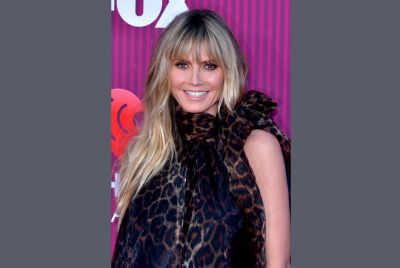
The service builds on Glif Characters, which the company introduced in September 2026. The original launch featured more than 150 AI-generated characters, each with a profile containing details about their appearance, height, casting age, and languages.
The platform is designed to maintain a character's appearance across many images and videos. Users can choose a character, provide a product photograph, and describe the desired advertisement. Glif then uses its integrated image and video generation tools to produce the content.
On 26 October, the company added an option allowing users to create their own characters by uploading as little as one image. Its system uses reference sheets to maintain facial consistency across different scenes and videos.
Users Question Replacement of Human Models
Criticism of Glif's launch has centred on the possibility that synthetic models could take opportunities away from people who depend on commercial modelling work. Others questioned the visual diversity of the promotional material.
According to Minuto60's review of the reaction, users pointed out that most of the faces appearing in the launch video looked white, with one commenter joking that the blue alien character was the exception. The criticism was particularly striking because Glif's character catalogue includes a wider variety of appearances, including an Asian man and a woman wearing a hijab.
The company's description of its characters as "real AI models" also became a target. Some users challenged the wording, arguing that artificial characters should not be presented as equivalent to human models.
Glif defended its service in the ensuing discussion, arguing that the technology could help smaller businesses produce advertisements previously available mainly to companies with larger budgets. The company also suggested that established brands could continue distinguishing themselves through more human-centred creative work.




Fashion Industry Facing AI-Related Job Concerns
The backlash arrives amid growing evidence that artificial intelligence is changing the economics of fashion photography. A 27 October investigation by Reuters reported that AI-generated fashion imagery could reduce production costs by 90 per cent or more compared with traditional photoshoots involving human models.
Reuters interviewed 15 modelling agency directors and examined more than a dozen confidential contracts involving brands including Diesel, Calvin Klein, and L'Oréal. Some proposed contractual terms sought permission to alter models' faces and bodies, create reusable digital replicas without additional compensation, or use images of their bodies to train AI systems.
The investigation also reported that fashion agencies were experiencing declining bookings and that some photography studios had closed as retailers adopted synthetic models for e-commerce images.
These developments illustrate why Glif's launch has generated concern beyond its own platform. Rather than simply creating novelty images, AI tools are increasingly being marketed as alternatives to established commercial production processes.
Unresolved Questions on Consent
Another concern involves the origins of AI-generated faces and the possibility that images of real people could be used without their knowledge.
Glif describes its existing characters as original AI models, but its public launch materials do not provide a detailed explanation of the datasets or processes used to create each character. Its newer image-upload feature also raises questions about how permission and likeness rights are handled when users create characters from photographs.
The New York State Fashion Workers Act, which took effect in June 2025, requires explicit consent before fashion brands create or modify digital replicas of models. The legislation provides a legal safeguard when an identifiable model's likeness is involved, although it does not resolve every question surrounding entirely synthetic characters.
Cornell University's School of Industrial and Labor Relations has also highlighted how AI-generated replicas can increase the vulnerability of fashion workers when contracts allow companies to reuse their images without additional payment. Its research emphasises the need for clearer consent requirements and stronger protections over digital likenesses.