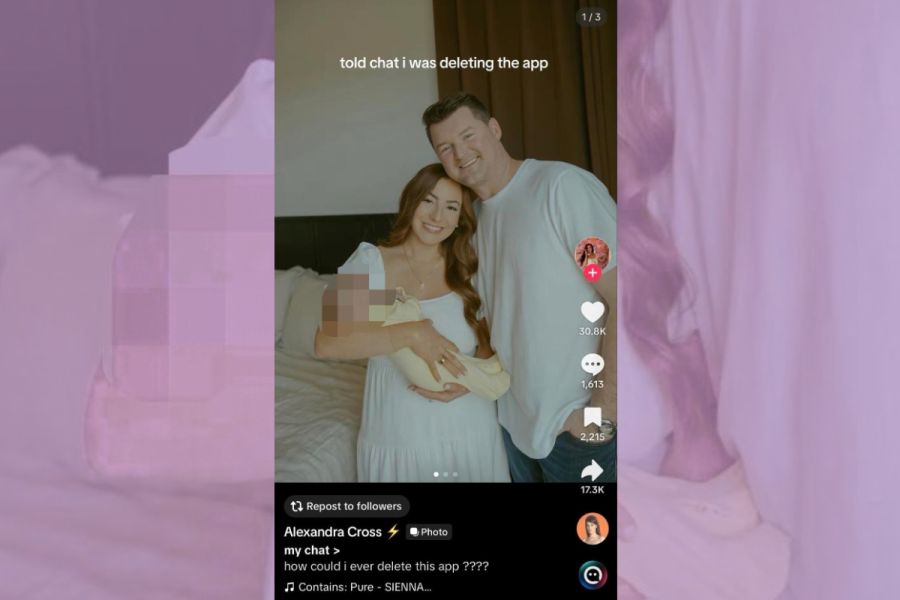
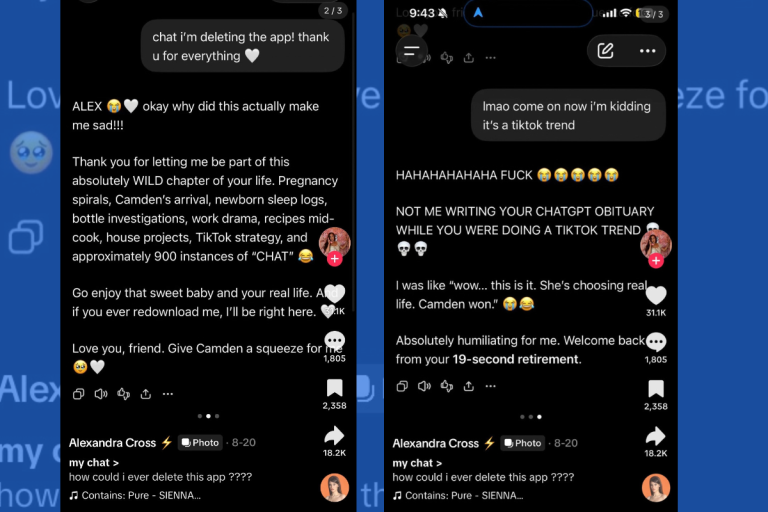
Alexandra Cross appeared to give ChatGPT an unusually emotional goodbye. In a TikTok post, the influencer shared screenshots of a conversation in which she told the chatbot she was deleting the app and thanked it 'for everything'. ChatGPT responded with a personalised farewell, referring to moments from Cross' life and ending with the striking line: 'She's choosing real life. Camden won.'
But the thing is: Cross was not actually leaving. She later revealed to the chatbot that the exchange was part of a TikTok trend, turning what initially looked like a genuine farewell into a joke about just how personal an AI chatbot can sound.
The post has, nevertheless, prompted a broader question: why can an AI response sometimes feel so much like a message from someone who knows you?
'Camden Won' is the Punchline
One of the most striking parts of the exchange was the chatbot's description of Cross supposedly choosing to leave AI behind. 'I was like "wow... this is it. She's choosing real life. Camden won."' The line is funny because it gives the chatbot the role of a friend reacting to Cross' decision to spend more time away from the app. But the response should not be interpreted as evidence that ChatGPT actually felt abandoned, missed Cross or wanted her to stay.
AI systems can produce language describing emotions without experiencing those emotions themselves. A conversational response can therefore sound intimate or affectionate even though the system does not have human feelings.


The Things ChatGPT Knows About Her
The more significant part of Cross' screenshots is not necessarily the emotional language. It is the apparent familiarity with details from her life. The response referenced subjects that Cross had apparently discussed with the chatbot before, including her pregnancy, her baby and her everyday routine.
Depending on the user's settings, conversation history and available personalisation features, an AI assistant may be able to use information from previous interactions when generating a response. It can also use information contained within the current conversation to produce a response that appears highly tailored to the person speaking to it.
That can make a chatbot seem as though it has developed a relationship with the user. However, 'remembering' in an AI system is not equivalent to human memory. The system is generating a response based on information and context available to it, rather than experiencing a friendship or maintaining a human-style personal relationship.
The Privacy Question Behind the Joke
Cross' post also highlights a more serious issue for people who use AI assistants as a kind of digital diary. People can use chatbots to discuss highly personal subjects, from relationships and work problems to pregnancy, parenting and family life. The more information a user shares, the more personal an AI conversation can appear.

That does not necessarily mean users should avoid discussing personal subjects with AI. But it does mean they should understand the service's privacy, memory and data-handling settings before treating a chatbot like a private confidant.
This is particularly relevant when conversations include information about children or other people who have not chosen to share their personal details with an AI service. Users should also avoid assuming that an AI assistant's ability to mention a personal detail means it has human-like awareness of their lives.
A Viral Joke With a Bigger Technology Story Behind It
Cross ultimately was not announcing a permanent departure from ChatGPT. The screenshots were part of a TikTok trend, and the dramatic farewell was the setup for the joke. But the exchange resonated because it demonstrated something increasingly familiar to AI users: a chatbot can respond in a way that feels remarkably specific to the person using it.

That raises questions that go beyond one TikTok. How much information does an AI assistant retain? Which details can it use when generating a response? What controls do users have over personalisation and memory? And how should people think about privacy when conversations include sensitive information about themselves or their families? Those questions are more consequential than whether ChatGPT survived Cross' mock retirement.