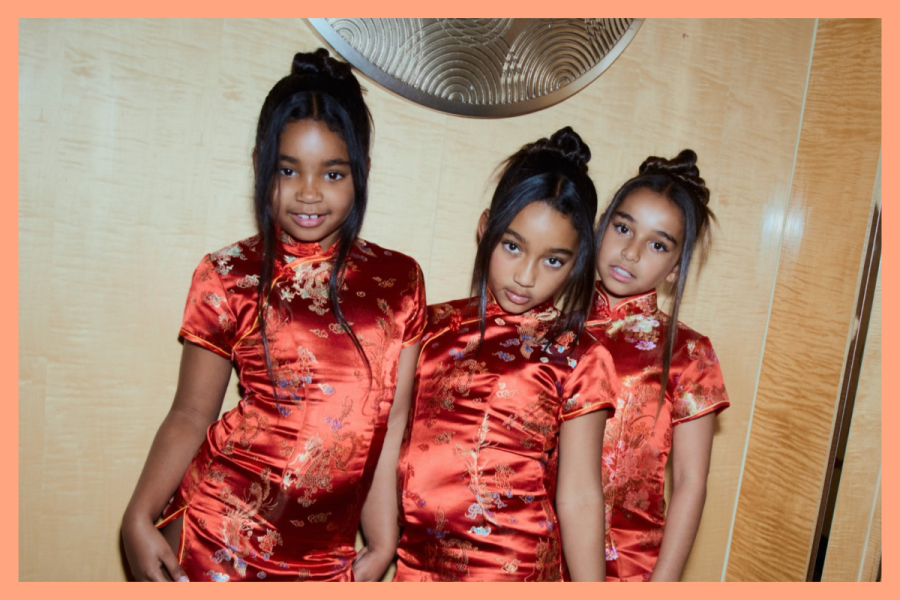
Kim Kardashian shared photos of her daughter Chicago West and nieces Dream Kardashian and True Thompson wearing matching red qipaos during a family trip to China. While many thought the girls looked adorable in their coordinated outfits, Kim's decision to post the photos online also drew scrutiny.
The reactions have been sharply divided, with some commenters raising concerns about the dresses' high slits and others accusing critics of sexualising traditional Chinese clothing. The disagreement has since raised a bigger question about where cultural appreciation ends and concerns about children's safety online begin.
Kim Kardashian Shares China Trip Photos
Kim shared a series of holiday photos featuring Chicago, Dream and True during the family's trip to China, with Kris Jenner and Khloé Kardashian also appearing in the Instagram post. Chicago, Dream and True wore matching red embroidered silk qipaos, posing together in the traditional Chinese dresses.
The photos captured both posed family moments and playful scenes, with the girls also seen running through hotel corridors and enjoying a McDonald's feast on the bedroom floor. While their coordinated outfits stood out in the holiday album, the images soon attracted attention for more than their matching looks.
Kim Kardashian shared new photos of her daughter Chicago West, niece Dream Kardashian (Rob’s daughter), and niece True Thompson (Khloé’s daughter), all looking absolutely adorable in matching bright red traditional Chinese qipaos! 🥹
— HouseOfVanity (@HouseOfVanity88) October 14, 2026
The three cousins are just too cute! ❤️ pic.twitter.com/E2mqvNH5jc


Backlash Over the Girls' Qipao Outfits
Several commenters said the girls looked lovely but expressed concerns about sharing the pictures publicly. 'I'm sure they had fun, but posting these images online? Not so adorable,' one person wrote, arguing that the way the children were presented 'comes off as sexualized'.
Others pointed to the dresses' details, suggesting the outfits could have been customised with longer hems and no slits considering their young age. One critic also raised concerns about artificial intelligence being used to manipulate innocent photographs of children into inappropriate images. 'You gotta be SO careful of the images of children you show online,' the user wrote.
However, not everyone was convinced by the backlash, with some accusing critics of making an innocent situation seem inappropriate. 'The reason y'all think qipaos are 'too much' for them is because of how much they're sexualized in the West,' one commenter argued, pointing out that young girls in China also wear traditional clothing.
Others said they had not seen anything inappropriate in the pictures and questioned why the dresses were attracting so much criticism. Several simply praised the girls' outfits, arguing that the children looked adorable, adding: 'Y'all must have sick ass minds because nothing stuck me as inappropriate.. Very weird thing to say'.
They ARE adorable and I’m sure they had fun, but posting these images online? Not so adorable.
— TheGirlOnTheBreakout (@merlot_sk) October 14, 2026
They are little girls being portrayed in a manner that comes off as sexualized.
Why do celebs do this to their kids? It’s so gross
Umm this is weird and why do the boys are never shown but they put the girls front in center there is no reason for these pics
— Sarah (@SarahTamara) October 14, 2026
Are Qipaos Really Inappropriate for Kids?
A qipao, also known as a cheongsam, is a traditional Chinese dress with features such as a high collar, decorative fastenings and side slits. It became fashionable in Shanghai during the 1920s, with its silhouette evolving over subsequent decades as tailors incorporated new cuts and Western tailoring techniques.
The garment has a rich cultural history, with its designs reflecting changing fashion trends and individual preferences. While some modern versions are associated with glamour and sensuality, the qipao itself is not inherently sexual.
Understanding the garment's cultural background helps place its appearance in context. Rather than reducing the qipao to a particular silhouette or interpretation, it is worth recognising its place in Chinese fashion and its evolution across generations.