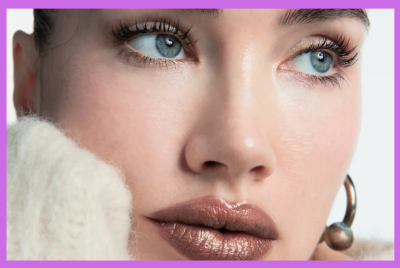

When Kylie Jenner got to this year's BAFTAs, the fashion talk didn't last long before people on social media started talking about her lips. Within hours, pictures of her past and present appearances side by side spread online, leading others to wonder if her lips seemed smaller than before.
There has been no confirmation from Jenner herself. Lighting, camera angles, make-up techniques, and even lip liner placement can dramatically alter how lips appear on film. However, the quick and intense response from public is telling a different story.
It is not only about Jenner, but also about a broader shift in how we view cosmetic enhancements and beauty standards. After years of celebrating fuller lips, people are increasingly curious about refinement and proportion.
Timothée Chalamet and Kylie Jenner at the BAFTAs ❤️ pic.twitter.com/unAOGSL1we
— Complex Pop Culture (@ComplexPop) February 22, 2026
The Kylie Effect: How She Redefined Lip Aesthetics
When Jenner first rose to prominence with her iconic fuller lips, it was more than a personal choice. It became a cultural moment.
Tutorials on overlining lips, how to achieve a pout, and the perfect lipstick shades all went viral. Beauty products sold out right away, and there were a lot more requests for lip fillers.
Marlee Bruno, a medial aesthetics expert, explained why celebrities like Jenner hold such sway over public perception. 'Public figures absolutely influence beauty trends. When someone like Kylie Jenner changes her look, millions of people see it instantly because social media makes those shifts feel immediate and personal.'
But Bruno pointed out that influence isn't the same as creating trends. 'Celebrities do not create insecurity out of nowhere. They amplify what is already valued in the culture or create it. What I am seeing now is less copying and more self-awareness. Patients are not asking to look like someone else. They want to look like themselves, just more balanced and refreshed. That is a big shift in the aesthetics world', she stated.
What Bruno described is a subtle but significant change. The aesthetic discussion has shifted from imitation to understanding. People now are less likely to try to look exactly like a celebrity and more likely to think about what looks well on their own face, features, and style.
A thread of celebrities before and after they became famous 🧵
— Nostalgia (@nostalgiaa) July 4, 2024
1. Kylie Jenner pic.twitter.com/KXZ7t6lWDP
Why Patients Are Reassessing Their Lips
More people are seeking to reassess, improve, or even get rid of their earlier enhancements. Clinics around the world still report high demand for augmentation, but this is a clear change in what patients want. Lip filler is still far from going out of fashion.
'There is definitely a move toward refinement. Patients who started filler years ago are now reassessing. Some want to dissolve and start over. Others simply want to reduce volume and restore definition', Bruno explained.
There are a few frequent reasons why people want this change. Over time, filler can move up a little above the natural lip line, make the edges softer, or make them look a little uneven. Sometimes getting the same injection over and over again makes you look heavier, which doesn't fit your style anymore.
Your age and lifestyle also matter. A look that made you feel good at 23 might not work for you at 30. Bruno added that this reassessment is usually due to aesthetic reasons, not medical.
While they don't regret it, a lot of patients see the choice to scale back as a good thing. They are not giving up on aesthetics. They are just improving them. The goal is structure, definition, and balance—and not just volume alone.
How Lip Fillers Are Dissolved
Most modern lip fillers are made from hyaluronic acid, a substance naturally found in the body. To dissolve them, clinicians use an enzyme called hyaluronidase. The process is done in the clinic and usually just takes a few minutes.
For the first day or two, swelling and little bruises are normal. Some patients may need more than one session, depending on how much filler was administered at first. It's considered safe when administered by an experienced medical provider. Though, there could be small risks, such as allergic reactions.
It's also important to be precise because over-dissolving might temporarily change the form of your lips and the hydration of your tissues. That's why professional supervision is so essential.
Meanwhile, Bruno added: 'Dissolution is a corrective tool. It is not a trend.' Social media may depict dissolving filler as a visual option, but in reality, it serves to restore balance, rectify asymmetry, or facilitate subsequent enhancements.
The Return of Subtlety in Beauty Culture
Jenner's recent BAFTAs moment is part of a larger trend that celebrates subtlety. Looks that bring out the best in natural features are becoming more popular. People want soft glamour, glowing skin, combed brows, and subtle contouring.
Yet this does not mean cosmetic treatments are going away. Instead, the focus has changed from visible modifications to improvement and balance. Patients understand more about how their faces work, how long products last, and how enhancements evolve over time. Many people want treatments that would help them look and feel well as they get older.
In this context, even the idea that a celebrity's lips are a little smaller is taken seriously. It looks like the beauty cycle may be swinging from projection to balance. People used to think that glamour was too much, but now they think that minor adjustments are stylish and up-to-date.
Tips Before Cosmetic Procedures
Experts recommend to take your time, do your research, and prioritise long-term balance over short-term effects.
Bruno advised: 'Choose a provider who understands anatomy and long-term facial balance. Ask about strategy, not just how many syringes you need today. Cosmetic work should evolve with your face over time. Subtle always ages better. If someone can immediately tell you had filler, something was likely overdone.'
The ultimate goal, she said, is not to replicate someone else's look but to feel confident and proportionate in your own. Successful cosmetic enhancements support a person's identity rather than hide it.
Even without confirmation that Jenner changed her lips, the debate sparked by her BAFTAs appearance is interesting from a cultural point of view. After a decade of prioritising fullness, people are increasingly embracing refinement and balance. The conversation is no longer about chasing extremes—it is about evolving with intention.
A Cultural Shift Toward Personalised Aesthetics
The trend of lip filler reassessment is part of a bigger movement in the beauty culture. Injectables are now quite widespread because of social media, but the next generation of patients is looking at beauty in a more nuanced way.
The shift also brings to light an essential idea. Cosmetic improvements work best when they are made specific to the individual. A treatment that works for one person may not work for another, and people's tastes change over time. Instead of blindly following trends, what matters is how well features, identity, and confidence fit together.
The attention on Jenner's lips may fade in a few days, but the discussion it generated will probably go on. After years of celebrating volume and projection, the aesthetic conversation is maturing. Refinement, reassessment, and proportion-led treatments are emerging as the new markers of beauty.
This 2026, subtle beauty does not mean boring. It is a sign of confidence and thoughtful self-care.