Silk scarves have long been associated with polish and poise—neatly tied at the neck, looped through a handbag handle, or folded beneath a coat collar. Yet over time, they have quietly evolved from decorative finishing touches into fully integrated elements of modern dressing. Today, silk scarves are worn as tops, belts, headpieces and even structural layering tools.
So how did this transformation happen? How can you wear one in a way that feels intention and not costume-like?
Here's a practical guide to understanding the cultural history of silk scarves, why they've endured, and how to style them from casual days to evening occasions with maximum impact.
From Cultural Symbol to Fashion Staple
Silk itself dates back thousands of years to ancient China, where it symbolised wealth and status. Scarves made from silk travelled along the Silk Road and eventually became prized textiles across Europe and the Middle East. In many cultures, headscarves served not only aesthetic purposes but also religious, social, and climatic ones—protecting wearers from sun, wind, and dust.
By the 20th century, silk scarves became synonymous with refined dressing. Hollywood icons such as Audrey Hepburn popularised the headscarf-and-sunglasses combination, while European luxury houses elevated the printed silk carré into a collectible fashion item. The silk square became a post-war wardrobe essential because it added personality without requiring a full outfit overhaul.
What's notable is that silk scarves have never disappeared from fashion. They've simply adapted. Instead of being limited to the neck, they have spread into clothing and structural style parts, which reflects the larger trend in fashion toward adaptability and multifunctionality.
Why Scarves Are Now Wardrobe Essentials
The shift from accessory to statement piece stems from three enduring fashion principles:
1. Versatility
A single 90x90cm silk square can function as a top, belt, headpiece, or bag accent. In an era of more considered wardrobes, pieces that serve multiple purposes hold greater value.
2. Fabric Performance
Silk regulates temperature naturally. It feels cool in warm climates and provides light insulation in cooler weather. This adaptability makes it wearable across seasons, whether wrapped lightly in summer or layered beneath knitwear in winter.
3. Personal Expression
Prints, colours, and motifs allow wearers to communicate individuality without committing to bold garments. Silk squares provide character right away with minimal effort.
In short, the silk scarf's reinvention is less about fleeting trends and more about practicality meeting creativity.
How to Wear Silk Scarves
1. Top
Wearing a silk scarf as a top works best with larger square scarves (around 90cm). Fold diagonally to create a triangle, position across the chest, and tie securely at the back or neck.
How to make it feel polished:
- Pair with high-waisted tailored trousers or denim jeans.
- Add structured outerwear such as a blazer.
- Choose scarves with medium-weight silk twill for better hold.
2. Belt
Thread a folded scarf through belt loops or wrap it around the waist and knot slightly off-centre. This technique works particularly well over monochrome dresses or neutral tailoring. The soft drape contrasts with structured fabrics, creating dimension. It also introduces colour without overpowering an outfit.
For petite frames, avoid overly bulky knots. A flat square knot keeps proportions balanced.
3. Headpiece
Headscarves carry rich cultural significance across regions, from Mediterranean coastal styling to Middle Eastern traditions. When worn respectfully and appropriately, they remain one of the most elegant ways to elevate an outfit.
Three timeless methods:
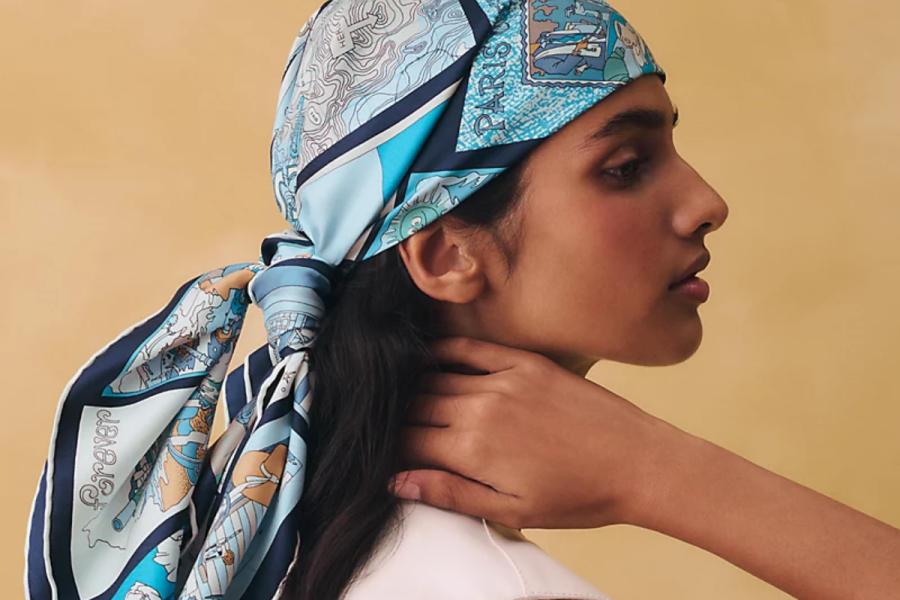
- Folded bandana-style and tied at the nape.
- Wrapped turban-style for sun protection.
- Slim-folded as a hairband.
4. Outerwear Layer
Instead of tying at the neck, drape the scarf beneath a blazer so that the ends fall vertically. Alternatively, wear it loosely over the shoulders in place of a light shawl. This technique works particularly well in transitional seasons when a coat feels excessive but a simple layer is necessary.
5. Evening Styling
Silk scarves transition seamlessly into evening wear:
- Knot as a halter-style top paired with a long skirt.
- Drape over bare shoulders with a tailored jumpsuit.
- Use as a refined wrap instead of a heavy shawl.
Choosing the Right Silk Scarf
Not all silk scarves perform the same. Here's what to consider before investing:
Fabric Type
Silk twill is durable and holds its shape well. Silk satin offers higher sheen but can be more slippery.
Size
- 50cm squares: Ideal for hair or bag styling.
- 70cm squares: Good for neckwear.
- 90cm squares: Most versatile for tops and belts.
Print and Colour
- One neutral print.
- One bold statement colour.
- One heritage-style motif.
How to Maintain Silk Scarves
To ensure your silk scarves last and retain their beauty:
- Hand wash carefully in cold water using a silk-specific or gentle detergent. Avoid regular detergents, which can damage the fibres and dull the sheen.
- Handle with care. Never wring or twist the scarf. Instead, press gently between clean towels to remove excess water.
- Iron on low heat while the scarf is slightly damp, or use a pressing cloth to protect delicate patterns and prints.
- Store flat or loosely folded to prevent permanent creases and stretching. Avoid hanging for long periods, which can distort the shape.
- Protect from sunlight and perfume, as prolonged exposure can fade colours or weaken silk fibres over time.
Proper care preserves sheen and fibre strength, ensuring your scarf remains wearable for years—even decades.
Why Scarves Are Forever Relevant
Unlike trend-driven items, silk scarves persist because they balance elegance with practicality. They do not rely on seasonal hemlines or fleeting aesthetics. Instead, they respond to creativity, offering endless possibilities for personal expression. From bold prints to subtle neutrals, a scarf can inject colour, pattern, or texture into any outfit, instantly elevating the look without overwhelming it.
The key to making a silk scarf feel contemporary lies in integration, not addition. When it replaces a belt, becomes a top, or functions as structural layering, it transforms from accessory to outfit anchor. Scarves can refresh casual jeans and a T-shirt, refine workwear, or add drama to evening attire.
If you're building a thoughtful wardrobe, a well-chosen silk scarf offers exceptional cost-per-wear value. It adapts across occasions, climates, and personal style shifts—something few fashion items can claim. They are also timeless conversation pieces, carrying history, and cultural significance that only few accessories can match.
So the next time you reach for a scarf, ask not how to accessorise with it, but how to build around it. Allow it to become the centrepiece of your outfit, not just a last-minute decision.