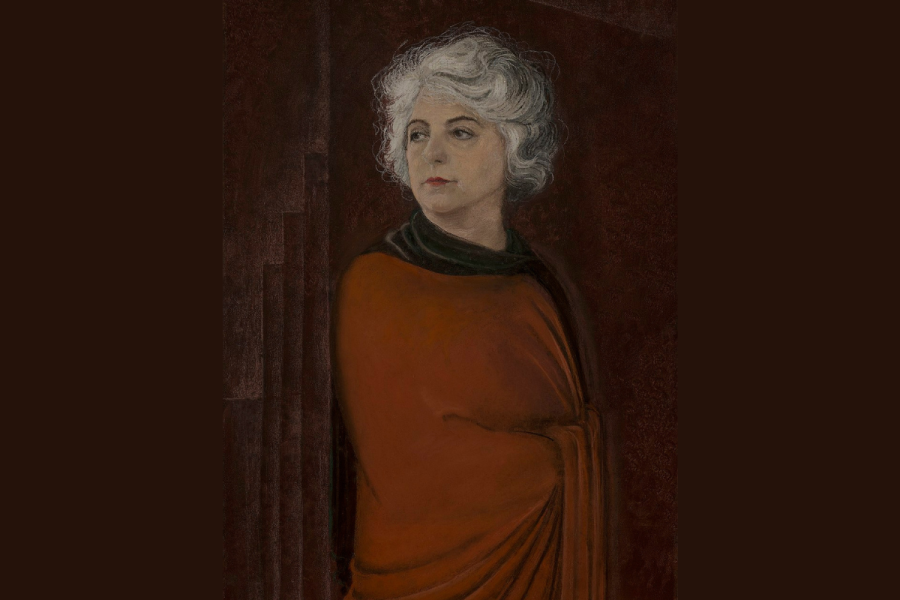
Long before fashion celebrated body confidence, fluid silhouettes and effortless dressing, women's clothing was designed around control. Corsets, stiff fabrics and structured tailoring shaped the female figure, often forcing the body into rigid forms.
Then came Madeleine Vionnet—a French couturier who believed clothes should move with women, not restrict them.
Born on 22 June 1876, Vionnet changed the course of 20th-century fashion by mastering the bias cut, a technique that transformed the way fabric behaved. By cutting material diagonally across the grain at a 45-degree angle, she created garments that flowed naturally around the body, allowing movement, comfort and elegance to exist together.
Her designs looked simple at first glance, but behind every curve and fold was extraordinary technical skill. Vionnet was not just creating dresses; she was rethinking the relationship between the body, fabric and fashion itself.
More than 100 years later, her influence can still be seen in modern eveningwear, slip dresses and red-carpet gowns. The bias cut remains one of fashion's most important techniques, a reminder of how one designer's radical idea changed the way women dressed forever.
From a Working-Class Childhood to Paris Couture
Vionnet's journey into fashion began far away from the glamorous world of Paris couture.
Born in Chilleurs-aux-Bois, France, she came from a modest background and began working as a lacemaker's apprentice at just 12 years old. Her early experience with delicate materials and craftsmanship would later influence her careful approach to fabric.
After leaving an unhappy marriage, Vionnet moved to London in the late 1890s, where she found work as a dress-fitter for British couturier Kate Reilly. The role introduced her to professional dressmaking and gave her the confidence to pursue fashion as a career.
She eventually returned to Paris in 1900, working at some of the city's most respected fashion houses, including Callot Soeurs and Doucet. These experiences helped her develop the technical knowledge that would later define her own couture house.
In 1912, she opened her first fashion house under the name Vionnet on Rue de Rivoli. Although the First World War forced the business to close, she returned in 1918 and reopened at a larger location on Avenue Montaigne.
It was during the 1920s that she began creating the designs that would make her a fashion legend.
The Bias Cut: The Technique That Changed Everything
Before Vionnet, the bias was mainly used for small details such as collars, trims and decorative elements. She saw something others had overlooked: cutting fabric diagonally could completely transform how it moved.
The bias cut allowed woven fabrics to stretch naturally, giving dresses a soft, body-skimming shape without the need for stiff construction. Instead of forcing women's bodies into a predetermined silhouette, Vionnet allowed the fabric to follow the body's natural lines.
Her gowns appeared effortless, silk draped over shoulders, satin flowed around curves, and chiffon moved with every step. But achieving that effect required remarkable precision.
Vionnet did not simply sketch designs on paper. She experimented through draping, folding and shaping fabric directly on miniature wooden mannequins measuring around 60 centimetres. She would perfect the construction on these smaller models before creating the final garment on a full-size figure.
This process made her more like an architect than a traditional dressmaker. She understood the mathematics of fabric, using geometry to create designs that looked natural while requiring complex engineering.
In 1925, British Vogue recognised her talent, describing her as 'perhaps the greatest geometrician among all French couturiers'.
The Designer Who Freed Women From the Corset
Vionnet's fashion arrived at a time when society was changing.
Inspired by ancient Greek drapery and the modern dance movements of Isadora Duncan, she believed clothing should celebrate movement rather than limit it.
Her dresses challenged the popularity of heavily structured garments and helped move women away from the restrictive styles associated with corsetry.
For Vionnet, the body was not something to reshape or hide. It was something to understand.
Her flowing gowns reflected a new idea of femininity, one based on freedom, confidence and natural movement. The clothes allowed women to walk, dance and exist comfortably, reflecting the changing role of women after the First World War.
During the 1930s, she continued exploring classical forms, creating sculptural gowns inspired by ancient Greek clothing. Some designs were made from a single piece of fabric and relied on carefully balanced folds rather than traditional fastenings.
The result was clothing that looked almost effortless, although every detail required exceptional craftsmanship.

More Than a Designer: Vionnet's Fight For Fashion Rights
Vionnet's influence extended far beyond the dresses she created.
At a time when copying designs was common in the fashion industry, she became one of the first couturiers to take systematic steps to protect her work.
She photographed her designs from multiple angles and used her own thumbprint on labels to authenticate garments. Her approach was an early attempt to protect intellectual property in fashion and recognise the creative work behind couture.
She was also unusually progressive when it came to supporting her employees.
While many fashion houses offered little protection for workers, Vionnet introduced benefits including paid holidays, maternity leave, healthcare support, childcare facilities and subsidised meals.
For her, fashion was not only about beautiful clothes. It was also about respecting the people who created them.
The Women Who Wore Vionnet's Designs
Vionnet's clients included European aristocrats and wealthy American women who admired her craftsmanship and innovative designs.
Her work was photographed by some of the greatest fashion photographers of the era, including Edward Steichen, George Hoyningen-Huene, Cecil Beaton and Horst P. Horst, helping establish her reputation internationally.
Her gowns appeared in the pages of fashion magazines, including Vogue, where her designs became symbols of elegance and modernity.
However, unlike many designers of her time, Vionnet was never interested in celebrity. She preferred focusing on her craft rather than building a public persona.
When the Second World War began, she closed her couture house in 1940 and retired from fashion.
For years afterwards, her name faded from public memory. But fashion historians eventually rediscovered her contribution, recognising her as one of the most important designers of the 20th century.
Why Madeleine Vionnet Still Matters Today
The influence of Madeleine Vionnet can still be seen everywhere in fashion.
The fluid evening gowns worn on modern red carpets, the popularity of silk slip dresses and the continued fascination with body-skimming silhouettes all reflect ideas she pioneered decades ago.
Today's designers continue to study her approach because she understood something timeless: clothing does not have to fight against the body to create beauty.
Madeleine Vionnet did not simply invent a new way of cutting fabric. She changed the way women experienced clothing.
On what would have been her 150th birthday, her legacy remains clear—one diagonal cut of fabric helped transform fashion from something that controlled women's bodies into something that moved with them.