Before Coco Chanel redefined womenswear, clothing was designed to constrain rather than liberate. Corsets shaped the body into rigid silhouettes, heavy fabrics limited movement, and tailoring prioritised appearance over function. For women, clothing often symbolised restriction rather than autonomy.
Chanel's introduction of the tweed suit in the 1920s disrupted this entire logic. What began as a quiet material innovation would evolve into one of fashion's most influential frameworks for modern femininity — one that would later be elevated onto the global political stage by Jacqueline Kennedy, transforming clothing into a tool of presidential image-making and soft power.
Chanel's Break from Restriction and the Reinvention of Tweed
Tweed was traditionally associated with British menswear — durable, structured, and designed for outdoor labour or sport. Chanel's genius lay in recognising its potential for something entirely different.
During her time in Scotland with the Duke of Westminster, Chanel encountered tweed in its original masculine context. She began borrowing from menswear wardrobes, but rather than replicate them, she re-engineered them for women. Working with Scottish mills, she developed lighter bouclé variations that retained texture but allowed softness, movement, and fluidity.
This shift was not aesthetic alone — it was structural. Jackets were cut without restrictive darts or heavy internal padding. Instead, Chanel relied on precise tailoring and fabric behaviour to create shape. The result was a silhouette that suggested authority without rigidity.
Even the smallest construction details were intentional. The signature chain sewn into the jacket hem was not decorative — it ensured garments hung correctly throughout the day, maintaining structure without stiffness.
As Chanel's philosophy implied, clothing should 'serve the body, not restrict it' — a radical idea at a time when women's fashion still prioritised control over comfort.
From Fabric to Function: The Rise of Modern Working Women
Chanel's tweed suit arrived at a moment of social transition. Women were entering offices, public life, and professional roles in growing numbers, yet their clothing remained rooted in outdated expectations of femininity.
The tweed suit offered something new: mobility without informality. Women could move between professional settings without changing outfits or sacrificing composure. Sleeves followed natural movement, linings allowed flexibility, and structured cuts maintained a polished silhouette throughout the day.
Colour also played a role in this transformation. Chanel rejected excessive ornamentation in favour of muted, natural tones — stone, sand, moss, and sky. These choices reinforced quiet authority rather than decorative display.
This marked a turning point in fashion history: clothing was no longer simply symbolic, but functional in the context of women's expanding public roles.
Jackie Kennedy and the Transformation of Fashion into Political Power
While Chanel created the language of modern feminine tailoring, Jacqueline Kennedy turned it into political strategy.
As First Lady of the United States, Jackie understood that fashion was not merely personal expression — it was diplomatic messaging. Her carefully constructed wardrobe helped shape the public identity of the Kennedy administration, reinforcing an image of elegance, stability, and cultural refinement often referred to as 'Camelot'.
Her structured suits — influenced by Chanel's aesthetic and often designed by Oleg Cassini — became a defining feature of her public presence. Clean lines, boxy jackets, and restrained silhouettes created a sense of composure that translated powerfully on television and in press photography, where every appearance was scrutinised globally.
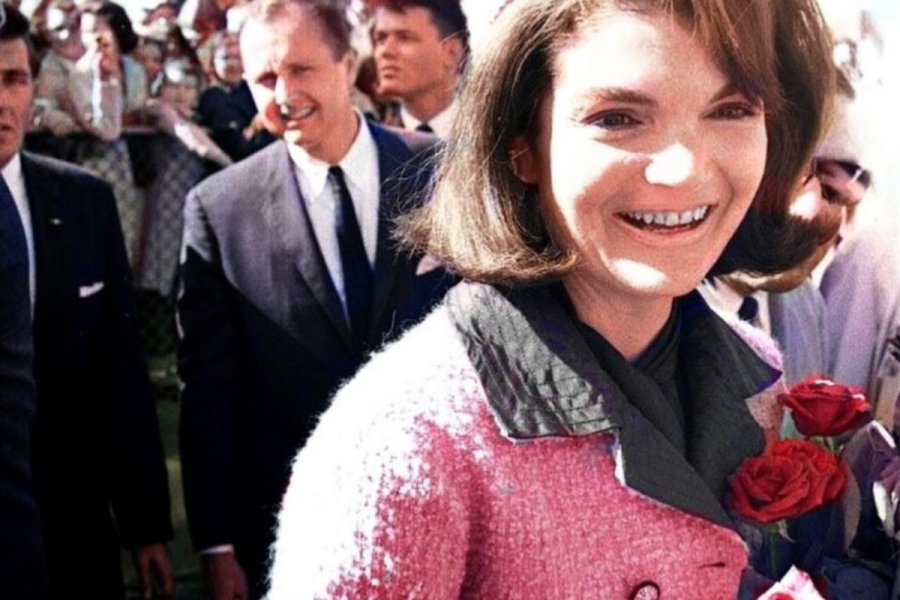
One of the most defining moments of this visual authority came in November 1963, following the assassination of President John F. Kennedy. Jackie Kennedy famously refused to change out of her blood-stained pink suit during the swearing-in of President Lyndon B. Johnson.
That decision transformed her outfit into a global political symbol — one of grief, resilience, and historical gravity. The garment is now preserved in the National Archives, underscoring its significance not as fashion, but as a political artefact.
In this moment, Chanel's legacy of structured femininity became something greater: a visual language of presidential endurance.
The Politics Behind Elegance and the Role of Image Control
Jackie Kennedy's fashion choices were not incidental — they were curated as part of a wider system of image control within the White House. Clothing was used to communicate stability during moments of national and international scrutiny.
State appearances, televised events, and diplomatic visits all relied on carefully constructed visual messaging. Jackie's wardrobe reinforced her husband's presidency by projecting calm authority and cultural sophistication, particularly during a period when television was reshaping political perception.
This elevates Chanel's influence beyond fashion history. Her design philosophy became embedded in how political power was visually communicated to the world.
A Legacy That Defined Power Dressing
The Chanel tweed suit ultimately bridged two worlds: masculine-coded authority and feminine refinement. It created a new framework for professional dressing that would influence generations of women entering the workforce.
From the rise of corporate tailoring in the post-war era to the evolution of modern power dressing in the 1980s and beyond, the silhouette established by Chanel continues to define professional femininity.
Designers such as Karl Lagerfeld and Virginie Viard have repeatedly revisited the suit, adapting its proportions and textures for modern audiences while preserving its structural DNA. Its enduring relevance lies in its adaptability — a design built for movement, reinterpreted across decades of social change.
Today, echoes of Chanel's vision can still be seen in boardrooms, political offices, and red carpets alike — wherever clothing is used not just to dress the body, but to project authority.
A Suit That Became a Language of Power
Chanel's tweed suit did more than modernise womenswear — it redefined how power could be visually communicated. Jackie Kennedy did not simply wear this language; she amplified it on the world stage, transforming structured tailoring into a symbol of presidential presence.
Together, Chanel's innovation and Jackie's political visibility created a lasting legacy: one where elegance, control, and mobility coexist as expressions of authority.
In this sense, the tweed suit is no longer just a fashion history. It is a blueprint for modern power — quiet, precise, and enduring.