There was a time when fashion was something dictated from the top down. Think elite salons, strict tailoring, and rules about what was 'appropriate' for different ages.
Then the 1960s arrived, and everything got turned on its head. Suddenly, it wasn't the older, wealthier crowd setting the tone anymore. It was teenagers and young adults with attitude, music, and a completely new way of dressing the world.
London became the unexpected epicentre of it all. The streets were louder, the clothes were shorter, and the energy was impossible to ignore. What started as a cultural shift quickly became a full-blown fashion revolution, and the industry has never really gone back to the way it was.
How Swinging London Sparked a Style Revolution
Swinging London wasn't just a catchy label. It was a full-on mood.
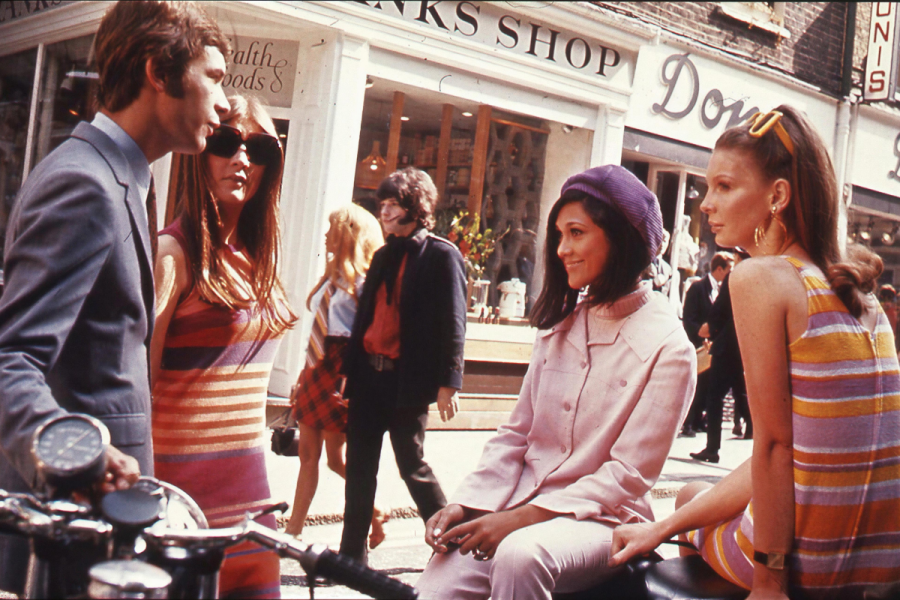
The city in the 1960s was buzzing with music, art, and a kind of creative chaos that spilled straight into fashion. You had boutiques popping up in places like Carnaby Street and Chelsea, where young shoppers weren't just buying clothes, they were discovering identity.
This was also the moment the so-called Youthquake hit. The term, famously pushed by Vogue's Diana Vreeland, captured how young people were suddenly the most important audience in fashion. Not just because they were trendy, but because they were driving what was trendy in the first place.
The Swinging London era marked a break from post-war restraint, replacing it with bold colours, experimental silhouettes, and a relaxed attitude that felt almost rebellious at the time. Aside from fashion changing, it was also society loosening up.
Mary Quant and the Miniskirt That Shook Up Fashion
If Swinging London had a uniform, it would probably be the miniskirt. And if there's one name attached to that moment, it's Mary Quant.
Quant designed a lifestyle. Her pieces were fun, practical, and made for movement. No stiff fabrics or overly complicated tailoring. Just clothes that let young women actually live their lives.
The miniskirt became the ultimate symbol of that freedom. It was daring, yes, but it was also playful and accessible. You didn't need to be wealthy or aristocratic to wear it. You just needed confidence.
Her designs aligned with bigger social changes too, especially around women's independence and the rise of youth-focused consumer culture. Suddenly, fashion wasn't about dressing properly, but about dressing for yourself.
Twiggy: The Model Who Defined Youth Culture
Of course, no conversation about Swinging London feels complete without Twiggy.
With her pixie haircut, dramatic lashes, and ultra-slim silhouette, Twiggy became the poster girl of the 1960s fashion revolution. She didn't look like the glamorous, curvy models who came before her. Instead, she looked young, fresh, and undeniably modern, which was exactly what the era was craving.
Discovered as a teenager, Twiggy quickly rose from London model to international fashion icon. She became closely associated with the mod movement, often wearing mini dresses, bold prints, and geometric shapes that captured the playful spirit of the decade.
More importantly, Twiggy symbolised fashion's changing priorities. The industry was no longer selling elegance reserved for older women with money. It was celebrating youth, individuality, and experimentation.
How Young People Changed the Runway
Before the 1960s, fashion shows were pretty controlled affairs—quiet, formal, and aimed at wealthy buyers. But youth culture didn't really do 'quiet'. It was loud, expressive, and constantly evolving. And the runway had to catch up.
Designers began to loosen things up. Hemlines went up. Shapes got sharper. Fabrics got bolder. Instead of looking backwards at tradition, fashion started looking outwards at what young people were actually wearing on the streets.
Models also changed. The polished, aristocratic ideal gave way to something more relatable and modern. The runway became less about fantasy and more about reflection. It mirrored what was already happening in real life.
This shift helped redefine fashion as self-expression rather than status. In other words, what you wore started to say something about who you were, not just how much you could afford.
Did the Youthquake Ever Really End?
The Swinging London era may feel decades away, but many of today's biggest fashion trends can still trace their roots back to the Youthquake movement.
Mini hemlines remain a staple, from party dresses to Y2K-inspired skirts dominating social media. Mod fashion, with its bold prints, sharp tailoring, and go-go boot aesthetic, continues to resurface on runways and high streets alike.
The era's love of gender-fluid dressing also feels strikingly modern. Slim tailoring, androgynous silhouettes, and a rejection of rigid dress codes have become increasingly mainstream, echoing the rebellious spirit of 1960s youth culture.
Even today's obsession with street style influencing luxury fashion owes something to Swinging London. Designers still look to everyday people, musicians, and youth-led subcultures for inspiration, proving that fashion remains as much about the streets as it is about the runway.
In many ways, the Youthquake never really ended. It simply evolved, reminding us that fashion moves fastest when young people decide the rules are ready to be rewritten.