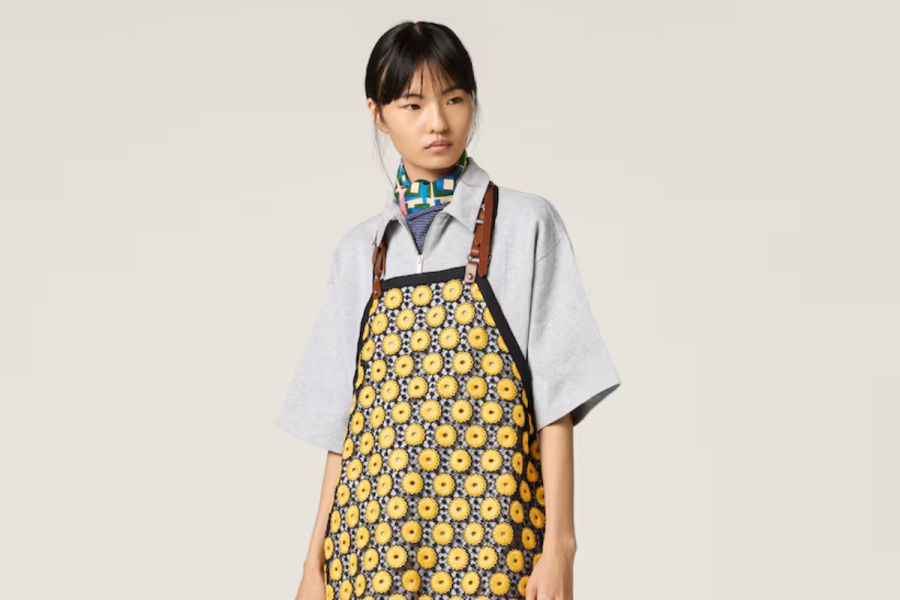
The so-called 'tradwife' trend has been gaining popularity in recent years, particularly across the UK, US, and Australia. It stands for 'traditional wife', which romanticises the idea that's focused on family life and vintage-inspired femininity. Fans of the aesthetic often embrace long skirts, tea dresses, puffed sleeves, modest necklines, and waist-cinching outfits reminiscent of 1940s and 1950s housewives.
For many, the style is a nostalgic nod to simpler times that prioritised a slower and more mindful way of living. However, it also sparks debate.
Some see this aesthetic as empowering and personal. Meanwhile, others view it as regressive, raising questions about gender roles and feminism in the modern era. With growing presence on social media, the trend has moved beyond niche communities and is now influencing fashion at large.
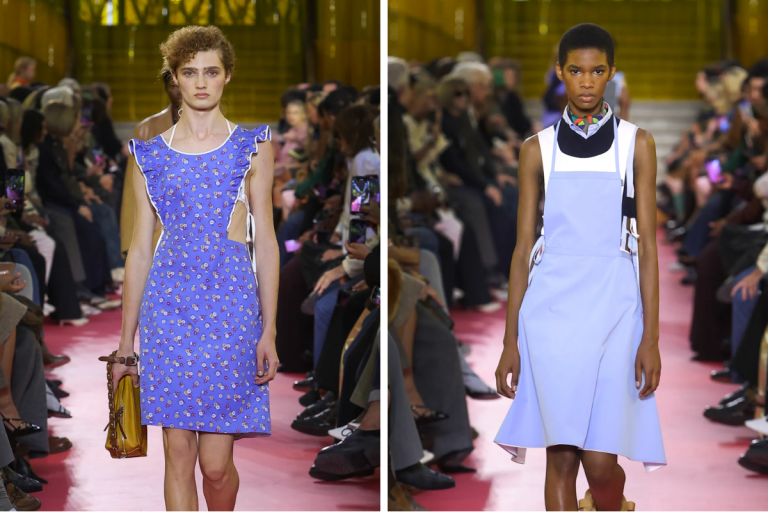
How Miu Miu Reimagined Aprons
Luxury fashion label Miu Miu has incorporated this retro-domestic aesthetic into its 2026 Spring/Summer collection, attracting both attention and controversy.
The Italian brand showcased a range of aprons and apron-inspired garments during Paris Fashion Week in October 2025, including a black leather apron priced at £3,600 and a Macramé apron at £3,700. Other pieces, such as a white Poplin apron (£1,470) and a Poplin pinafore dress (£2,100), complemented the collection's focus on domestic motifs.
Based on show notes, the collection was inspired by Helga Paris' photography book Women at Work. It's intended as a 'consideration of the work of women–their challenges, adversity, experience.'
Models wore layered aprons adorned with studs, lace, and floral motifs to highlight Miu Miu's reinterpretation of the traditional domestic apron as a high-fashion statement.
The £3,000+ Apron Backlash
Despite the brand's artistic intentions, social media responses were mostly negative. According to the Daily Mail, some critics called the collection 'Soviet Dinner Lady chic' and accused the brand of being out of touch with everyday realities. Other social media users said the presentation looked like wealthy people dressing up as 'peasants'.
The high price point, particularly for the Macramé apron at £3,700, intensified the debate. Commentators argued that transforming a symbol of domestic work into a luxury item ignores the reality of working-class women. While Miu Miu framed the apron as a versatile symbol of labour and care, critics said it felt tone-deaf amid a wider social conversation about accessibility and privilege in fashion.
Are Aprons Making Fashion Comeback?
Miu Miu is not alone in embracing apron-inspired designs. Calvin Klein's Spring 2026 show, for example, opened with a milk-white apron, which stylist Veronica Leoni described as a tribute to working-class individuals. Celebrities such as Anya Taylor-Joy, Emma Corrin, and Myha'la have also donned apron-inspired pieces, which demonstrates the growing cultural visibility of the trend.
The apron's comeback in fashion reflects both nostalgia and symbolism. The trend appeals to younger consumers, including Gen Z—who are embracing slower lifestyles without necessarily following traditional gender roles. High street brands have also started featuring tea dresses, gingham, and lace, bringing elements of the tradwife aesthetic into more affordable everyday fashion.
Whether seen as a bold fashion statement or a controversial appropriation, aprons have returned as a talking point in contemporary style. They intersect history, domestic symbolism, and luxury fashion, showing how clothing can carry new meanings in 2026.