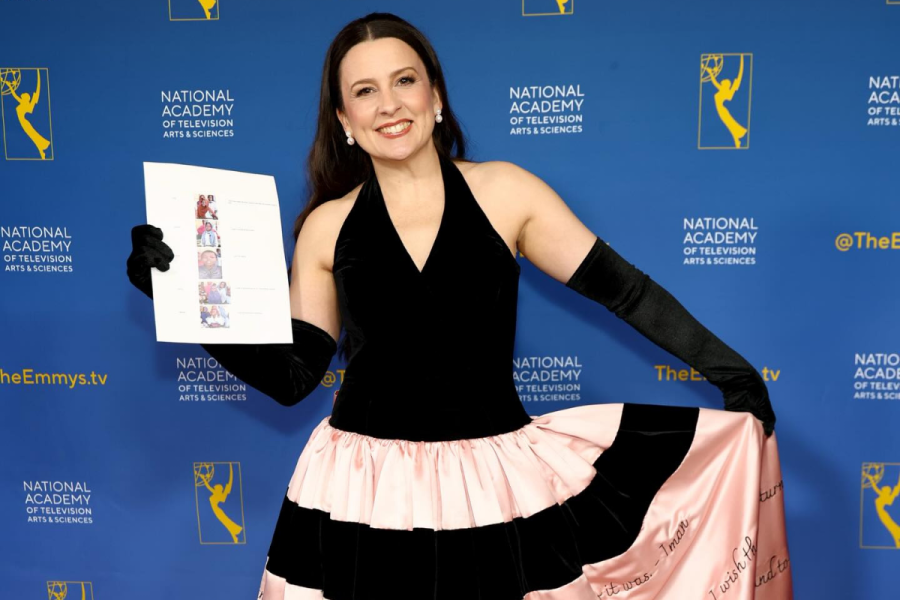
Ms Rachel built her huge following by teaching toddlers how to speak, sing and learn through brightly coloured videos. But Rachel Accurso, the woman behind the beloved children's character, has increasingly found herself at the centre of debates far removed from nursery rhymes.
With more than 21 million YouTube subscribers and a growing entertainment empire spanning Netflix, merchandise and music, her influence is considerable. Yet her outspoken views on Gaza, LGBTQ+ rights, immigration and other humanitarian issues have also attracted fierce criticism, particularly online. Accurso has made clear that she would rather risk being unpopular than remain silent on issues involving children.
From Toddler Star to Political Voice
Accurso and her husband, Aron Accurso, began making Ms Rachel videos in 2019 after their son, Thomas, experienced a speech delay. Their first video, Bubble, Bubble Pop!, was filmed in their New York apartment on a phone.
The channel grew dramatically during the pandemic and has since become a global children's brand. Netflix signed Ms Rachel in 2025, while her videos have generated billions of views. Her first album, I'm So Happy, is due on 25 September and features 23 tracks.
That success has given Accurso a platform far beyond the preschool audience she originally set out to serve. It has also made her decision to speak about politics much more consequential.
She has criticised the Israeli government over the war in Gaza, advocated for LGBTQ+ rights and spoken about humanitarian crises including Sudan. In September, she said she would match rapper Macklemore's $1 million donation to organisations supporting Palestinians — about £747,000 at the 21 September exchange rate — and urged other wealthy celebrities to do the same.


Gaza Backlash and Antisemitism Accusations
Her comments on Gaza have become the biggest source of controversy surrounding her public profile.
Accurso says she was deeply affected by footage from Gaza and conversations with families there. She has framed her activism around protecting children, arguing that governments should be criticised when children's rights are violated.
Her position has nevertheless prompted accusations of antisemitism. Accurso rejects that characterisation and has pointed to messages expressing sympathy for Jewish victims, as well as work with Parents Circle, an organisation involving Israeli and Palestinian families who have lost relatives.
The controversy intensified in January 2026, when screenshots circulated showing that Accurso had apparently liked the comment 'Free America from the Jews' beneath a post about Palestine, Sudan, Congo and Iran. She apologised and said the like was accidental, explaining that she had been trying to remove the comment. She later shared a private exchange in which she said she had tried to delete it and hated antisemitism.
That incident remains important to understanding why her political activity has generated such intense scrutiny: her enormous platform means even an alleged accidental interaction can become a major public story.
She Says Silence Is Not an Option
Accurso has said she was advised to avoid controversial political subjects because doing so could alienate families and reduce the number of children watching her videos.
She rejects that calculation.
'It's good to criticise governments for violating children's rights,' she told the Guardian. 'Because we're the grownups of this world and we're meant to keep children safe.'
She has also distinguished people who cannot safely speak publicly and those with significant privilege who choose not to. That stance has further divided opinion around her brand.
At the same time, she has no stated ambition to enter politics herself. Despite supporters joking online about 'Ms Rachel for president', Accurso has said she has no interest in becoming a politician, although she has spoken about possibly becoming a Christian minister one day.
The Price of Speaking Out
The backlash has not been limited to social media arguments. Accurso and her family have faced security problems, according to her husband, although they have not publicly detailed them.
Aron has nevertheless defended her decision to speak out, describing her compassion as genuine and saying that remaining silent would not be true to who she is.
That tension now sits at the heart of Ms Rachel's unusual fame. She remains a trusted figure for millions of parents and children, while her adult political views have made her a target for criticism from some of the same online audiences that helped build her career.
For Accurso, however, popularity was never supposed to be the point. Her message is simpler: she believes her enormous platform gives her a responsibility to speak when children are suffering—even when doing so makes her less liked.