A beauty trend that appears to celebrate doing less has become the centre of a much bigger debate, with critics warning that the growing popularity of 'naked nails' risks reinforcing racial and class-based ideas about what looks sophisticated or professional.
The minimalist manicure has surged in popularity, with short, unpainted nails or barely-there shades appearing on models and fashion crowds at Copenhagen Fashion Week.
Google searches for 'naked nails' have risen by 85% since May, while searches for 'milky nails' have increased by 22%.
But the trend has also been linked to the controversial 'clean girl aesthetic' – a pared-back beauty look associated with slicked-back hair, glowing skin and minimal make-up.
Critics have argued that the aesthetic, often associated with wealthy white women, can appropriate beauty practices long associated with Black and brown women.
From Copenhagen Chic to a Wider Beauty Debate
The appeal of naked nails is not necessarily about race or status. For many women, it is simply a practical and fashionable choice.
At Copenhagen Fashion Week, the look reflects the Danish preference for understated beauty. Isabella Rose Davey, the event's COO, described it as 'very Danish', pointing to a lifestyle built around cycling, swimming and sauna visits.
Saffron Goddard, a manicurist who has worked on campaigns for brands including Burberry and Mango, said the emphasis is now on 'healthy-looking, well-groomed nails rather than a noticeable manicure'.
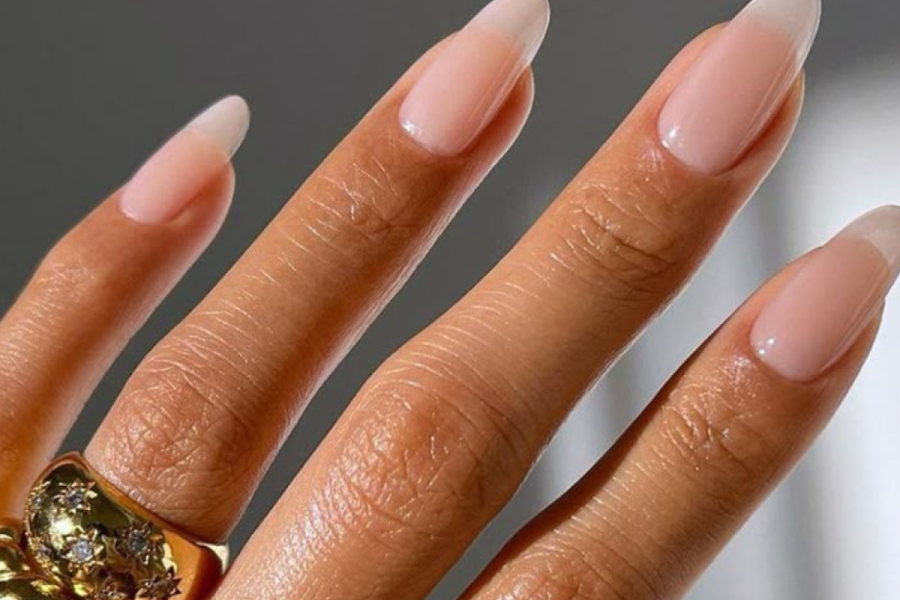
Despite the name, 'naked' nails are not always completely bare. Clear polish, sheer colours and barely-there pinks can create the effect.
The trend may also reflect financial pressures. A manicure in Britain can cost between £15 and £55, making regular appointments an expense some consumers may choose to cut back on.
Environmental concerns are another factor, with gel and acrylic products being non-biodegradable and capable of shedding microplastics. Concerns about UV exposure and allergic reactions have also contributed to growing interest in nail-health-focused treatments.
Beauty expert Annabelle Taurua said the 'no-mani mani' reflects a broader shift towards low-maintenance beauty, where the aim is to create a polished appearance without an obviously elaborate treatment.
Why 'Natural' Beauty Has Become a Race Issue
Irene Shelley, editor of Black Beauty and Hair magazine, stressed that choosing minimal nails is not itself the problem.
'The trend itself isn't the problem: minimalism is a valid choice for anyone,' she said.
The concern, she explained, is what happens when 'a bare aesthetic gets coded as more sophisticated or more professional than a fuller, more expressive one that's historically been coded as Black or working-class'.
That distinction is at the heart of the racial-erasure criticism.
Bold colours, elaborate nail art and longer manicures have become prominent forms of self-expression within Black beauty culture. Critics are not arguing that minimalist nails should be rejected, but questioning whether expressive styles are unfairly treated as less polished or respectable.
Beauty journalist and broadcaster Ateh Jewel placed the debate within a longer history of beauty standards reflecting social power.
She compared the shift with Coco Chanel's role in popularising tanned skin among white upper-class women in the 1920s.
'Beauty is just another way to see how culture reflects power, status and racial prejudices,' Jewel said.
Jewel herself has enjoyed both naked nails and colourful nail art. She said she has moved towards brighter colours because she no longer wants to conform to 'old social structures'.
The debate, therefore, is not about declaring naked nails racist or telling people to abandon minimalist manicures. It is about whether one aesthetic is being presented as inherently superior.
If short, natural-looking nails are simply another fashion choice, there is little controversy. But if they become associated with being cleaner, more elegant, professional or respectable than expressive styles, critics argue that old racial and class assumptions can resurface.