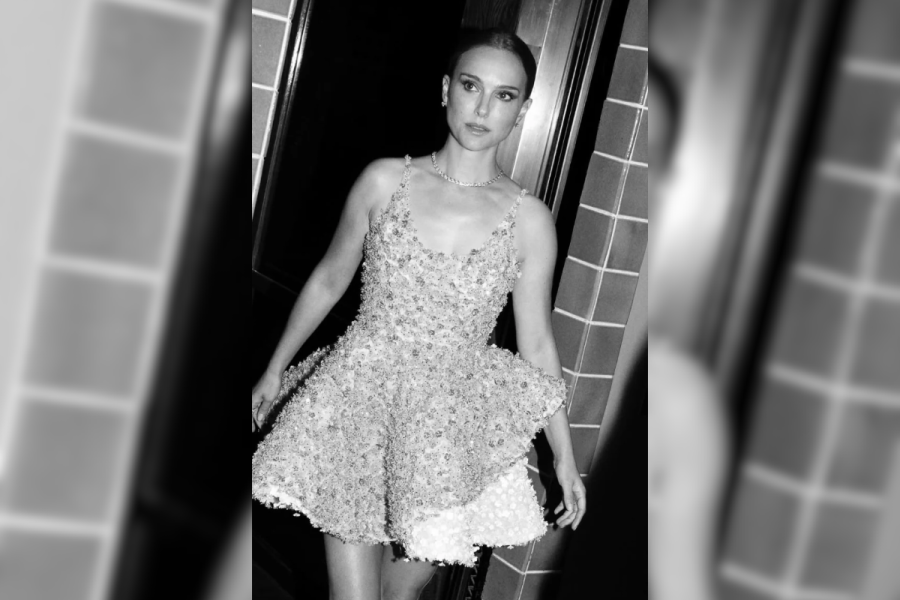
Oscar-winning actress Natalie Portman has revealed that being sexualised as a child star influenced her decision to cultivate a 'good girl' image to protect herself. Portman said she made a conscious effort to appear serious, intelligent and studious after being portrayed as a 'sexualised Lolita' early in her career.
In an interview, Portman explained that she wanted people to see her as more than the characters she played on screen. Presenting herself as a serious student helped push back against an image she felt had been imposed on her. 'I think there was a conscious effort, because I was depicted as this sexualised Lolita, that I wanted to be like, "No, I'm serious, I'm a good girl, I'm a prude, I'm smart, I'm a student," emphasising that as almost a safety mechanism,' she said.
Natalie Portman in 'Black Swan' (2010)
— SONicXTRA (@NicOyereyi) July 27, 2026
Natalie Portman (born Natalie Hershlag) is an Israeli-American actress, producer, and director widely regarded as one of Hollywood's most accomplished performers. She is known for balancing blockbuster franchises with critically acclaimed… pic.twitter.com/QdR4uivWl6
How Early Hollywood Roles Shaped Her Image
Beginning her film career at just 12, she starred in Luc Besson's 1994 thriller Léon: The Professional. Her character, Mathilda, is a young girl whose family is murdered and who becomes involved with a professional hitman.
Her early roles brought her attention at a young age, including her appearance in the 1996 film Beautiful Girls. Looking back, Portman has described how being portrayed in a sexualised way influenced the image she chose to project in response. However, Portman said the serious image associated with her did not fully reflect her personality, with people increasingly assuming she was naturally reserved rather than recognising her playful side.


Why People Mistake Her for Being Serious
Portman said the image she adopted as protection eventually shaped how others perceived her. What began as a conscious effort to control her public image became an assumption that followed her into adulthood.
'But then, over time, it became like everyone thinks I'm really serious,' she said. 'I'm very silly, and I love to laugh more than anything, and I love to goof off.'
Her comments reveal the disconnect between the serious persona people associate with her and the person she says she is away from the screen. Despite her reputation for taking on demanding roles, Portman insists that humour and playfulness are important parts of her personality.
She has also challenged the perception that she is a perfectionist, which she believes is partly linked to her performance in Darren Aronofsky's Black Swan. For the 2010 psychological thriller that earned her the Academy Award for Best Actress, she portrayed a ballerina struggling under intense psychological pressure.
Portman has described herself as more forgiving of her own mistakes than people might expect. Reflecting on a phrase she encountered during her university years, she recalled the words 'Done, not good', offering another glimpse into her less serious side.
See Natalie Portman, Sterling K. Brown and Jenna Ortega Take Aim at the Art World in New The Gallerist Images (Exclusive) https://t.co/pZQLJwMIX5
— People (@people) October 22, 2026
Bringing More Joy
Portman is also keen to bring more joy to audiences through her work, particularly at a time when difficult news can feel relentless. Her upcoming film The Gallerist, in which she stars alongside Jenna Ortega, is among her latest projects as she continues to explore different roles.
Discussing her current approach to her career, Portman said she wants her work to offer something positive amid the 'really heavy stuff going on.' 'Right now, it's a lot of joy,' she said. 'I think it's both for myself and what I hope to offer an audience.'
Ultimately, Natalie Portman's shows how the image she shaped as a young actress came to influence other people's expectations. While presenting herself as serious and studious once felt like a form of protection, she now wants audiences to recognise the playful personality behind that image.