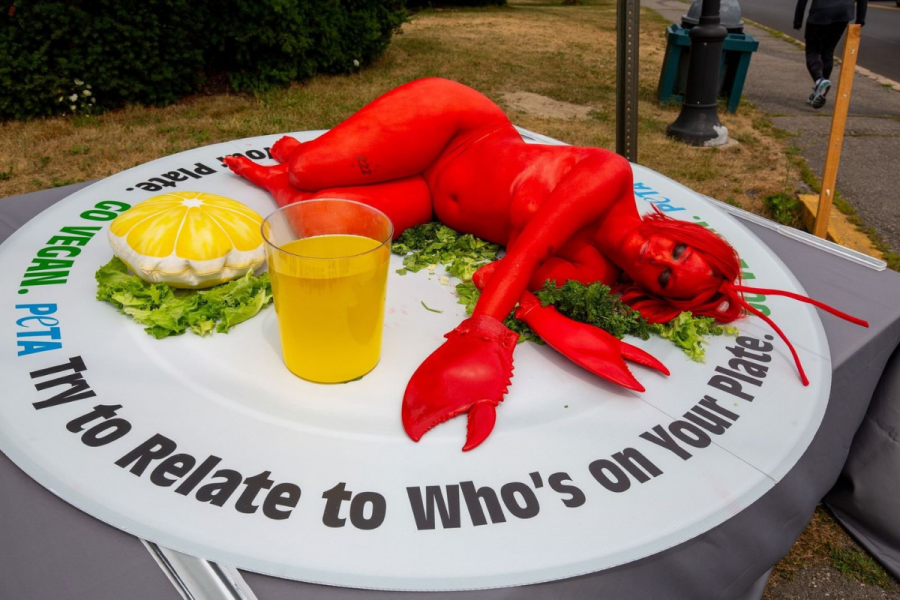
A festival worker escorted a painted, nearly nude protester through crowds of families, reigniting a heated and unresolved debate in Rockland, Maine.
This stunt has raised an uncomfortable question that neither side seems willing to answer clearly: does an animal suffer for the sake of tradition, or is this outrage a performance directed at a working-class festival that has not changed its ways in 78 years?
Last year PETA filed a complaint in an ultimately unsuccessful attempt to shut the festival down, calling it a municipally-endorsed spectacle of animal suffering. This year, with the courts closed, the group sent a woman dressed as a plated lobster to the five-day event. The footage of her being escorted away has garnered millions of views, reigniting an ongoing debate about the true cost of Maine's most beloved tradition.
PETA's Campaign Against the Festival
PETA has been active in Rockland for years, but this marks its most direct intervention to date. The organisation aims to make people recognize the victim behind the tradition, rather than allowing the festival's 20,000 pounds of steamed lobster to be seen as a harmless local attraction.
Critics argue that theatre does not change opinions, only headlines, though the scale of the video's reach makes that argument harder to dismiss outright.
We put a human “lobster” on a plate outside @MELobsterFest to force people to see the victim behind the tradition🦞💔 pic.twitter.com/uNGWK5qdUW
— PETA (@peta) July 29, 2026
Can Lobsters Feel Being Boiled Alive?
The stunt is effectively highlighting an important debate. In recent years, scientific views on crustacean sentience have evolved, leading some governments, including the UK, to formally acknowledge that decapod crustaceans, such as lobsters and crabs, can experience pain under animal welfare laws.
PETA is leveraging a significant scientific shift by framing the festival's practice of boiling lobsters alive as an act of cruelty rather than a tradition. This is the strongest argument the organisation has against an event that has never had to justify its cooking methods based on scientific grounds before.
This has to be the most unintentionally hilarious protest I've ever seen.
— NeverBeSilenced (@JonConn65769672) July 30, 2026
Maine Maritime Heritage vs. Modern Animal Welfare
The festival's perspective often goes unheard, which frustrates local residents. Rockland's lobster industry supports fishing families who already face rising fuel costs, tightening environmental regulations, and unpredictable catch seasons. Additionally, the festival reinvests its proceeds back into the community, providing independent deckhands and vendors with their most significant week of the year.
The Maine Lobster Festival is a nonprofit organization, but even more than that, it is a year-round fundraiser dedicated to supporting Midcoast Maine. We set a goal of raising $20,000 to support our community this year, but we exceeded that goal with a total of $25,000! pic.twitter.com/GltwbynRtZ
— Maine Lobster Fest (@MELobsterFest) August 3, 2026
Organisers have consistently defended their methods, stating that they are traditional, lawful, and widely accepted. Their defence is based on heritage and legality rather than on spectacle. For many attendees, PETA's protest seems like unnecessary interference from a movement that is not directly invested in whether the boats will operate next season.
What Are People Saying Online?
The furious online reaction only highlights how entrenched both sides have become. Replies under PETA's posts range from proud defenders calling lobster a delicacy to critics attacking the group's own controversial euthanasia record. Rather than changing minds, the exchange looks less like persuasion and more like two sides talking past each other at volume.
Do you guys still mass euthanize animals or do you just block everyone that mentions it now?
— Hush (@Emo_Twiz) July 31, 2026
PETA has demonstrated its ability to capture the public's attention with a single strategically crafted image, while the festival maintains decades of local support. As legal definitions of animal sentience continue to evolve, this 78-year tradition confronts modern ethical standards, and this year's protest is unlikely to resolve the ongoing debate.