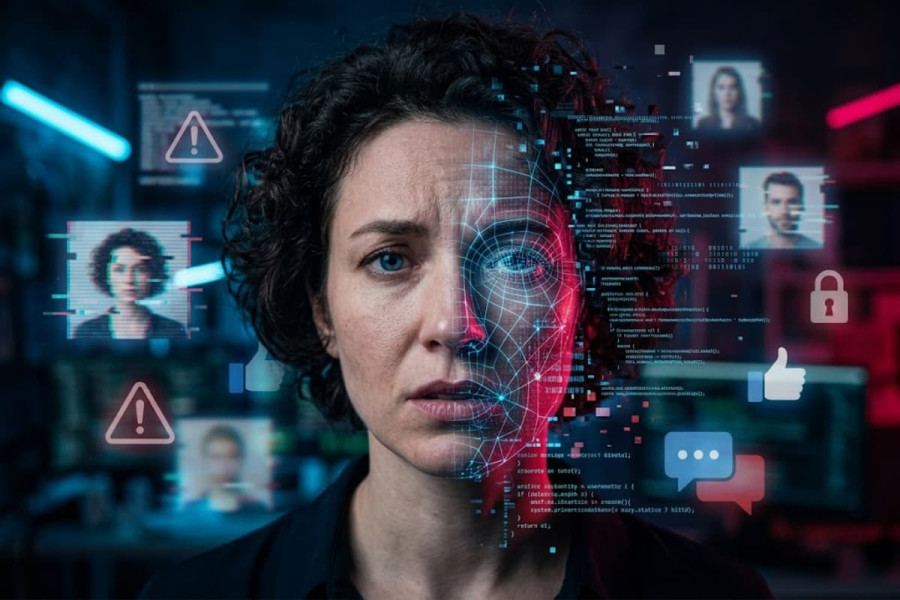
Artificial intelligence has transformed countless industries, making everyday tasks faster and more efficient. However, the same technology has also created new opportunities for abuse. One of the most disturbing examples is the rapid rise of AI deepfake pornography, a growing problem that overwhelmingly targets women without their knowledge or consent.
As AI image and video generation tools become increasingly accessible, creating realistic fake explicit content has become easier than ever. What once required advanced technical expertise can now be achieved using widely available software, raising serious concerns about privacy, online safety and digital rights.
What Is AI Deepfake Porn?
AI deepfake pornography refers to sexually explicit images or videos that have been digitally manipulated using artificial intelligence to make it appear as though a real person is involved. In many cases, the individual has never posed for explicit material and may not even know that such content exists.
The technology uses machine learning algorithms to analyse photographs, videos and facial features before generating convincing fake content. While deepfake technology has legitimate uses in filmmaking, education and entertainment, it has increasingly been exploited to produce non-consensual explicit material.
Women, particularly public figures, influencers, journalists and private individuals with a visible online presence, have become the primary targets.
Why the Problem Is Growing So Quickly
Several factors have contributed to the surge of AI-generated explicit content.
AI Tools Are More Accessible

Powerful AI image generators have become widely available, with many offering user-friendly interfaces that require little technical knowledge. This accessibility has lowered the barrier for creating convincing fake images and videos.
Even when major AI companies introduce safeguards to prevent misuse, smaller or less regulated platforms often lack adequate restrictions.
Social Media Provides Endless Images
Millions of people regularly upload high-quality selfies, family photos and videos to social media platforms. These publicly available images provide the raw material that malicious actors can misuse to create deepfake content.
The more photographs available online, the easier it becomes for AI systems to generate realistic results.
Anonymous Online Communities
Some online forums and messaging groups actively share AI-generated explicit material, encouraging users to create and distribute fake images of real people.
The anonymity offered by parts of the internet makes it difficult to identify those responsible, allowing harmful content to spread rapidly across multiple platforms.
The Human Cost Behind the Technology
Although the images are fake, the emotional and psychological impact on victims is very real.
Many women describe experiencing anxiety, humiliation, fear and loss of control after discovering manipulated images circulating online. Some have faced workplace issues, damage to personal relationships and online harassment as a result.
Unlike traditional image-based abuse, AI-generated content can continue resurfacing even after it has been removed from one platform. Once copied and shared across multiple websites, complete removal becomes extremely difficult.
Victims are often forced to spend significant time reporting content, contacting platforms and seeking legal assistance while dealing with the emotional consequences.
Governments Are Responding
Governments around the world have begun introducing stronger laws aimed at tackling AI-generated intimate image abuse.
Several countries have criminalised the creation or distribution of non-consensual deepfake pornography, while others are updating existing revenge porn legislation to include AI-generated material.
Technology companies are also investing in better detection systems, watermarking tools and faster reporting mechanisms. However, experts argue that legislation alone cannot keep pace with the rapid development of artificial intelligence.
Greater cooperation between governments, technology companies and law enforcement agencies will likely be needed to reduce the spread of harmful content.
How People Can Better Protect Themselves
No one is responsible for becoming a victim of deepfake abuse. However, there are practical steps people can take to reduce their exposure.
Consider reviewing privacy settings on social media accounts, limiting access to personal photographs where appropriate and being cautious about sharing high-resolution images publicly.
If someone discovers AI-generated explicit content featuring their likeness, experts generally recommend documenting the material, reporting it to the platform hosting the content and seeking legal or professional advice where available. Many countries also have organisations that support victims of image-based abuse.
A Technology Challenge That Requires Collective Action
Artificial intelligence continues to offer enormous benefits across healthcare, education, science and business. Yet its misuse demonstrates that technological progress must be matched by ethical responsibility and stronger protections for individuals.
The rise of AI deepfake pornography is not simply a technology issue—it is a privacy, safety and human rights issue that disproportionately affects women. As AI tools become more sophisticated, preventing abuse will require a combination of stronger laws, improved platform moderation, responsible AI development and greater public awareness.
Ultimately, ensuring that people can participate safely in the digital world means holding those who misuse AI accountable while continuing to develop technology that respects consent, dignity and personal privacy.