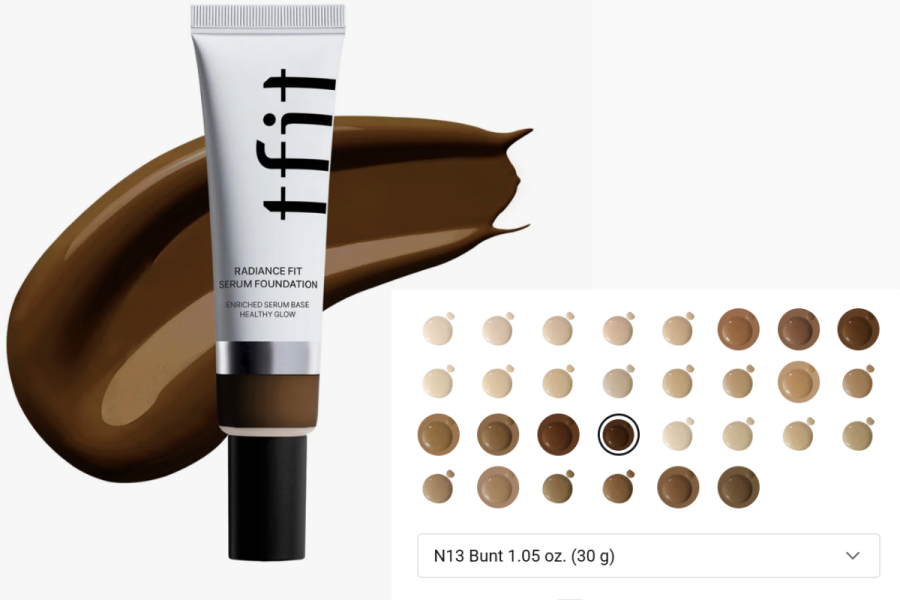
A single word has put K-beauty label TFIT in the midst of serious controversy. Shoppers have accused the brand of colourism after discovering that the darkest shade in its Radiance Fit Serum Foundation range is labelled simply as 'Burnt'. As they examined the rest of the shade card, the backlash intensified.
It began on Reddit, where a dark-skinned, half-East Asian user was browsing TFIT's shades and stopped cold at N13 Burnt. She was clear that she loved seeing the brand expand into deeper tones. It was the name that stung. The irony, several commenters pointed out, is that the backlash has nothing to do with the shade itself, which many welcomed as a genuine step forward for deeper skin tones.
'Burnt' has a long, ugly history as a colourist slur, and it is also tied to the use of burnt cork in blackface performance, which is exactly why this one word hit so much harder than a simple bad naming call.
Translation Error or Inclusivity Fail?
The comments quickly divided into two camps. One side argues that expanding globally means you can no longer use the excuse of 'we didn't realise'. When shipping products worldwide, it is essential for companies to ensure that the wording on their packaging is vetted for a global audience, without exception.
Comment
by u/hanyul_ from discussion
in MakeupAddiction
The other side reckons this is a language gap rather than any malicious intent, that the term probably originated as a neutral description related to colour and just didn't get checked against Western context before launch.
Both sides remain firm in their positions, which is why the debate persists.
The Naming Double Standard in Shade Range
There's a real defence for the word 'burnt' in art circles. Burnt Umber is a genuine pigment term, an earth colour that's literally heated, or calcined, to deepen its shade. However, look at how TFIT names the rest of its range and that defence becomes less convincing.
Comment
by u/hanyul_ from discussion
in MakeupAddiction
The lighter shades are called things like C01 Porcelain, C1.5 Lingerie, and C03 Rosy, and the warm tones are named W01 Vanilla and W02 Almond Butter, all soft, pretty, food-and-lingerie-coded language. Then you hit the deepest shade and it's just N13 Burnt. There's no creativity or warmth in that name—just a blunt action word.
A Wider K-Beauty Problem
Brands like Fenty Beauty and MAC successfully avoid this exact issue by sticking to numbers or neutral-tone labels instead of loaded words. This makes TFIT's misstep even more noticeable.
The brand clearly put real effort into building out a genuinely inclusive 30-shade range. However, it did not apply the same level of care when naming the results, and this mismatch has become a common issue in K-beauty as brands rapidly expand into export markets.
It is a pattern beauty watchers say is becoming harder to ignore, as more Korean brands chase international growth without investing the same attention in how that growth is communicated.
TFIT has not made any public statements yet. Whether they choose to rename the shade or remain silent, the brand has already set a new standard for how closely K-beauty's shade expansions will be scrutinised moving forward.
For a brand that built its name on inclusive formulation, the lesson here is that inclusivity has to extend to the label as well as the shade itself.