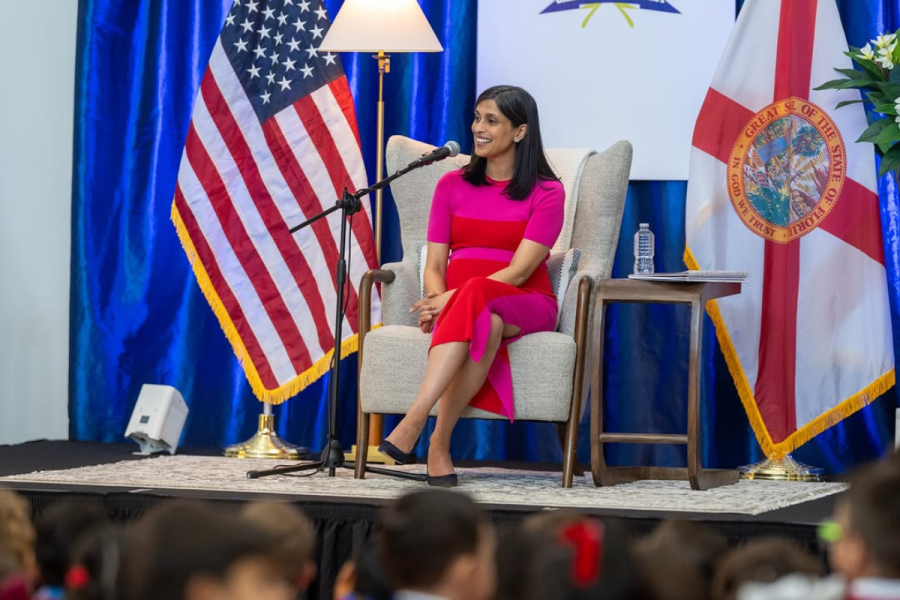
Usha Vance has unexpectedly become a talking point in Washington's fashion circles, with her increasingly understated wardrobe being interpreted by some commentators as a quiet departure from the bold, highly polished aesthetic often associated with MAGA-aligned political women.
As the wife of Vice President JD Vance steps more firmly into the role of Second Lady, her public appearances have drawn growing attention not for dramatic style statements, but for what many describe as their deliberate simplicity.
Neutral tones, soft tailoring, and minimal accessories have become a consistent feature of her look, setting her apart from the more visually assertive fashion choices of other prominent Republican women.
According to GMT, this subtle shift has sparked debate over whether her style reflects personal preference, political messaging, or simply a preference for discretion in an increasingly image-conscious political environment.
The conversation has only intensified as comparisons emerge with figures such as Karoline Leavitt and Katie Miller, both known for their more structured, camera-ready styling and high-impact public appearances.
A Subtle Shift Away From Washington Flash
Observers have noted that MAGA-era political fashion has often leaned towards strong silhouettes, bold colour palettes, and highly curated styling designed for maximum media impact. In contrast, Usha Vance's wardrobe choices appear to lean into restraint, favouring muted dresses, simple knitwear, and understated elegance.
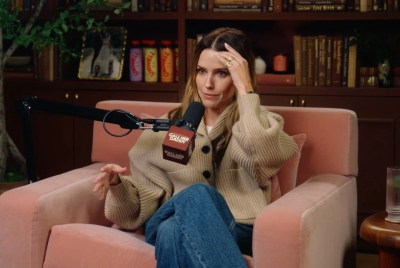
Recent appearances have seen her opt for soft browns, creams, and neutral layering pieces rather than statement outfits. The Sun noted that one widely discussed look featured a fitted, modest brown dress paired with a cardigan, a combination that fashion watchers described as emblematic of her low-key approach to public life.
Her styling choices have led some commentators to label her aesthetic as 'anti-MAGA glamour', suggesting that her fashion direction stands in contrast to the more performative image politics often seen within Republican circles. However, others argue that such interpretations may be reading too much into what is essentially a personal preference for simplicity.
A source cited in fashion commentary noted that her style is 'less about making statements and more about feeling comfortable in her own skin', a view echoed by those who see her wardrobe as grounded in practicality rather than political signaling.
Still, in Washington, where visual presentation is closely scrutinised, even subtle differences in styling rarely go unnoticed. The contrast between Vance and other Republican women has therefore become a broader conversation about how femininity, power, and political identity are expressed through clothing.
'Muted Elegance' in Contrast to High-Impact Political Style
The emergence of Usha Vance's more restrained fashion identity has been particularly notable when set against the backdrop of other high-profile Republican figures.
Women such as Karoline Leavitt and Katie Miller have cultivated a distinctly more assertive public image, often featuring sharply tailored outfits, defined silhouettes, and bold styling choices designed for television and press appearances.
By comparison, Vance's approach has been described by fashion observers as 'muted elegance', emphasising simplicity, comfort, and subtle sophistication rather than visual dominance. Her outfits tend to avoid dramatic detailing, instead focusing on clean lines and neutral palettes.
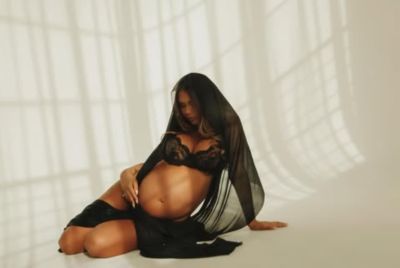
The discussion around her style has also intersected with broader conversations about political maternity fashion and how women in high-profile government roles navigate visibility during major life changes.
Some commentators suggest that her approach signals a quieter evolution in how Republican women present themselves publicly, while others insist it is simply a reflection of individual taste.
Despite the speculation, there is no clear indication that Vance's wardrobe choices are intended as political messaging. However, in the hyper-visible world of American politics, fashion is rarely interpreted in isolation. Every appearance becomes part of a wider narrative, whether intentional or not.
As one fashion commentator put it, 'In Washington, even the quietest outfit can speak the loudest'.